

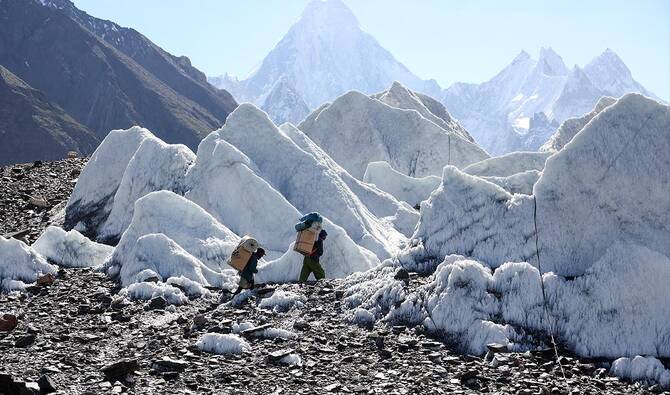

ISLAMABAD: Pakistan on Saturday warned that accelerating glacier melt poses growing risks to lives, infrastructure and water security, as climate change intensifies extreme weather events across the country’s northern regions.
The warning comes after a series of climate-linked disasters, including 2025 floods that the government estimates caused losses of Rs822 billion (around $2.9 billion) and claimed more than 1,000 lives across the country. Authorities say the deluge was driven in part by rising temperatures and changing glacier patterns in the Hindu Kush–Karakoram–Himalaya region.
The latest events follow catastrophic floods in 2022, which killed more than 1,700 people and submerged large parts of the country, underscoring its vulnerability to climate shocks despite contributing minimally to global emissions.
“Climate change is accelerating glacier melt and increasing the likelihood of glacial lake outburst floods,” President Asif Ali Zardari said in a message marking World Day for Glaciers, which falls on Mar. 21.
“The extreme heat and weather events witnessed in northern Pakistan in 2025, which led to flash floods, landslides, loss of lives and damage to infrastructure, served as a clear warning.”
Pakistan is home to more than 13,000 glaciers, the largest concentration outside the polar regions, which feed the Indus River system that supports the country’s agriculture, hydropower generation and water supply.
Officials say shifts in glacier behavior are increasing the risk of glacial lake outburst floods, particularly in Gilgit-Baltistan and Khyber Pakhtunkhwa, where communities face growing exposure to sudden flooding and landslides.
Water from these glaciers sustains millions of people downstream, irrigating farmland across the Indus basin and supporting both rural livelihoods and urban demand.
Zardari said Pakistan was taking steps to address the risks through policy measures, including the National Climate Change Policy 2021, the National Adaptation Plan 2023 and its commitments under international climate agreements.
He also called for greater regional and global cooperation, including improved data sharing, early warning systems and access to climate finance to help vulnerable mountain communities adapt to changing conditions.
“Our glaciers are central to Pakistan’s water security and to the stability of the ecosystems that sustain our people,” he said.
“The choices we make today will shape the future of our mountains and the wellbeing of generations that follow.”


