

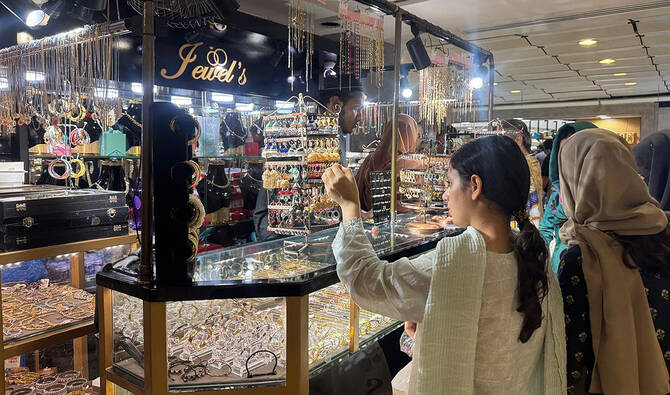

KARACHI: At Karachi’s bustling Zainab Market, Saima Rehan moved from stall to stall, lifting dresses from crowded racks, checking price tags and quietly putting them back.
Like many shoppers ahead of Eid Al-Fitr, she had come looking for new clothes for the holiday. Instead, she left empty-handed.
Pakistan’s inflation has picked up in recent months, with consumer prices rising around 6–7 percent, adding pressure on household budgets even after easing from peaks seen in 2023. A recent increase in petrol prices by Rs55 per liter ($0.20), driven by higher global oil costs due to conflict in the Middle East, has further pushed up transport and retail prices.
The impact is especially visible during the pre-Eid shopping season, when markets traditionally stay open late into the night as families buy clothes, shoes and gifts for the three-day festival marking the end of Ramadan.
This year, however, both shoppers and traders say the energy is missing.
“A suit that used to cost Rs2,500 [$8.91] is now being sold for Rs5,000 [$17.83],” Rehan, a skin therapist at an upscale salon in Karachi, told Arab News.
“The price of every household item, clothes and accessories has increased manifold, making it impossible for us to shop.”
Many shoppers said rising fuel costs had eroded their purchasing power, forcing them to scale back Eid spending.
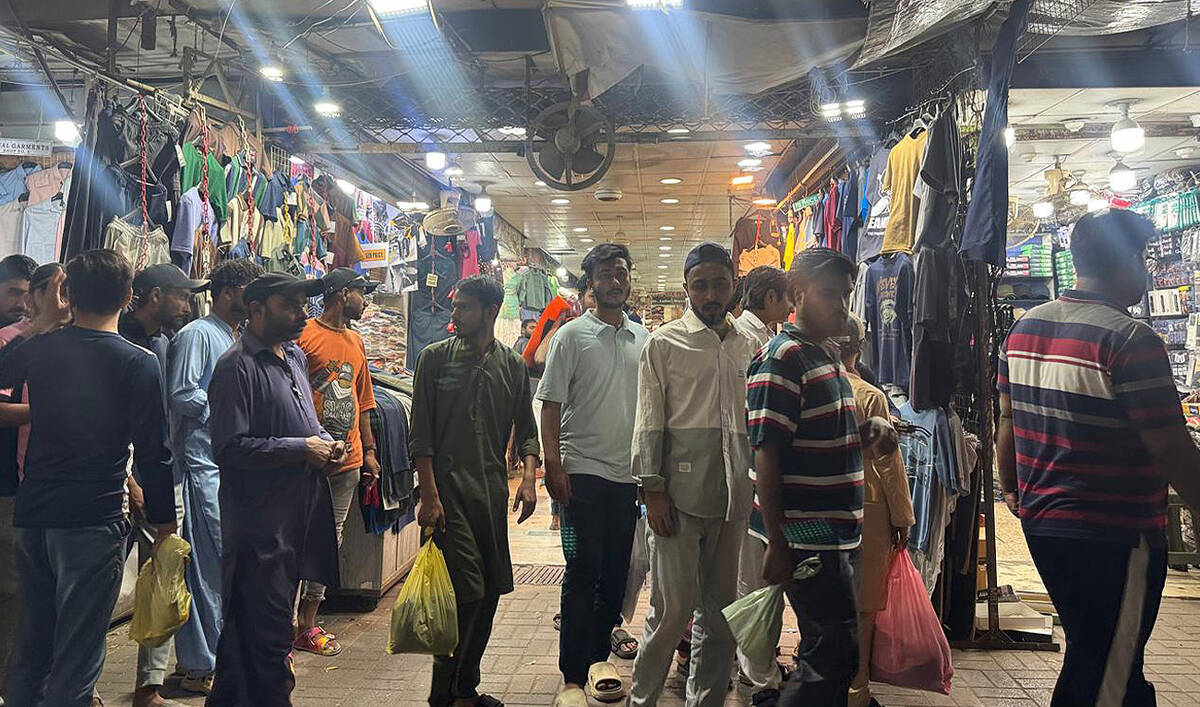
People standing outside a shop in Karachi's Saddar area on March 16, 2026. (AN Photo)
“The price of petrol is very high compared to last year, which has increased traveling costs,” said Mahrukh Imran, a 19-year-old student.
“Factor in the rising prices of clothes and it becomes difficult to shop for Eid.”
One always ended up spending over their planned budget due to inflation, she added.
‘CLOSE TO IMPOSSIBLE’
For retailers, the slowdown is visible not only in reduced footfall but also in smaller purchases.
Ameen Khan, a 30-year-old shopkeeper selling traditional women’s clothing, said customers continue to bargain despite fixed prices.
“It’s not their fault,” he said. “Inflation has brought all of us to this point.”
Khan said markets that once remained packed throughout Ramadan now appeared noticeably quieter.
“This year, our business is down by 70 percent due to increased inflation,” Khan said.
“Previously the market used to remain packed all 30 days of Ramadan. But this year the situation is right in front of you,” he said, pointing toward an empty road adjacent to his shop.
Back inside the market, skin therapist Rehan continued browsing, occasionally pausing to ask prices before moving on.
“I’ve been shopping for quite some time now, but this year I am seeing that there is not that kind of rush in markets as there used to be,” she said.
Rehmat Ali, a salesperson at a ready-to-wear garments shop, said buying patterns had also shifted.
“In this day and age, for Rs5,000 ($17.50) we can only get a pair of pants and a shirt,” Ali said. “Affording shoes in this range is close to impossible.”
Customers said even assembling a basic outfit now stretched beyond their means.
“A pair of decent-quality jeans alone costs around Rs7,000 [$24.96],” said 20-year-old Mohammad Sadiq.
“If I pair it with a shirt, the cost goes up to Rs10,000 [$35].”


