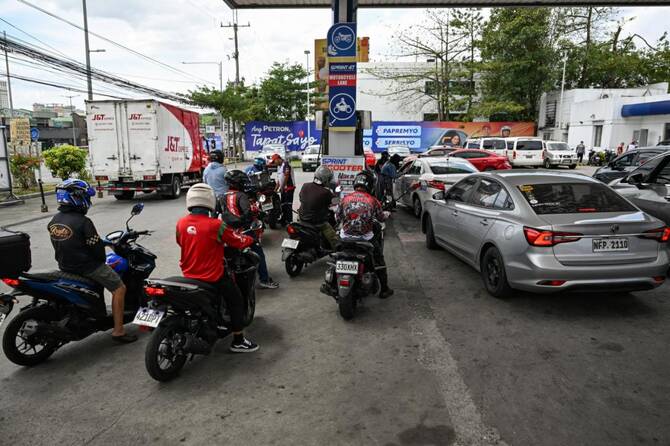
MANILA: The Philippine lower house of Congress on Monday granted President Ferdinand Marcos Jr authority to temporarily suspend or reduce excise taxes on fuel to stabilize soaring petroleum prices that risk fanning inflation in the consumption-driven economy.
The measure, which Marcos has certified as urgent, requires approval from the Senate before it can be enacted into law. The Senate will vote on the issue on Tuesday, its president said.
Under the measure, Marcos may temporarily reduce or halt the collection of excise taxes on petroleum products for up to six months, upon the recommendation of an inter-agency budget panel. The total suspension period cannot exceed one calendar year.
Marcos may exercise the power under two main conditions: when the average Dubai crude oil price based on Mean of Platts Singapore reaches or exceeds $80 per barrel for one month, or if he declares a national emergency or calamity that leads to extraordinary increases in domestic fuel prices.
Governments across Southeast Asia have begun rolling out measures to cushion the economic impact of the widening Middle East conflict, with steps aimed at conserving energy, stabilizing domestic markets and protecting vulnerable sectors such as tourism.
On Monday, Philippine Energy Secretary Sharon Garin said the country has approached Russia for possible oil importation, but gave no details on possible volumes and duration, adding that Manila was awaiting Moscow’s response.
Garin also said China’s ban on fuel exports only applied to existing contracts and the country’s deals with Chinese suppliers would remain in force.


![]()

Philippines’ lower house grants president power to ease fuel taxes
Short Url
https://arab.news/m7f6r
Philippines’ lower house grants president power to ease fuel taxes
- The measure, which Marcos has certified as urgent, requires approval from the Senate before it can be enacted into law


Latest updates


© 2026 SAUDI RESEARCH & PUBLISHING COMPANY, All Rights Reserved And subject to Terms of Use Agreement.