

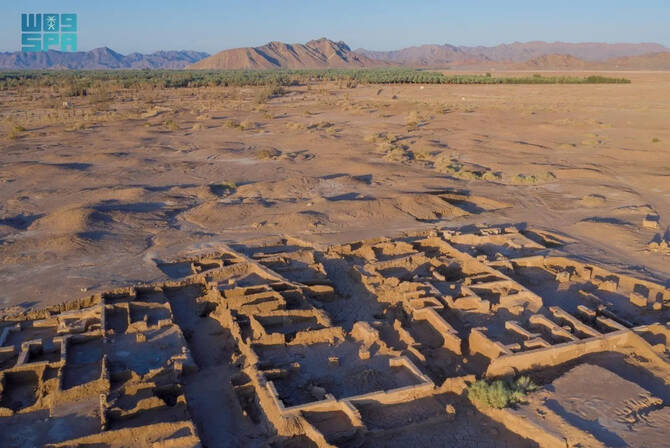

ALULA: The ruins of the ancient city of Qurh, about 20 km south of AlUla in the Madinah Province of northwestern Saudi Arabia, offer a glimpse into a once-thriving center of trade and culture.
Set in the historic valley of Wadi Al-Qura and spread across a wide plain near the village of Mughayra, framed by low mountain ranges, the archaeological site marks one of the region’s most important settlements of the early Islamic centuries. Its strategic position meant it was on key caravan routes linking the southern and northern parts of the Arabian Peninsula.
Archaeological remains at Qurh reveal the outlines of buildings, market areas and street networks, indicating that the city once enjoyed active commercial and social lives. The architectural patterns discovered at the site date to the early Islamic period, highlighting the city’s role as a bustling urban center during its peak.

Archaeological remains at Qurh reveal the outlines of buildings, market areas, and street networks, indicating that the city once hosted active commercial and social life. (SPA)
Historically, Qurh was closely connected to the famous Incense Route, the network of caravan trails that transported frankincense and other valuable goods across Arabia. Caravans traveling through Wadi Al-Qura helped transform the city into a major commercial stop and a meeting point for merchants and travelers.
By the end of the 12th century, however, Qurh gradually declined, while AlUla to the north began to emerge as the valley’s new urban center.
Today, the Royal Commission for AlUla continues archaeological surveys and excavations at the site in cooperation with international research institutions. The work aims to document the city’s history and uncover new discoveries that shed light on its role in regional trade and culture.
Researchers say the ongoing efforts will help preserve the site’s heritage while reinforcing AlUla’s growing reputation as a world-renowned destination for archaeology and cultural tourism.


