AI disinformation turns Nepal polls into ‘digital battleground’

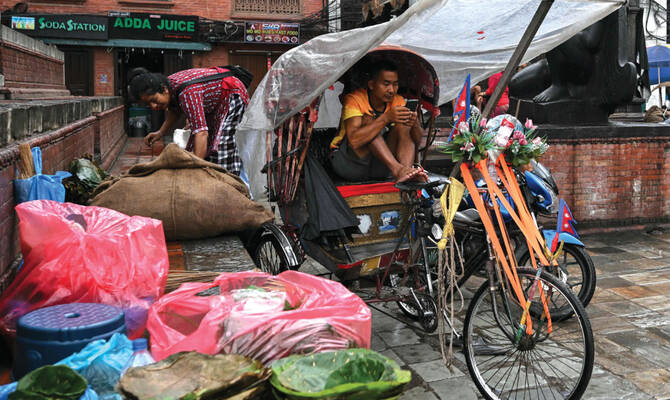
A rickshaw puller uses a mobile phone at the Durbar Square in Kathmandu on Sept. 13, 2025. (AFP/File)
Short Url
Updated 04 March 2026
Follow

AI disinformation turns Nepal polls into ‘digital battleground’

  • “Nepal ... is grappling with the scale of the threat that disinformation poses to society and democracy at large”

KATHMANDU: Slick AI-generated disinformation has flooded election campaigns in Nepal, which votes Thursday in the first polls since deadly protests triggered by a brief ban on social media overthrew the government.

The September 2025 protests were driven by tech-savvy youth angry at job shortages and flagrant corruption by an aging political elite.

Now parties across the political divide are tapping social media to push their agendas and woo voters, especially the young, including a surge of people registering to cast their ballot for the first time.

But some of the content is manipulated or outright fake, experts and fact-checkers say.

“In a country where digital literacy is low, people believe what they see,” said Deepak Adhikari, editor of the independent NepalCheck team.

Kathmandu-based technology policy researcher Samik Kharel described a “digital battleground” in the run-up to the landmark vote, warning that Nepal lacked the expertise to monitor the onslaught of machine-generated content.

“It is even hard for experts to figure out what is real and fake,” Kharel said.

Around 80 percent of all of Nepal’s internet traffic is through social media platforms, he said.

Internet analytics site DataReportal estimates more than 56 percent of Nepal’s 30 million people are online, including 14.8 million Facebook users and around 4.3 million on Instagram. About 2.2 million are on TikTok, according to the Internet Service Providers’ Association of Nepal.

“Disinformation remains a top concern that could undermine the integrity of the election process,” said Ammaarah Nilafdeen of the US-based Center for the Study of Organized Hate.

“Nepal ... is grappling with the scale of the threat that disinformation poses to society and democracy at large.”


Lawsuit challenges Trump administration’s ending of protections for Somalis

Updated 10 March 2026
Follow

Lawsuit challenges Trump administration’s ending of protections for Somalis

  • The lawsuit cites a series of statements Trump has made describing Somalis as “garbage” and “low IQ people” who “contribute nothing.”

BOSTON: Immigrant rights advocates filed a lawsuit on Monday seeking to stop US President Donald Trump’s administration from next ​week ending legal protections that allow nearly 1,100 Somalis to live and work in the United States. The lawsuit, brought by four Somalis and two advocacy groups, challenges the US Department of Homeland Security’s decision to end Temporary Protected Status for Somali immigrants, whom Trump has derided in public remarks. Outgoing Homeland Security Secretary Kristi Noem in January announced that TPS for Somalis would end on March 17, arguing that Somalia’s conditions had improved, despite fighting continuing between Somali forces and Al-Shabab militants. The plaintiffs, who ‌include the groups ‌African Communities Together and Partnership for the Advancement ​of ‌New ⁠Americans, in the ​lawsuit filed ⁠in Boston federal court argue the move was procedurally flawed and driven by a discriminatory, predetermined agenda.
The lawsuit cites a series of statements Trump has made describing Somalis as “garbage” and “low IQ people” who “contribute nothing.”
The plaintiffs said the administration is ending TPS for Somalia and other countries due to unconstitutional bias against non-white immigrants, not based on objective assessments of country conditions.
“The termination of TPS for Somalia is racism masking as immigration policy,” ⁠Omar Farah, executive director at the legal group Muslim Advocates, said ‌in a statement.
DHS did not respond to ‌a request for comment. It has previously said TPS ​was “never intended to be a de ‌facto amnesty program.”
TPS is a form of humanitarian immigration protection that shields eligible migrants ‌from deportation and allows them to work. Under Noem, DHS has moved to end TPS for a dozen countries, sparking legal challenges. The administration on Saturday announced plans to pursue an appeal at the US Supreme Court in order to end TPS for over 350,000 Haitians. It ‌also wants the high court to allow it to end TPS for about 6,000 Syrians.

SOMALI COMMUNITY TARGETED
Somalia was first designated ⁠for TPS in ⁠1991, with its latest extension in 2024. About 1,082 Somalis currently hold TPS, and 1,383 more have pending applications, according to DHS. Somalis in Minnesota in recent months had become a target of Trump’s immigration crackdown, with officials pointing to a fraud scandal in which many people charged come from the state’s large Somali community. The Trump administration cited those fraud allegations as a basis for a months-long immigration enforcement surge in Democratic-led Minnesota, during which about 3,000 immigration agents were deployed, spurring protests and leading to the killing of two US citizens by federal agents.
In November, Trump announced he would end TPS for Somalis in Minnesota, and a month later said ​he wanted them sent “back to where they ​came from.”
The US Department of State advises against traveling to Somalia, citing crime and civil unrest among numerous factors.