
NEW DELHI: As dengue surges globally, an Indian vaccine candidate has entered the final stage of testing, raising hopes for one of the world’s first single-dose shots against the deadly mosquito-borne disease.
Dengue, which causes severe flu-like symptoms and debilitating body aches, has exploded globally, fueled by rising temperatures and densely populated cities.
The World Health Organization (WHO) says that almost half the world’s population is now at risk, with 100-400 million infections every year. India alone has recorded over one million cases and at least 1,500 deaths since 2021.
Hoping to stem the global epidemic, Panacea Biotec has begun final Phase III trials of its vaccine, DengiAll, which has been pursuing for nearly 15 years.
More than 10,000 volunteers across the country are enrolled in the study, overseen by the Indian Council of Medical Research, with the vaccine on track for rollout as early as next year if the trial results are favorable.
“We will try to get this vaccine out there as soon as possible,” Syed Khalid Ali, chief scientific officer of Panacea, told AFP in New Delhi.
Doctor Ekta Gupta, professor of clinical virology at the Institute of Liver and Biliary Sciences in New Delhi, said dengue was now considered hyperendemic in India, with all four virus serotypes circulating simultaneously.
“This vaccine is very much needed right now to control the occurrence of these cases, or at least prevent the severity.”
- Climate change -
Monsoon outbreaks regularly push Indian hospitals to their limits, crowding urban wards and leaving rural regions grappling with late diagnoses and poor access to care.
Higher temperatures and changing rainfall patterns create ideal conditions for Aedes mosquitoes — the vectors of dengue — to reproduce and spread the virus.
Children are particularly vulnerable to the more severe form, called dengue hemorrhagic fever, as they are more likely to suffer low platelet counts and shock.
Participants in Phase III trials, which started in 2024, were randomly assigned to receive either the vaccine or a placebo, with the results expected later this year.
Vaccines against all four dengue serotypes have long posed a scientific challenge. Immunity to one strain does not protect against others, and secondary infections can be more severe.
Most existing candidates require multiple doses.
If approved, DengiAll would become one of the world’s first single-dose dengue vaccines, following Brazil’s approval of a similar shot last year.
It would also be the first such vaccine available in India, where no dengue shot is currently licensed for public use.
“We will be the second (single-dose) vaccine to come out... But in India and several lower-middle-income countries, we will be the first ones to roll out the dengue vaccine,” Ali said.
The candidate is based on a tetravalent strain originally developed by the US National Institutes of Health.
- ‘Hope for future’ -
Panacea is the most advanced of three Indian firms licensed to use the strain, having developed its own formulation and secured a process patent.
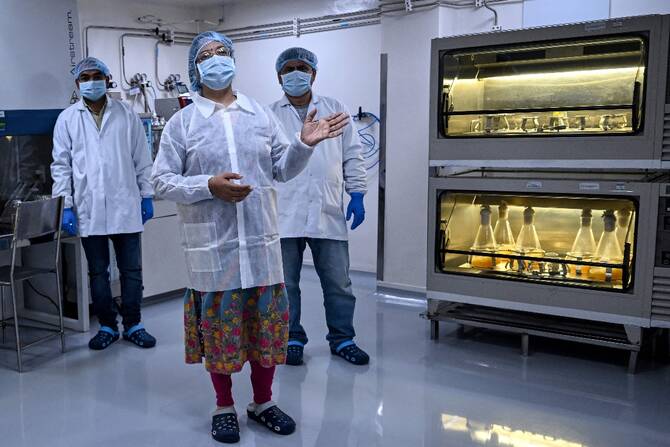
Inside the company’s research labs, doctor Priyanka Priyadarsiny, head of biological R&D, said vaccine development involves several steps, from proof-of-concept studies to regulatory checks.
“We are extremely cautious about purity, safety and adverse effects,” she said. “Only after meeting regulatory specifications can a product be considered safe for public use.”
At present, the WHO recommends only one dengue vaccine, Qdenga, produced by Japan’s Takeda for children aged six to 16 in high-transmission settings.
Qdenga, which requires two doses administered three months apart, is not currently available in India.
Ali said DengiAll could be given to people aged one to 60 and is expected to offer long-term protection.
In India, final approval would come from the Drug Controller General of India, while WHO prequalification would be required for large-scale international use.
Experts say a successful Indian-made vaccine could be key to affordability and mass rollout in lower-income countries.
Virologist and Oxford University fellow Shahid Jameel — who is not connected with the trial — warned dengue incidence could rise by 50-75 percent by 2050 under current climate change trends.
Still, he cautioned that only Phase III results would determine whether a candidate meets the criteria for a safe and effective dengue vaccine.
“Phase III testing and follow-up are needed to show if the above conditions are met,” he told AFP.
“Only then can we have a useful dengue vaccine. It is still early days, but there is hope for the future.”