

 From legacy to leadership: Honoring Saudi Foundation Day
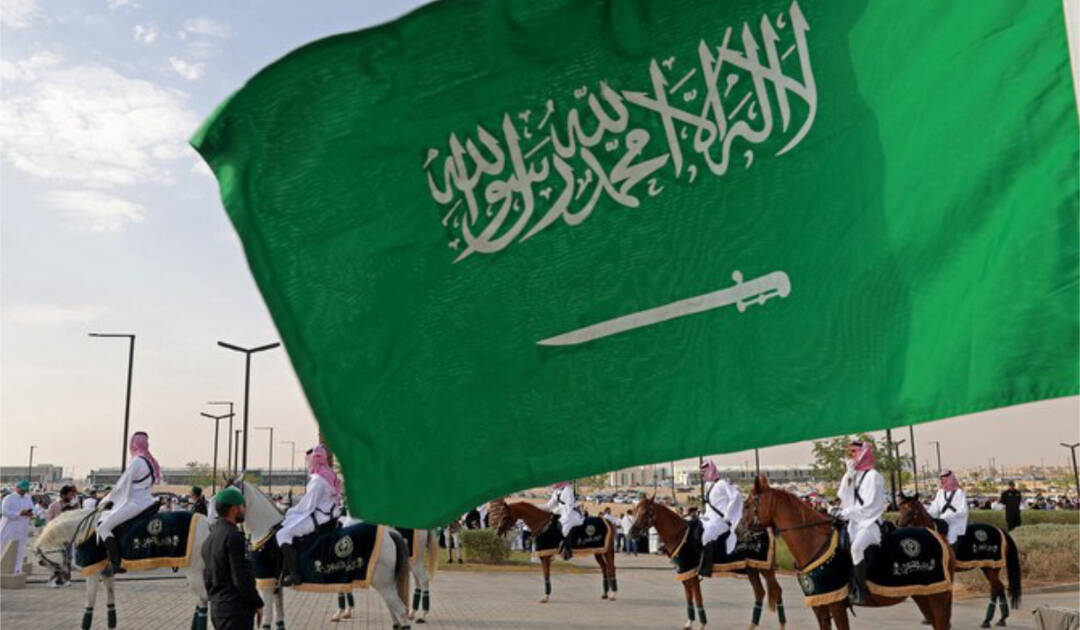

Saudi Arabia has undergone three defining historical phases that together shaped the nation known today as the Kingdom of Saudi Arabia, laying firm foundations for the security, stability and economic advancement it enjoys in the present era.
The First Saudi State, established in 1727 under the leadership of Imam Mohammed bin Saud, marked the beginning of organized governance and political unity grounded in social cohesion and shared values.
Centered in Diriyah, it laid the foundations of a stable political entity that unified communities under a clear system of leadership and shared principles. It was later followed by the Second Saudi State, established by Imam Turki bin Abdullah bin Mohammed bin Saud, which preserved the concept of unity and statehood despite regional challenges and political fluctuations, safeguarding the legacy upon which future consolidation and the emergence of the modern Saudi state would be built.
The Third Saudi State began with a defining historical moment when King Abdulaziz bin Abdulrahman bin Faisal Al-Saud recaptured Riyadh on Jan. 15, 1902. This event marked a cornerstone in the history of Saudi Arabia, as it laid the foundations for the emergence of a modern Saudi state. From this starting point, King Abdulaziz initiated a gradual process of unification that brought together most parts of the Arabian Peninsula, establishing a cohesive nation and ushering in an era of political stability and civilizational development across multiple fields.
The process of unification reached its historic culmination in 1932, when King Abdulaziz proclaimed the establishment of the Kingdom of Saudi Arabia, transforming a unified territory into a recognized modern state with defined institutions and governance structures. This declaration marked the beginning of a new phase focused on state-building, administrative organization and the consolidation of national identity under a single political framework.
Only a few years later, another transformative chapter unfolded with the discovery of oil, which reshaped the Kingdom’s economic trajectory. The first commercial shipment of Saudi oil in 1938 marked the start of a new economic era, providing the resources necessary to expand infrastructure, develop public services and accelerate modernization. Oil revenues enabled the establishment of key institutions, the growth of cities and the improvement of living standards, positioning the Kingdom as an influential economic force regionally and globally.
Today, Saudi Arabia is witnessing another transformative phase with the launch of Saudi Vision 2030 under the leadership of King Salman and Crown Prince Mohammed bin Salman.
Today, Saudi Arabia is witnessing another transformative phase with the launch of Saudi Vision 2030 under the leadership of King Salman and Crown Prince Mohammed bin Salman.
The Vision represents a structural shift toward economic diversification, human capital development and sustainable growth, aiming to expand non-oil sectors and strengthen the resilience of the national economy.
The results of this transformation have begun to materialize across multiple indicators. The size of the Saudi economy has expanded significantly, with gross domestic product growing from SR2.6 trillion ($693 billion) in 2016 to almost SR4.7 trillion by 2024, reflecting an average growth rate of about 8 percent during this period.
The National Industrial Development and Logistics Program has played a significant role in strengthening Saudi Arabia’s non-oil economy, contributing about SR986 billion to non-oil GDP in 2024. This marked a notable increase compared with the previous year and highlights the program’s growing importance in advancing the objectives of Vision 2030, particularly in diversifying the economy beyond its traditional reliance on oil.
Saudi Arabia has made a substantial advance in diversifying its economy, with non-oil activities now contributing 55.6 percent of total GDP. At the same time, the Kingdom’s reliance on oil revenues has declined from 90 percent to about 68 percent, reflecting steady progress in broadening its economic base.
Tourism has become a vital pillar of economic growth, driven by regulatory reforms, infrastructure expansion and the Kingdom’s increased openness to global visitors. In 2025, the sector achieved record performance, welcoming more than 122 million domestic and international tourists. According to preliminary estimates from the Ministry of Tourism, total tourism spending reached about SR300 billion, reflecting a 6 percent increase compared to 2024.
Building on the progress outlined above — from economic diversification and reduced reliance on oil to record-breaking growth in tourism — these achievements represent a continuation of the development journey that began with the First Saudi State, was renewed in the Second and reached its modern form in the Third Saudi State under King Abdulaziz.
Marking Feb. 22 each year as Saudi Foundation Day is therefore not only a commemoration of historical origins, but also a recognition of three centuries of state-building, resilience and transformation.
It is a reminder that today’s accomplishments are rooted in a deep historical legacy — one that continues to guide the Kingdom’s ambitions for the future.
• Talat Zaki Hafiz is an economist and financial analyst. X: @TalatHafiz


