

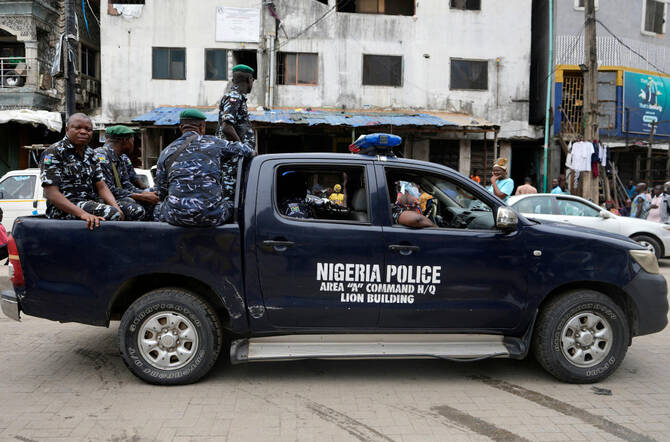

ABUJA: Armed men killed at least 38 people in the village of Dutse Dan Ajiya in Nigeria’s northwestern Zamfara State, local police and authorities told AFP Saturday.
Zamfara State, like many northern states, is plagued by insecurity from many sources, including armed gangs locally called “bandits” who loot villages and kidnap residents, and a spreading militant threat, with groups in the northwest extending their reach southward.
The latest attack occurred in the night of Thursday into Friday in the remote village, which had “few access routes” said Yazid Abubakar, spokesperson for the Zamfara police, adding: “Right now, normalcy has been restored in the area.”
According to Hamisu Faru, a local legislator, who reported 50 deaths from the attack, “the bandits came from Gando forest. They laid siege on Dutse Dan Ajiya and opened indiscriminate fire, killing any resident who tried to flee.”
Armed gangs are based in the forests straddling the states of Zamfara, Katsina, Kaduna, Sokoto, Kebbi, and Niger, from where they launch attacks on villages.
The Nigerian army has been beefing up its deployment to the region for several years to combat these groups, but the violence continues.
The rising violence by militant groups and bandits in Nigeria has drawn the attention of the United States in recent months.
US President Donald Trump, who frames much of the violence as “persecution” or even “genocide” of Christians, ordered surprise airstrikes in coordination with Nigerian authorities on Christmas Day in Sokoto State in the north.
- 40,000 dead since 2009 -
Most experts say that both Christians and Muslims have been equally affected by the violence.
Since 2009, the militant insurgency in Nigeria, led primarily by Boko Haram and its rival faction, the Daesh West Africa Province (Daesh-WAP), has left more than 40,000 dead and two million displaced in the northeast of the country, according to the UN.
The recent attack in Zamfara State came the day after attacks on seven villages in neighboring Kebbi State by the Lakurawa militant group, which killed dozens of people, according to police and a confidential security report seen by AFP.
In recent years, the emergence of Lakurawa in the northwest has exacerbated violence in the region, forcing the governments of the affected states to recruit more self-defense militias.
Some researchers link Lakurawa to the Daesh in the Sahel, which is primarily active in Mali and neighboring Niger, although others remain skeptical.
Meanwhile, Nigeria’s “bandits” gangs, primarily motivated by money, have strengthened their cooperation with militant groups.


