MEXICO CITY: The Pan American Health Organization, PAHO, on Wednesday issued a new epidemiological alert following a surge of measles cases across the Americas, with Mexico reporting the highest numbers. It also called for urgent vaccination campaigns, highlighting that 78 percent of recent cases involved unvaccinated people.
The alert follows Canada’s loss of measles-free status in November — a setback the United States and Mexico could soon mirror. While both governments have requested a two-month extension to contain their respective outbreaks, the situation is complicated by the Trump administration’s January withdrawal from the World Health Organization, the parent agency of PAHO.
Current data is discouraging; the upward trend persists with only months remaining before the 2026 FIFA World Cup kicks off across the three North American host nations.
In the first three weeks of 2026, PAHO confirmed 1,031 new measles cases across seven countries — a staggering 43-fold increase compared to the same period last year.
While no deaths have been reported thus far, the concentration remains high: Mexico leads with 740 cases, followed by the United States with 171 and Canada with 67.
The state of Jalisco, in western Mexico, has recorded the country’s highest incidence rate this year, following last year’s major outbreaks in Chihuahua and neighboring Texas.
In the United States, public health attention has shifted toward South Carolina, where cases are rising. In response, the Mexican government has spent weeks urging the public to receive the two-dose vaccine.
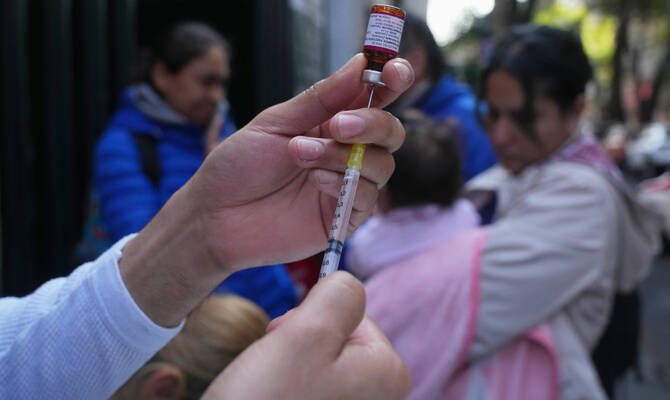
Authorities have even established mobile vaccination clinics in high-traffic hubs like airports and bus terminals, while in the capital, Mayor Clara Brugada launched 2,000 new vaccination modules this week.
“Everyone under 49 years of age, please get vaccinated,” Brugada urged on Tuesday, emphasizing that the vaccine is now accessible throughout the city. To maximize reach, the new modules are being stationed outside health centers and within major subway stations, bringing the campaign directly to the city’s busiest transit corridors.
PAHO’s alert follows a year of sustained growth in measles cases — the highest in five years — driven by a global resurgence and what the agency describes as “persistent immunization gaps.”
While adolescents and young adults account for the largest volume of cases, the highest incidence rates are striking children under the age of one. The disparity underscores a critical need to reinforce second-dose coverage.
Regional data is grim: only 33 percent of countries have reached the 95 percent threshold for the first vaccine dose, and a mere 20 percent have achieved it for the second.


![]()

Regional health organization issues alert as measles cases surge across the Americas
Short Url
https://arab.news/zwbfm
Regional health organization issues alert as measles cases surge across the Americas
- In the first three weeks of 2026, PAHO confirmed 1,031 new measles cases across seven countries — a staggering 43-fold increase compared to the same period last year


Latest updates


© 2026 SAUDI RESEARCH & PUBLISHING COMPANY, All Rights Reserved And subject to Terms of Use Agreement.