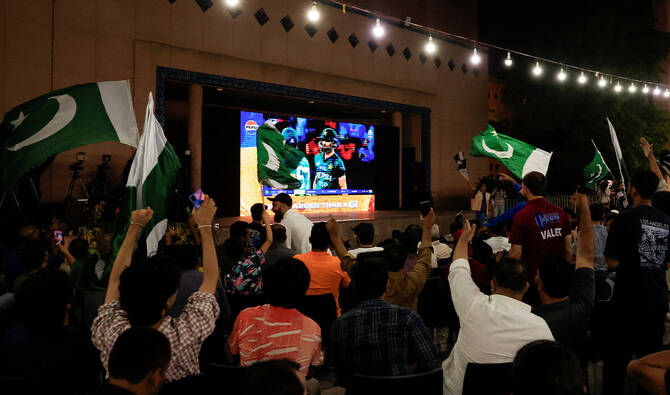

LAHORE/KARACHI: Pakistani cricket fans in major cities voiced support this week for a government-mandated boycott of a high-profile Twenty20 World Cup match against India, as the decision intensified a long-running dispute over politics, security and governance in international cricket.
Pakistan last week announced it would not play India in their scheduled Feb. 15 T20 World Cup match in Colombo, citing what officials described as India’s politicization of cricket and its refusal to engage with Pakistan in bilateral or multilateral fixtures under normal conditions.
The boycott comes amid heightened diplomatic tensions between the nuclear-armed neighbors and growing criticism in Pakistan that the International Cricket Council (ICC) has become overly influenced by India’s political and commercial interests.
The India-Pakistan rivalry is one of cricket’s most lucrative and emotionally charged, but bilateral series have been suspended for more than a decade due to political tensions. Matches between the two sides now occur almost exclusively at ICC tournaments, often under heavy security and diplomatic scrutiny.
In Lahore, fans gathered near Qaddafi Stadium and at neighborhood cricket grounds said the boycott was justified and long overdue.
“It was very necessary to boycott the match with them (India), what they did with us is before you,” cricket fan Mohammad Kashif said.
“They were defeated, and because of that defeat, they took out all their anger on the ground… So our government did absolutely right, they started it first, now we have made the decision to not play the match, it’s absolutely right.”
Others framed the decision as a response to what they see as Indian dominance in cricket governance.
“This is a very good decision in my opinion because you see India is being arrogant, and this arrogance of India should be snapped a bit,” said Mohammad Asghar, another fan in Lahore.
“They should also realize that someone has come forward to challenge them.”
The boycott has also revived debate in Pakistan over the ICC’s independence, with critics arguing that India’s economic clout, driven largely by its massive broadcast market, has tilted decision-making in New Delhi’s favor.
“This is a good decision by the government, by Pakistan, by the Pakistan Cricket Board,” said Ayaz Ahmed, referring to previous disputes involving India at Asian tournaments.
“They engage in wrongdoings. This is the right decision to boycott the match. They should know that someone can also take a stand against them.”
Pakistan’s move has drawn mixed reactions internationally, with some analysts warning that prolonged standoffs could disrupt major tournaments, while others say the episode underscores deeper structural tensions within global cricket, particularly over power, revenue distribution and political neutrality.
In Karachi, some fans expressed disappointment that politics had once again overshadowed the sport.
“I wish the government, especially the Indian government, had let cricket be, let the game be a game,” said cricket fan Niaz Ali.
“But they started imposing their politics and decisions on cricket, and especially, we’re seeing how they’re influencing ICC decisions… Pakistan’s decision is a good one.”
Others linked the boycott to broader calls within Pakistan for reforming global cricket governance.
“Pakistan’s decision to end the ICC’s monopoly is a great one,” said Kafil Ahmed.
“Now we’ll see if the government reviews or makes a decision on it in the next 8–10 days.”