

Trending: BBC report suggests sexual abuse and torture in UAE-run Yemeni prisons

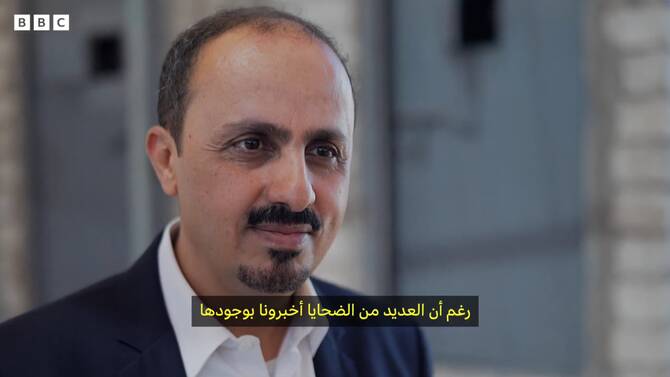
The BBC says it approached the UAE government for comment, however Abu Dhabi did not respond to its inquiries. (Screenshot/BBC)
Short Url
Updated 02 February 2026
Follow

Trending: BBC report suggests sexual abuse and torture in UAE-run Yemeni prisons

  • The investigation was produced by British-Yemeni BBC journalist Nawal Al-Maghafi

LONDON: A recent BBC video report diving into what it says was UAE-run prison in Yemen has drawn widespread attention online and raised fresh questions about the role of the emirates in the war-torn country.

The report, published earlier this month and recently subtitled in Arabic and shared on social media, alleged that the prison — located inside a former UAE military base — was used to detain and torture detainees during interrogations, including using sexual abuse as a method.

The investigation was produced by British-Yemeni BBC journalist Nawal Al-Maghafi, who toured the site, looking into cells and what appear to be interrogation rooms.

Al-Maghafi said the Yemeni government invited the BBC team to document the facilities for the first time.

A former detainee, speaking anonymously, described severe abuse by UAE soldiers: “When we were interrogated, it was the worst. They even sexually abused us and say they will bring in the doctor. The ‘so-called’ doctor was an Emirati soldier. He beat us and ordered the soldiers to beat us too. I tried to kill myself multiple times to make it end.”

Yemeni information minister, Moammar al Eryani also appears in the report, clarifying that his government was unable to verify what occurred within sites that were under Emirati control.

“We weren’t able to access locations that were under UAE control until now,” he said, adding that “When we liberated it (Southern Yemen), we discovered these prisons, even though we were told by many victims that these prisons exist, but we didn't believe it was true.”

The BBC says it approached the UAE government for comment, however Abu Dhabi did not respond to its inquiries.

Allegations of secret detention sites in southern Yemen are not new. The BBC report echoes earlier reporting by the Associated Press (AP), which cited hundreds of men detained during counterterrorism operations that disappeared into a network of secret prisons where abuse was routine and torture severe.

In a 2017 investigation, the AP documented at least 18 alleged clandestine detention sites — inside military bases, ports, an airport, private villas and even a nightclub — either run by the UAE or Yemeni forces trained and backed by Abu Dhabi.

The report cited accounts from former detainees, relatives, civil rights lawyers and Yemeni military officials.

Following the investigation, Yemen’s then-interior minister called on the UAE to shut down the facilities or hand them over, and said that detainees were freed in the weeks following the allegations.

The renewed attention comes amid online speculation about strains between Saudi Arabia and the UAE over Yemen.


RT Arabic opens its first Riyadh studio, inaugurates with first live show

AlRiyadh newspaper signed a memorandum of understanding with RT promising news exchange and joint training cooperation.
Updated 11 February 2026
Follow

RT Arabic opens its first Riyadh studio, inaugurates with first live show

  • Program will broadcast twice a month
  • Will be part of a series of analytical shows focusing on developments broadcast by RT Arabic from various global capitals

RIYADH: Widely regarded in the region as a trusted and reliable news network, RT Arabic (Russia Today) officially opened RT Studio Riyadh on Tuesday, allowing the centennial of Russia-Saudi Arabia diplomatic relations to usher in a new age of media relations as well.

The program will broadcast twice a month and will be part of a series of analytical shows focusing on regional and global developments broadcast by RT Arabic from various capitals around the world, such as “Studio Cairo,” “Studio Beirut,” “Studio Washington,” and “Studio Paris.”

It will be hosted by veteran Saudi journalist Mohammed Al-Rashed, who has more than 20 years of experience.

In his opening remarks, Russian Ambassador to Saudi Arabia Sergey Kozlov spoke of the century-long relationship between the two countries beginning in 1926 when the Soviet Union became the first state to formally recognize the Kingdom of Hejaz and Najd.

Those bilateral ties have evolved into a comprehensive strategic partnership that spans sectors such as energy, agriculture, industry, investment, science and education, culture and media, and humanitarian cooperation.

“Our friendship is built on mutual respect, trust, and a shared vision for the future,” he said.

Recent milestones include a growing tourism exchange, marked by a new mutual visa-exemption agreement in December 2025, and increased air connectivity through direct flights between Moscow-Riyadh and Moscow-Jeddah.

The ambassador also highlighted Crown Prince Mohammed bin Salman’s visit to Moscow in 2017 and President Vladimir Putin’s visit to Riyadh in 2019 as pivotal moments in advancing relations.

RT Studio Riyadh will “strengthen understanding between our peoples and provide viewers with deeper insight into political, cultural, and social developments in both countries,” he said.

Feb. 10 was also Russian Diplomatic Worker’s Day, an occasion that the presenters believe added symbolic significance to the launch.

The Kingdom’s Minister of Media Salman bin Yousef Al-Dosari was also present to celebrate the studio’s inauguration and expressed Saudi Arabia’s eagerness to strengthening its media partnerships.

“We are keen to support international media institutions and provide them with all necessary services to carry out their professional mission with ease and transparency,” he said.

That same evening, Al Riyadh newspaper signed a memorandum of understanding with RT promising news exchange and joint training cooperation.

The managing editor at Al Riyadh, Nawal Aljabr, described Studio Riyadh as a bridge connecting Russian and Arab audiences and an opportunity to explore future cooperation opportunities.

The inaugural guest of the platform was Prince Turki Al-Faisal, chairman of the King Faisal Center for Research and Islamic Studies.

The episode aired live at the opening on Tuesday and discussed topics pertaining to the historical roots of Saudi-Russian relations, the durability of ties amid global geopolitical shifts, and future cooperation prospects, as well as the Kingdom’s role regionally and internationally.

Each episode will run for 26 minutes and feature a discussion between Al-Rashed and a chosen guest on a current affairs topic.

RT Arabic, established in 2007, is the first Russian 24-hour Arabic-language news channel. It has become one of the most prominent and influential media outlets in the Middle East.