

Pakistan saw 143% rise in civilian deaths from militant attacks in Jan. — report

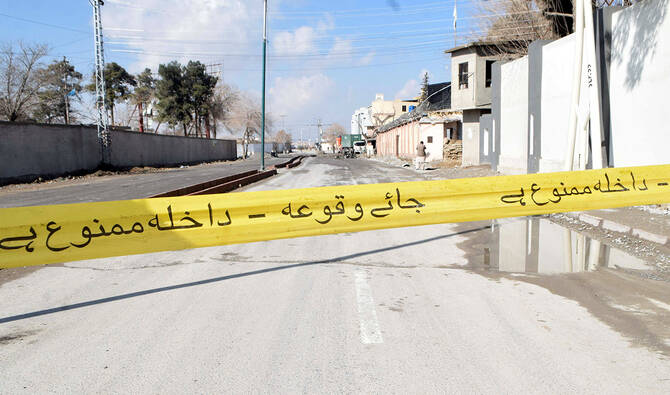
A road leading to a site is cordoned off, after militant attacks, in Quetta, Pakistan, February 1, 2026. (REUTERS)
Short Url
Updated 02 February 2026
Follow

Pakistan saw 143% rise in civilian deaths from militant attacks in Jan. — report

  • Pakistan witnessed 87 militant attacks in Jan., with 38 in Khyber Pakhtunkhwa and 27 in Balochistan
  • The report follows coordinated bomb and gun attacks in Balochistan that killed more than 200 people

KARACHI: Pakistan witnessed a 143 percent increase in civilian casualties in the month of January, compared to the previous month, an Islamabad-based think tank said on Monday, with the country’s restive Khyber Pakhtunkhwa and Balochistan provinces experiencing the highest number of incidents.

The surge in attacks comes amid a resurgence of militant activity in Pakistan’s northwestern and southwestern regions bordering Afghanistan, where security forces have been confronting multiple groups such as the Tehreek-e-Taliban Pakistan (TTP) and the separatist Baloch Liberation Army (BLA). Islamabad has often accused Kabul of allowing militants to operate from Afghan soil and New Delhi of backing these groups, allegations they both deny.

Pakistan saw a 28 percent increase in militant attacks, with 87 incidents across the country in January, the Islamabad-based Pakistan Institute for Conflict and Security Studies (PICSS) said in its report. Of these, 38 attacks took place in Khyber Pakhtunkhwa, 27 in Balochistan and two in the Punjab province.

“A total of 361 people were killed during the month, including 242 militants, 73 civilians, and 46 security force personnel,” PICSS said in its report.

“Compared to the previous month, civilian deaths increased by 143 percent, militant deaths by 35 percent, and security force fatalities by seven percent,” it continued.

“Balochistan emerged as the primary theater of both militant activity and security force operations.”

The report follows coordinated bomb and gun attacks across multiple cities in Balochistan, according to officials. The attacks killed at least 177 militants, 31 civilians and 17 security personnel.

The PICSS report said that 71 civilians, 52 security personnel, and 12 militants were also injured in attacks, while around 60 suspected militants were arrested in Jan. The country witnessed three suicide attacks last month, it added.

“No militant attacks were reported during January from Sindh, Azad Jammu and Kashmir, Islamabad, or Gilgit-Baltistan,” the report added.


Rating firm S&P says it won’t rush Iran war downgrades, sees risks for countries like Pakistan

Updated 12 March 2026
Follow

Rating firm S&P says it won’t rush Iran war downgrades, sees risks for countries like Pakistan

  • Agency says it is monitoring indebted energy importers as higher oil prices strain finances
  • Gulf economies seen better placed to weather shock, though Bahrain flagged as vulnerable

LONDON: S&P Global ‌said it would not make any knee-jerk sovereign rating cuts following the outbreak of war in the ​Middle East, but warned on Thursday that soaring oil and gas prices were putting a number of already cash-strapped countries at risk.

The firm’s top analysts said in a webinar that the conflict, which has involved US and Israeli strikes ‌against Iran and Iranian ‌strikes against Israel, ​US ‌bases ⁠and Gulf ​states, ⁠was now moving from a low- to moderate-risk scenario.

Most Gulf countries had enough fiscal buffers, however, to weather the crisis for a while, with more lowly rated Bahrain the only clear exception.

Qatar’s banking sector could ⁠also struggle if there were significant ‌deposit outflows in ‌reaction to the conflict, although there ​was no evidence ‌of such strains at the moment, they ‌said.

“We don’t want to jump the gun and just say things are bad,” S&P’s head global sovereign analyst, Roberto Sifon-Arevalo, said.

The longer the crisis ‌was prolonged, though, “the more difficult it is going to be,” he ⁠added.

Sifon-Arevalo ⁠said Asia was the second-most exposed region, due to many of its countries being significant Gulf oil and gas importers.

India, Thailand and Indonesia have relatively lower reserves of oil, while the region also had already heavily indebted countries such as Pakistan, Bangladesh and Sri Lanka whose finances would be further hurt by rising energy prices.

“We ​are closely monitoring ​these (countries) to see how the credit stories evolve,” Sifon-Arevalo said.
