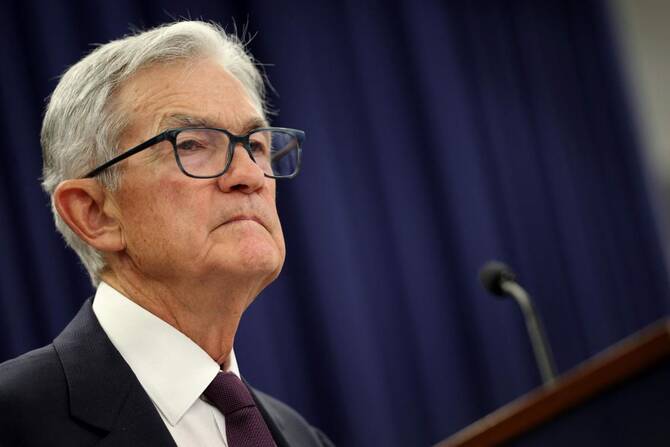
WASHINGTON: President Donald Trump said on Thursday he intends to announce his pick to replace Federal Reserve Chair Jerome Powell on Friday, with speculation intensifying that the nod will go to former Fed Governor Kevin Warsh.
“I’ll be announcing the Fed chair tomorrow morning,” Trump said at the Kennedy Center on Thursday, in response to a question.
The pick is “a person that won’t be too surprising to people. A lot of people think that this is somebody that could have been there a few years ago. It’s going to be somebody that is very respected, somebody that’s known to everybody in the financial world.”
Bloomberg News later reported that the White House is preparing for Trump to nominate Warsh, citing people familiar with the matter.
Warsh went to the White House for a meeting with Trump on Thursday, according to one source familiar with the matter.
A second source, briefed on the discussion, said the former Fed governor impressed Trump, adding that nothing was final until Trump announced his pick.
Trump wants the Fed to cut interest rates deeply. His escalating pressure on Powell and the Fed for cuts has given rise to the possibility that Powell might remain at the Fed beyond May to try to safeguard the Fed from further political pressure. Powell’s separate term as a member of the Board of Governors runs to 2028.
The Fed, which cut rates three times in 2025, left its benchmark interest rate unchanged in the 3.50 percent-3.75 percent range after the end of a two-day policy meeting on Wednesday. Trump says the rate should be two to three percentage points lower, a level historically consistent with a stalled or faltering economy. The economy grew at a 4.4 percent annualized rate in the third quarter, according to Commerce Department data. Over the course of the Trump administration’s months-long search for Powell’s successor, the president has been seen to favor different candidates, even as he has ramped up his campaign to exert influence over the Fed, whose independence from political pressure is seen as key to its ability to control inflation. In recent months Trump has tried to fire a Fed governor in a case now before the Supreme Court, and his Justice Department has opened a criminal investigation into Powell over cost overruns for renovations at the Fed’s headquarters in Washington — a move the Fed chief has called out as a “pretext” to pressure him over monetary policy.
Four candidates on Trump’s short list
All candidates to take the reins from Powell agree with Trump that rates should be lower. That was one of the president’s explicit criteria for his pick.
On Thursday, Warsh leapt to the top of betting sites’ favorites as a contender for the job, with pricing at prediction markets Polymarket and Kalshi both putting his chances at more than 80 percent.
Warsh has called for regime change at the central bank and wants, among other things, a smaller Fed balance sheet, a goal seemingly at odds with Trump’s preference for looser monetary policy. Trump almost picked Warsh in 2018 for the top Fed job, but chose Powell instead, a decision the president has publicly and loudly regretted for much of the time since then.
Rick Rieder, chief investment officer of BlackRock’s global fixed income business, had as recently as Wednesday been the odds-on favorite to be Trump’s nominee. Rieder, who has never worked in government or at the Fed, would bring a fresh face to an institution that the president accuses of entrenched political bias. Fed Governor Christopher Waller, one of two policymakers who dissented this week in the central bank’s decision to keep rates unchanged, is also in the running. He was the first Fed policymaker to make the economic case for lower rates, saying that tariffs wouldn’t cause inflation and the economy needed the support, both arguments that have won over many of his colleagues and helped seal support for the rate cuts last year.
White House economic adviser Kevin Hassett was an early front-runner for the job but is now seen as an unlikely choice after Trump said he would rather keep him in his current post. Hassett is an economist and unapologetic cheerleader for many of the president’s orthodox-defying policies, including high tariffs and an immigration crackdown.

Trump to announce Federal Reserve chair pick Friday after meeting Kevin Warsh
Short Url
https://arab.news/b5cz6
Trump to announce Federal Reserve chair pick Friday after meeting Kevin Warsh
- All four candidates for top Fed job support lower interest rates
- BlackRock’s Rick Rieder, Fed Governor Christopher Waller also on short list
Trump administration reaches a trade deal to lower Taiwan’s tariff barriers
- The gap reached nearly $127 billion in the first 11 months of 2025. US officials attended the signing through the American Institute in Taiwan
- The deal comes ahead of President Donald Trump’s planned visit to China in April and suggests a deepening economic relationship between the US and Taiwan
WASHINGTON: The Trump administration reached a trade deal with Taiwan on Thursday, with Taiwan agreeing to remove or reduce 99 percent of its tariff barriers, the office of the US Trade Representative said.
The agreement comes as the US remains reliant on Taiwan for its production of computer chips, the exporting of which contributed to a trade imbalance of nearly $127 billion during the first 11 months of 2025, according to the Census Bureau.
Most of Taiwan’s exports to the US will be taxed at a 15 percent rate, the USTR’s office said. The 15 percent rate is the same as that levied on other US trading partners in the Asia-Pacific region, such as Japan and South Korea.
Trade Representative Jamieson Greer and Commerce Secretary Howard Lutnick attended the signing of the reciprocal agreement, which occurred under the auspices of the American Institute in Taiwan and the Taipei Economic and Cultural Representative Office in the United States. Taiwan’s Vice Premier Li-chiun Cheng and its government minister Jen-ni Yang also attended the signing.
“President Trump’s leadership in the Asia-Pacific region continues to generate prosperous trade ties for the United States with important partners across Asia, while further advancing the economic and national security interests of the American people,” Greer said in a statement.
The Taiwanese government said in a statement that the tariff rate set in the agreement allows its companies to compete on a level field with Japan, South Korea and the European Union. It also said the agreement “eliminated” the disadvantage from a lack of a free trade agreement between Taiwan and the US
The deal comes ahead of President Donald Trump’s planned visit to China in April and suggests a deepening economic relationship between the US and Taiwan.
Taiwan is a self-ruled democracy that China claims as its own territory, to be annexed by force if necessary. Beijing prohibits all countries it has diplomatic relations with — including the US — from having formal ties with Taipei.
Cheng said Taiwan hopes the agreement will make it a strategic partner with the US “so as to jointly consolidate the democratic camp’s leading position in high technology.”
The agreement would make it easier for the US to sell autos, pharmaceutical drugs and food products in Taiwan. But the critical component might be that Taiwanese companies would invest in the production of computer chips in the US, possibly helping to ease the trade imbalance.
In a separate but related deal, Taiwan will make investments of $250 billion in US industries, such as computer chips, artificial intelligence applications and energy. The Taiwanese government says it will provide up to an additional $250 billion in credit guarantees to help smaller businesses invest in the US
The investments helped enable the US to reduce its planned tariffs from as much as 32 percent initially to 15 percent.
Taiwan’s government said it will submit the reciprocal trade deal and investment plans to its legislature for approval.
In Taipei, President Lai Ching-te told reporters that Taiwan had agreed to reduce tariffs on imports from the US but stressed that the rate on 93 items would remain unchanged to protect important agriculture and industrial sectors such as rice farming.
The US side said the deal with Taiwan would help create several “world-class” industrial parks in America in order to help build up domestic manufacturing of advanced technologies such as chips. The Commerce Department in January described it as “a historic trade deal that will drive a massive reshoring of America’s semiconductor sector.”
In return, the US would give preferential treatment to Taiwan regarding the possible tariffs stemming from a Section 232 investigation of the importing of computer chips and semiconductor manufacturing equipment.
TSMC, the chip-making giant, is expected to be the key investor. It has committed to $165 billion in investments in the US, including not only fabrication plants but also a major research and development center that would help build a supply chain to power US artificial intelligence ambitions. Major US tech companies such as Nvidia and AMD rely on TSMC for manufacturing highly advanced chips.
When asked whether investing in the US would endanger Taiwan’s most advanced industries, Lai said: “Whether it’s TSMC or other industries, as long as their R&D centers are in Taiwan, their advanced manufacturing processes are in Taiwan and their largest production volume is in Taiwan, Taiwan can continue to develop steadily.”
Taiwan said the investments will be two-way, with US companies also investing in key Taiwanese industries. Nvidia this week signed a land deal in Taipei to build a headquarters office there.
The agreement comes as the US remains reliant on Taiwan for its production of computer chips, the exporting of which contributed to a trade imbalance of nearly $127 billion during the first 11 months of 2025, according to the Census Bureau.
Most of Taiwan’s exports to the US will be taxed at a 15 percent rate, the USTR’s office said. The 15 percent rate is the same as that levied on other US trading partners in the Asia-Pacific region, such as Japan and South Korea.
Trade Representative Jamieson Greer and Commerce Secretary Howard Lutnick attended the signing of the reciprocal agreement, which occurred under the auspices of the American Institute in Taiwan and the Taipei Economic and Cultural Representative Office in the United States. Taiwan’s Vice Premier Li-chiun Cheng and its government minister Jen-ni Yang also attended the signing.
“President Trump’s leadership in the Asia-Pacific region continues to generate prosperous trade ties for the United States with important partners across Asia, while further advancing the economic and national security interests of the American people,” Greer said in a statement.
The Taiwanese government said in a statement that the tariff rate set in the agreement allows its companies to compete on a level field with Japan, South Korea and the European Union. It also said the agreement “eliminated” the disadvantage from a lack of a free trade agreement between Taiwan and the US
The deal comes ahead of President Donald Trump’s planned visit to China in April and suggests a deepening economic relationship between the US and Taiwan.
Taiwan is a self-ruled democracy that China claims as its own territory, to be annexed by force if necessary. Beijing prohibits all countries it has diplomatic relations with — including the US — from having formal ties with Taipei.
Cheng said Taiwan hopes the agreement will make it a strategic partner with the US “so as to jointly consolidate the democratic camp’s leading position in high technology.”
The agreement would make it easier for the US to sell autos, pharmaceutical drugs and food products in Taiwan. But the critical component might be that Taiwanese companies would invest in the production of computer chips in the US, possibly helping to ease the trade imbalance.
In a separate but related deal, Taiwan will make investments of $250 billion in US industries, such as computer chips, artificial intelligence applications and energy. The Taiwanese government says it will provide up to an additional $250 billion in credit guarantees to help smaller businesses invest in the US
The investments helped enable the US to reduce its planned tariffs from as much as 32 percent initially to 15 percent.
Taiwan’s government said it will submit the reciprocal trade deal and investment plans to its legislature for approval.
In Taipei, President Lai Ching-te told reporters that Taiwan had agreed to reduce tariffs on imports from the US but stressed that the rate on 93 items would remain unchanged to protect important agriculture and industrial sectors such as rice farming.
The US side said the deal with Taiwan would help create several “world-class” industrial parks in America in order to help build up domestic manufacturing of advanced technologies such as chips. The Commerce Department in January described it as “a historic trade deal that will drive a massive reshoring of America’s semiconductor sector.”
In return, the US would give preferential treatment to Taiwan regarding the possible tariffs stemming from a Section 232 investigation of the importing of computer chips and semiconductor manufacturing equipment.
TSMC, the chip-making giant, is expected to be the key investor. It has committed to $165 billion in investments in the US, including not only fabrication plants but also a major research and development center that would help build a supply chain to power US artificial intelligence ambitions. Major US tech companies such as Nvidia and AMD rely on TSMC for manufacturing highly advanced chips.
When asked whether investing in the US would endanger Taiwan’s most advanced industries, Lai said: “Whether it’s TSMC or other industries, as long as their R&D centers are in Taiwan, their advanced manufacturing processes are in Taiwan and their largest production volume is in Taiwan, Taiwan can continue to develop steadily.”
Taiwan said the investments will be two-way, with US companies also investing in key Taiwanese industries. Nvidia this week signed a land deal in Taipei to build a headquarters office there.
© 2026 SAUDI RESEARCH & PUBLISHING COMPANY, All Rights Reserved And subject to Terms of Use Agreement.