



LAHORE: In a sunlit courtyard at Tollinton Market, a colonial-era building off Lahore’s Mall Road, Ustaad Saleem-ud-Din bent over a thin sheet of colored paper, fixed the bamboo spine and adjusted the cross-spar as he patiently taught a group of students how to make their first kite.
Scenes like this have been rare in Lahore for nearly two decades. With the return of Basant, the city’s spring kite-flying festival, artisans and cultural groups are now trying to revive kite-making not just as a seasonal pastime, but as a fading craft that once supported thousands of livelihoods and defined Lahore’s cultural identity.
The festival was banned nearly 20 years ago after dozens of people were killed or injured by metallic or chemically coated kite strings, which posed serious risks to pedestrians and motorcyclists. The ban dismantled a largely informal, home-based economy tied to kite-making, forcing many skilled craftsmen to abandon a trade passed down through generations.
The Punjab government is now set to hold the kite-flying festival once again on Feb. 6-8, 2026, for the first time since 2007.
“Now that Basant has opened again, I am very happy,” Din told Arab News. “Lahore has got its culture back.”
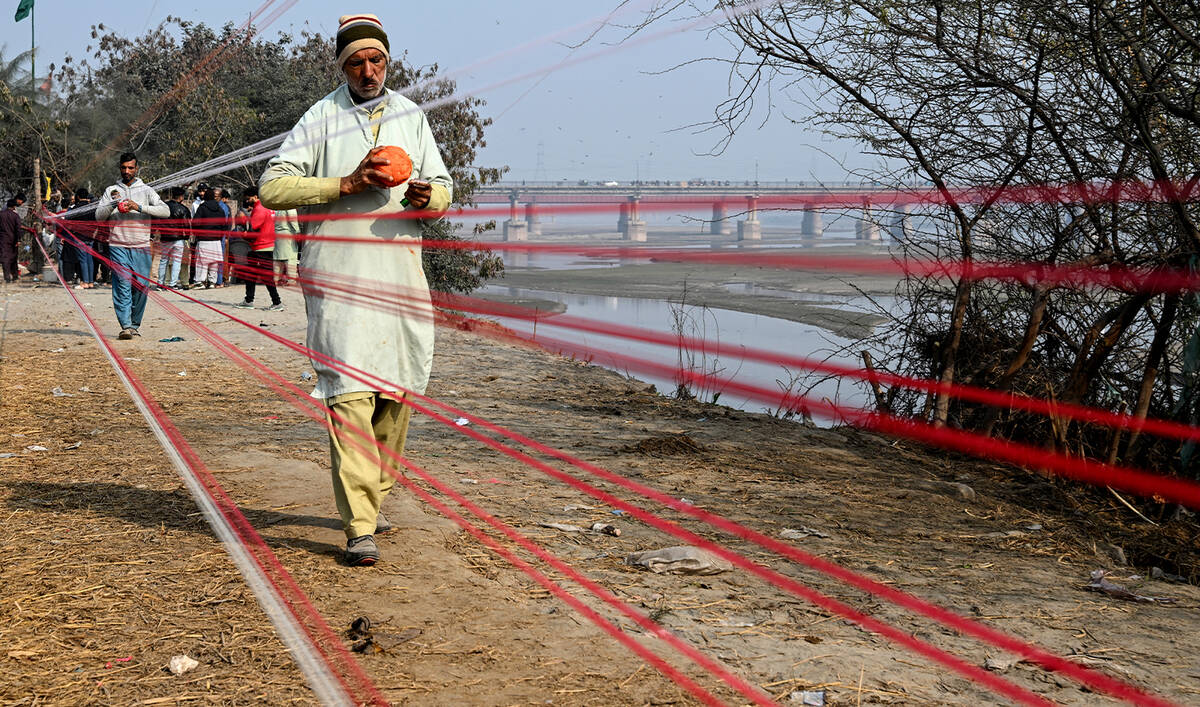
A man applies coats of glass powder to kite strings ahead of the Basant Festival in Lahore on January 18, 2026. (AFP)
Din, who has 45 years of experience in kite-making, said the ban had forced him to give up the craft and sell fruit on a pushcart to survive.
But last week, he led a workshop organized by Lahore Ka Ravi, a platform known for heritage walks, storytelling sessions and immersive events exploring the city’s forgotten crafts and traditions. For its founder, Ghazi Taimoor, the aim was to reconnect people with the skill and memory behind kite-making.
“For nearly two decades, Lahore has been deprived of one of its most beautiful traditions,” Taimoor said. “Basant is how Lahoris welcome spring. As winter ends, you see yellow everywhere: on rooftops, in the skies and in the spirit of the city.”
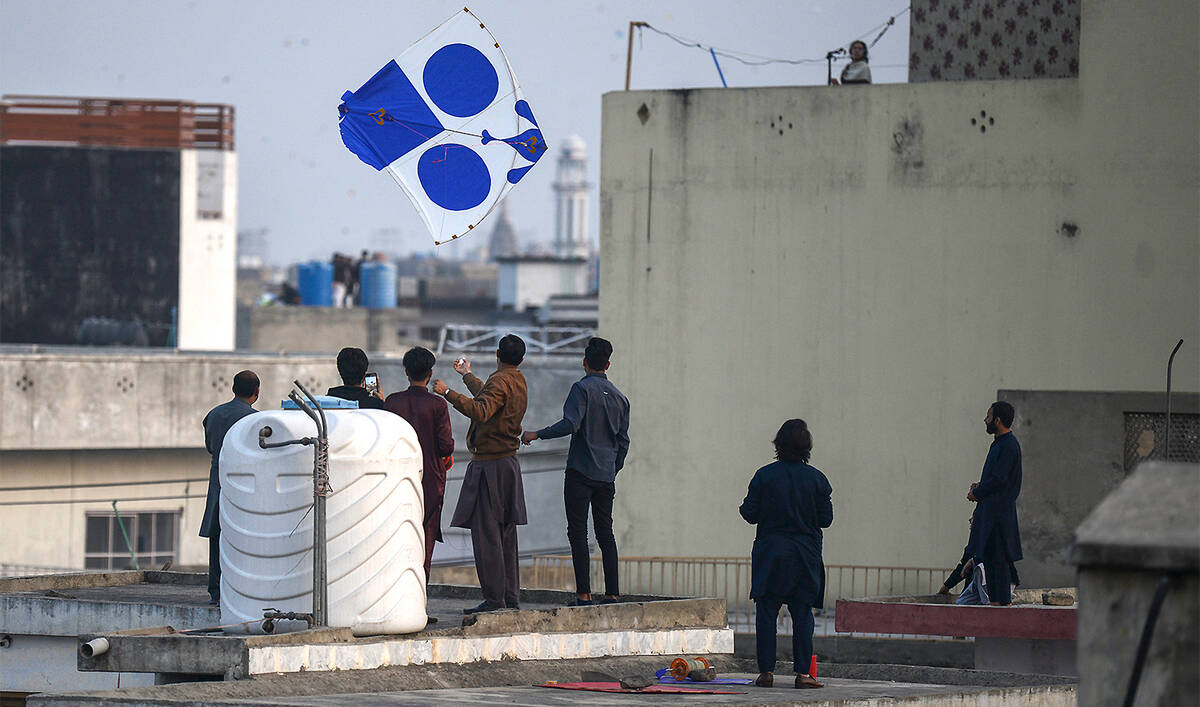
Youths fly kites on a rooftop during the Basant Kite Festival despite a ban imposed by authorities in 2007 following a spate of accidents, in Rawalpindi on February 18, 2022. (AFP/File)
The workshop brought together people who had lived Basant in its heyday and a younger generation that had only heard stories about it.
“An entire generation had never seen Basant,” Taimoor said. “Here, older generations are celebrating, while the younger ones are curious about all the hype.”
Fiza Jafri, a researcher associated with the organization, said involving veteran artisans was central to the workshop’s purpose.
“We wanted people to experience authentic kite-making, to understand what a patang [type of kite] is, how it’s made, and why it matters,” she said. “Before celebrating, it was important to go into its history and understand it.”
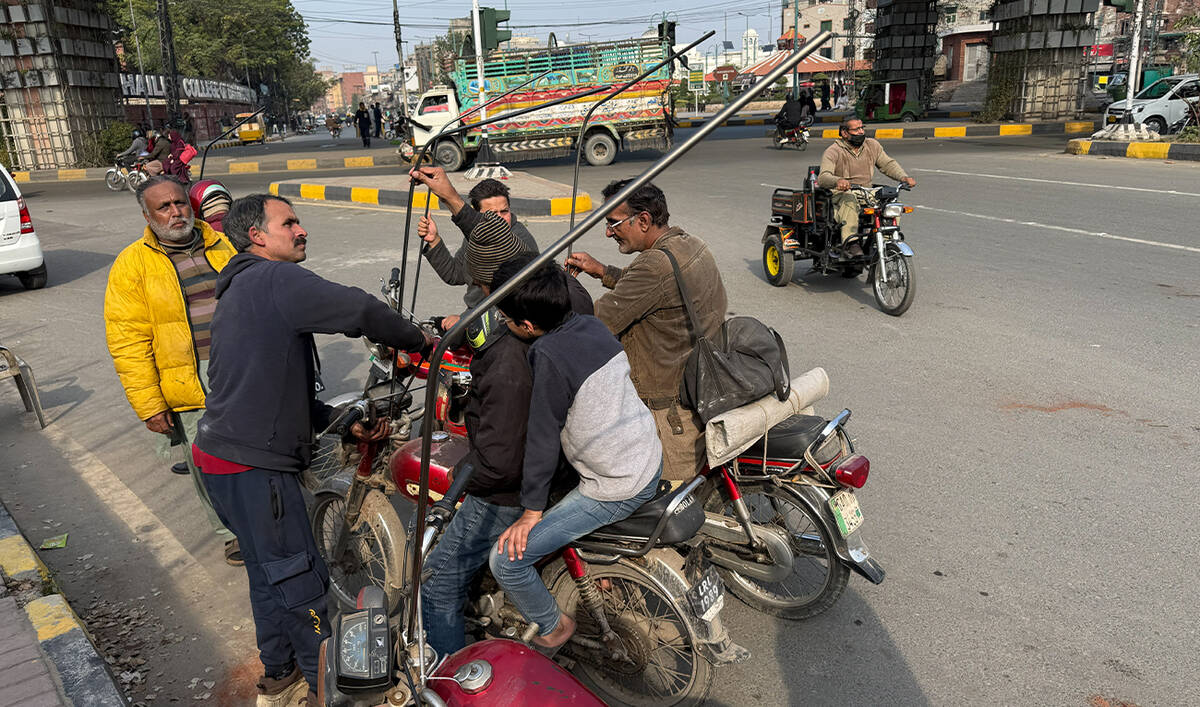
Commuters are installing metal rods on their motorcycles in Lahore, Pakistan, on January 26, 2026. (AN photo)
For many participants, the workshop was their first hands-on encounter with a craft they knew only through family stories.
Sheharyar Malik, an Erasmus Mundus scholar, said the festival’s return stirred mixed emotions.
“There’s excitement, but also a sense of loss,” he said. “The skills weren’t passed down in the same way.”
Industry groups say the revival of kite-making could also restore livelihoods if managed carefully.
Muhammad Ali Khokhar, president of the Punjab Safe Kite Flying Association, said the provincial administration was interested in regularizing the festival and had discussed allowing kite-flying activity year-round.
“Kite-making, particularly involving smaller kites, had historically been home-based work mostly done by women, young girls and people with disabilities,” he said. “The revival of Basant could help restore livelihoods for these people if properly regulated.”
“If this work restarts properly, people will give you blessings,” said Ustaad Javed Bhatti, a kite-maker from the Lohari Gate area of Lahore’s Walled City, who said he was forced out of work due to the ban.
This year, kite-flying activities are taking place under an extensive safety plan. Authorities in Punjab have distributed one million safety rods among motorcyclists through 100 designated points across Lahore, with spending exceeding Rs110 million ($392,000), according to local media reports.
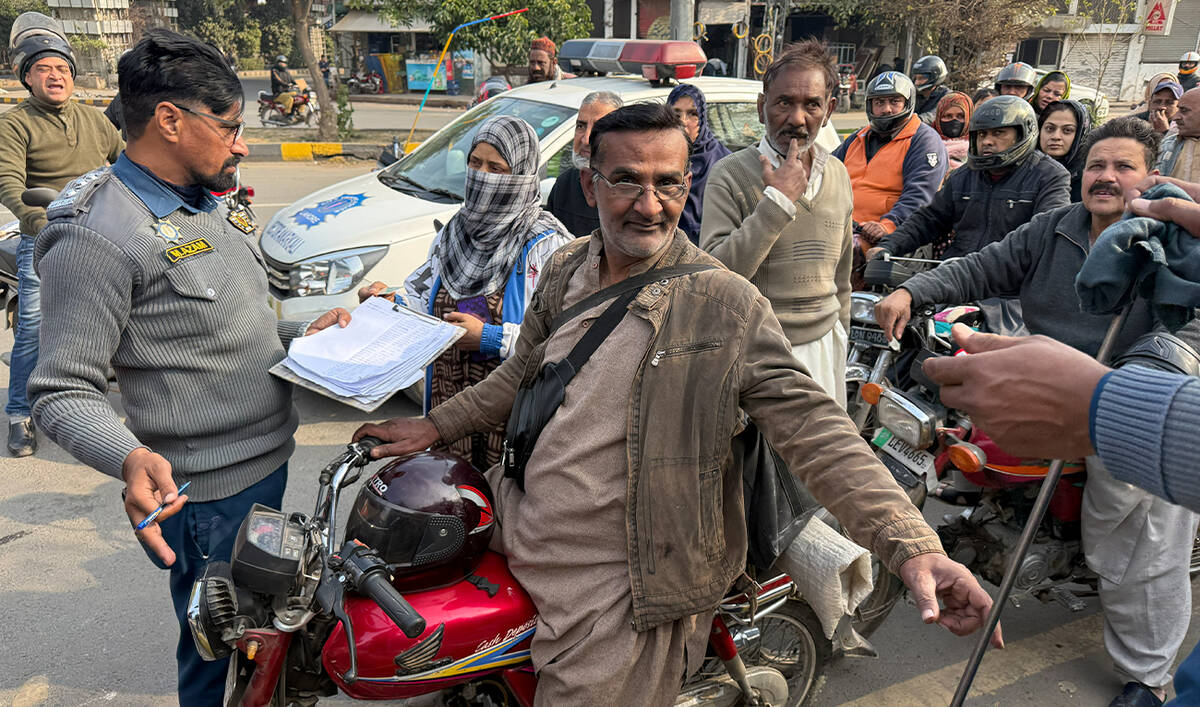
Police distribute metal rods to motorcyclists in Lahore, Pakistan, on January 26, 2026. (AN photo)
To enforce regulations and manage traffic flow, around 100 road safety camps have been set up, staffed by teams from the district administration, traffic police and rescue services. The Punjab government has also launched a free shuttle service, deploying 695 buses across the city to reduce congestion.
For some younger Lahoris, the experience of basant and kite-making is entirely new.
“I’ve only heard stories about Basant,” Zahra Hussain, 20, said, holding a kite she had made herself at the workshop. “I’m really excited to finally see it.”
Parents at the event also welcomed the renewed interest in local traditions.
“There’s so much Western influence in what children consume,” said educationist Ayesha Kasuri. “This festival allows them to connect with their city and heritage.”


