

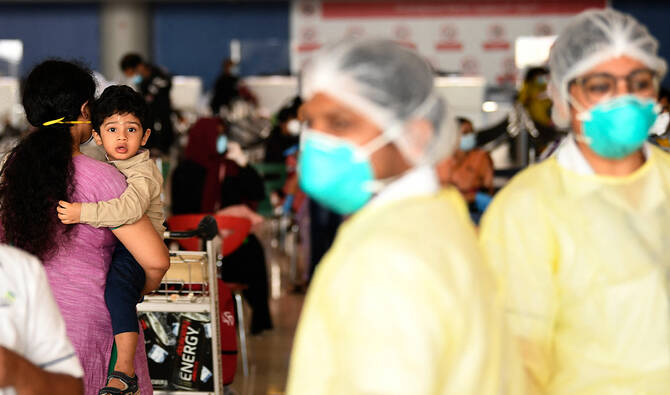

ISLAMABAD: The Border Health Services-Pakistan (BHS-P) on Wednesday issued an advisory ordering the screening of all passengers at the country’s entry points to curb the cross-border spread of Nipah virus.
An outbreak of the Nipah virus in India’s West Bengal state has sparked concern in Asian countries such as Thailand and Indonesia, who have started screening passengers. Two cases have been confirmed in India’s West Bengal since December, reportedly in health care workers.
Nipah, a zoonotic virus first identified during a 1990s outbreak in Malaysia, spreads through fruit bats, pigs and human-to-human contact. There is no vaccine for the virus, which can cause raging fevers, convulsions and vomiting. The only treatment is supportive care to control complications and keep patients comfortable.
The BHS-P, a department of the Ministry of National Health Services, issued an advisory on Wednesday saying that the outbreak of the virus in India had made it imperative to strengthen preventive and surveillance measures at borders.
“All In-Charges at Points of Entry shall ensure 100 percent screening of all arriving passengers, transit passengers, crew members, drivers, helpers, and support staff,” a copy of the advisory seen by Arab News read.
“No individual shall be allowed entry into Pakistan without health clearance by Border Health Services – Pakistan.”
It said these measures will be applicable at all points of entry, including international airports, seaports and ground or land border crossings.
The BHS-P said mandatory verification of every traveler’s country of origin and complete travel and transit history for the preceding 21 days will be carried out, irrespective of their nationality or travel status.
“Screening staff shall remain alert for early signs and symptoms of Nipah virus infection, including fever, headache, respiratory symptoms, and neurological signs such as confusion, drowsiness, or altered consciousness,” the advisory said.
It added that individuals “consistent with suspected Nipah Virus case definition” will be immediately isolated at the entry point, restricted from onward movement and managed strictly in accordance with the Infection Prevention and Control (IPC) protocols.
“Such suspected cases shall be promptly referred to the designated isolation facility or tertiary care hospital in coordination with provincial and district health authorities,” it said.


