Libya to sign 25-year oil deal with TotalEnergies and ConocoPhillips

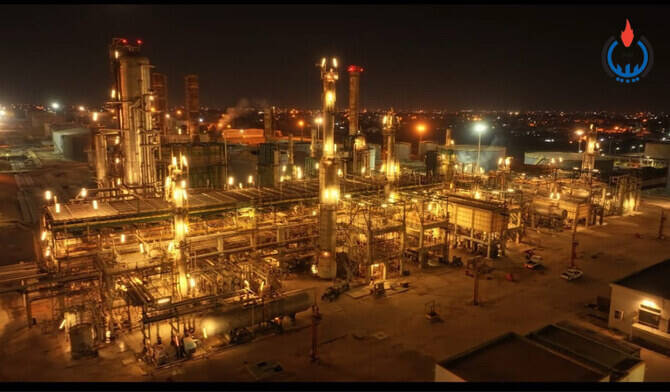
Libya will sign a 25-year oil development agreement on Saturday with France’s TotalEnergies and US-based ConocoPhillips, involving more than $20 billion in foreign-financed investment, Prime Minister Abdulhamid Al-Dbeibah said. (X: @NOC_Libya)
Short Url
Updated 24 January 2026
Follow

Libya to sign 25-year oil deal with TotalEnergies and ConocoPhillips

  • Signed through Waha Oil Company, the deal is aimed at boosting production capacity
  • The company’s daily output typically ranges between 340,000 and 400,000 bpd

TRIPOLI: Libya will sign a 25-year oil development agreement on Saturday with France’s TotalEnergies and US-based ConocoPhillips, involving more than $20 billion in foreign-financed investment, Prime Minister Abdulhamid Al-Dbeibah said.
Signed through Waha Oil Company, the deal is aimed at boosting production capacity by up to 850,000 barrels per day (bpd) and is expected to generate ‌net revenues ‌of more than $376 billion, ‌Dbeibah ⁠said in a ‌post on X.
A Waha source said the company’s daily output typically ranges between 340,000 and 400,000 bpd under normal operations.
Waha, a subsidiary of Libya’s state-run National Oil Corporation, operates five main oil and gas ⁠fields as well as several producing subfields, connected by ‌pipeline networks that transport crude ‍to the Sidra ‍oil terminal and gas to processing facilities.
Dbeibah ‍said Libya will also sign a memorandum of understanding with US oil major Chevron and a cooperation agreement with Egypt’s oil ministry.
The deals are set to be signed during the Libya Energy and Economy Summit being ⁠held in Tripoli.
The agreements reflect “the strengthening of Libya’s relations with its largest and most influential international partners in the global energy sector,” Dbeibah said.
Libya is one of Africa’s biggest oil producers, but output has been disrupted repeatedly in the chaotic decade since 2014, when the country split between rival authorities in the east and west ‌following an uprising that toppled Muammar Qaddafi.


Tunisian police arrest member of parliament who mocked president

Updated 05 February 2026
Follow

Tunisian police arrest member of parliament who mocked president

  • Ahmed Saidani mocked the president in a Facebook post, describing him as the “supreme commander of sewage and rainwater drainage”

TUNIS: Tunisian police arrested lawmaker Ahmed Saidani on Wednesday, two of his colleagues ​said, in what appeared to be part of an escalating crackdown on critics of President Kais Saied.
Saidani has recently become known for his fierce criticism of Saied. On Tuesday, he mocked the president in a Facebook post, describing him as the “supreme commander of sewage and rainwater drainage,” blasting what he said ‌was the absence ‌of any achievements by Saied.
Saidani ‌was ⁠elected ​as ‌a lawmaker at the end of 2022 in a parliamentary election with very low voter turnout, following Saied’s dissolution of the previous parliament and dismissal of the government in 2021.
Saied has since ruled by decree, moves the opposition has described as a coup.
Most opposition leaders, ⁠some journalists and critics of Saied, have been imprisoned since he ‌seized control of most powers in 2021.
Activists ‍and human rights groups ‍say Saied has cemented his one-man rule and ‍turned Tunisia into an “open-air prison” in an effort to suppress his opponents. Saied denies being a dictator, saying he is enforcing the law and seeking to “cleanse” the country.
Once a supporter ​of Saied’s policies against political opponents, Saidani has become a vocal critic in recent months, accusing ⁠the president of seeking to monopolize all decision-making while avoiding responsibility, leaving others to bear the blame for problems.
Last week, Saidani also mocked the president for “taking up the hobby of taking photos with the poor and destitute,” sarcastically adding that Saied not only has solutions for Tunisia but claims to have global approaches capable of saving humanity.
Under Tunisian law, lawmakers enjoy parliamentary immunity and cannot be arrested for carrying out their ‌duties, although detention is allowed if they are caught committing a crime.