

Saudi-US Trade & Investment Council holds 9th meeting and discusses 31 joint initiatives

The meeting was chaired by the General Authority for Foreign Trade from the Saudi side and the Office of the US Trade Representative. SPA
Short Url
Updated 21 January 2026
Follow

Saudi-US Trade & Investment Council holds 9th meeting and discusses 31 joint initiatives

RIYADH: The Saudi-US Trade and Investment Council held its ninth meeting in Riyadh on Jan. 21 and discussed 31 joint initiatives across various fields aimed at achieving the objectives of the Kingdom’s Vision 2030.

The meeting was chaired by the General Authority for Foreign Trade from the Saudi side and the Office of the US Trade Representative from the American side, with the participation of 20 entities from both, according to the Saudi Press Agency.

The council aims to enhance economic cooperation between the two countries by reviewing trade and investment policies, addressing obstacles, and supporting technical dialogue between relevant entities. 

It also focuses on developing trade and investment policies, facilitating trade, addressing technical and regulatory obstacles. The council aims to support cooperation in sanitary and phytosanitary measures and agricultural products, enhancing intellectual property protection, and fostering growth in digital trade, innovation, and emerging technologies.

The meeting was attended by several government entities including the Ministry of Economy and Planning, the Ministry of Industry and Mineral Resources, and the General Authority of Civil Aviation.

The Saudi Food and Drug Authority, the General Ports Authority, and the Saudi Data and Artificial Intelligence Authority were also attending, in addition to the Local Content and Government Procurement Authority, and the Zakat, Tax and Customs Authority.

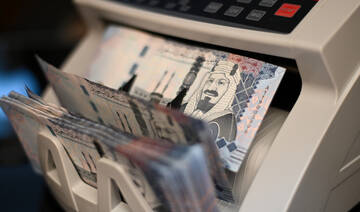
Saudi Arabia, UAE, Malaysia lead Islamic fintech as market eyes $341bn: report

Updated 6 sec ago
Follow

Saudi Arabia, UAE, Malaysia lead Islamic fintech as market eyes $341bn: report

JEDDAH: Saudi Arabia, Malaysia and the UAE are leading global Islamic fintech development as transaction volumes are projected to reach $341 billion by 2029, according to a new industry report.

The Global Islamic Fintech Report 2025/26, produced by DinarStandard and Elipses, said the three countries ranked among the most conducive ecosystems globally under the Global Islamic Fintech Index, which evaluates talent, regulation, and infrastructure, as well as market maturity and capital availability.

The report highlighted how Gulf Cooperation Council economies are accelerating efforts to position the region as a hub for Shariah-compliant digital financial services.

Global Islamic fintech transaction volumes were estimated at $198 billion in 2024/25 and are expected to expand at an annual rate of 11.5 percent through 2029, slightly outpacing the broader fintech industry, which is projected to grow at around 11 percent annually over the same period.

Huzayfa Patel, digital assets and fintech development at the Qatar Financial Center, said: “Over the last decade, fintech has moved into the mainstream of financial services and consumer behavior. The fintech market revenue is projected to grow fivefold to $1.5 trillion by 2030, with growth driven in part by digital access expanding faster than traditional offerings.”

He added that Islamic fintech is expanding alongside rising demand for ethical and Shariah-compliant financial products.

The sector now includes 484 Islamic fintech firms worldwide, with 30 companies identified as notable players based on innovation, funding activity and geographic expansion strategies. Industry experts cited access to capital, regulatory compliance requirements, limited customer education and high customer acquisition costs among the main barriers to growth.

The report identified Saudi Arabia, Iran, Malaysia, and the UAE,  in the top 10 countries by Islamic fintech transaction volume, alongside Indonesia, Kuwait, and Turkiye, as well as Bangladesh, Pakistan and Qatar.

Najmul Haque Kawsar, senior consultant at DinarStandard, said Saudi Arabia has introduced national infrastructure to enable regulated real estate tokenization and digital ownership transfers, highlighting the Kingdom’s push to expand digital financial services.

“In a region where property is culturally and economically central, the narrative is easy to explain: fractional exposure to property-linked cashflows, without pretending that bricks and mortar are suddenly frictionless,” he said.

Digital assets are also emerging as the next frontier of Islamic finance. Daniel Ahmed, co-founder and chief operating officer of digital asset platform Fasset, said public discussions around Islamic finance, cryptocurrencies and blockchain have often focused narrowly on whether crypto is halal.

“While understandable, this framing is incomplete. It treats digital assets as a monolithic product rather than as what they truly are: a neutral financial infrastructure,” he said.

Ahmed added: “A more meaningful and intellectually honest question is not whether digital assets are permissible by default, but whether they can be designed and governed to fulfil the Maqasid Al-Shariah, the higher objectives of Islamic law.”

The report said practical use cases are increasingly centered on stablecoins and central bank digital currencies for settlement, tokenization for distributing real-world assets, and embedding Shariah governance frameworks into digital financial systems.

Stablecoins had a combined market capitalization of about $317 billion in early 2026, making them an increasingly important settlement mechanism, while tokenized real-world assets remained relatively small at around $4.31 billion.

The region is also witnessing growing regulatory momentum. In Abu Dhabi, the FIDA cluster — covering fintech, insurance, digital and alternative assets — aims to build institutional-grade digital asset infrastructure under regulatory supervision.

The UAE’s central bank has launched the Digital Dirham initiative, covering wholesale and retail central bank digital currencies as part of a broader Financial Infrastructure Transformation Program. Malaysia has similarly published a discussion paper on asset tokenization, signaling a shift from experimentation toward regulatory oversight.

Pilot projects are beginning to reflect this regulated approach. Fasset has received a provisional license in Malaysia to launch a stablecoin-powered Islamic digital bank within a regulatory sandbox, positioning digital currency as supervised infrastructure for payments, settlement and treasury functions.

The report noted that even limited adoption of tokenized instruments could unlock significant value. Fitch estimates global outstanding sukuk exceeded $1 trillion in the third quarter of 2025, meaning that migrating just 1 percent to 5 percent of issuance on-chain could represent between $9 billion and $45 billion in assets.

It said the sector’s long-term growth will depend on whether Shariah oversight can be standardized into operational controls, legal frameworks can enforce tokenized ownership claims, and digital platforms can combine regulatory compliance with consumer-friendly distribution models.

Saudi Arabia and the wider GCC, it added, are increasingly shaping the next phase of Islamic fintech development as digital finance converges with Shariah-compliant innovation.