

Oman’s economy grows 2% in Q3 as bank credit expands 

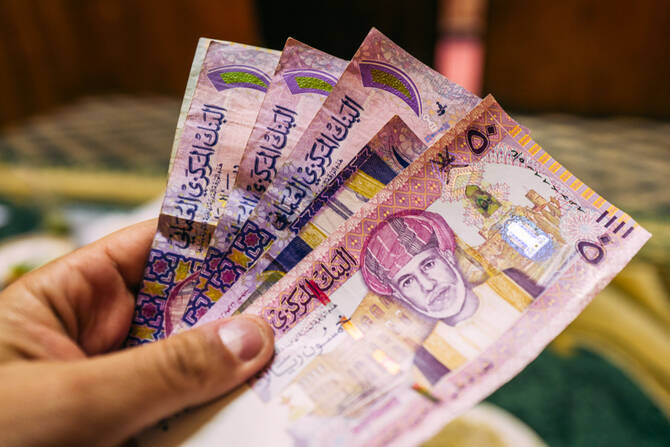
Gross domestic product at constant prices reached about 9.91 billion Omani rials ($26 billion) in the three months through September, up from 9.71 billion rials a year earlier, according to preliminary data from the National Centre for Statistics and Information. Shutterstcok
Short Url
Updated 18 January 2026
Follow

Oman’s economy grows 2% in Q3 as bank credit expands 

JEDDAH: Oman’s economy expanded 2 percent in the third quarter of 2025, supported by steady growth in non-oil activities, while bank lending continued to rise faster than deposits, underscoring improving domestic demand. 

Gross domestic product at constant prices reached about 9.91 billion Omani rials ($26 billion) in the three months through September, up from 9.71 billion rials a year earlier, according to preliminary data from the National Centre for Statistics and Information. 

The expansion was driven mainly by non-oil sectors, where value added increased 2 percent to more than 7.3 billion rials, Oman News Agency reported. 

This comes after Fitch Ratings recently upgraded the Sultanate’s sovereign credit rating to investment grade at BBB-, projecting GDP growth of around 4 percent in 2025, driven largely by robust expansion in the non-oil sector. 

Meanwhile, S&P Global Ratings expects steady real GDP growth of about 2 percent a year through 2028, supported by ongoing economic diversification and momentum in the services sector. 

“By economic activity, construction activities grew 1.3 percent to around 1.035 billion rials, while wholesale and retail trade increased 1.3 percent to 830.5 million rials. Public administration and defense rose 1.5 percent, reaching 932.5 million rials in Q3 2025,” the ONA report stated. 

Oil sector activities increased 1.9 percent to nearly 3.07 billion rials, compared with just over 3.01 billion rials in the same period of 2024. Crude oil production rose 2 percent to more than 2.55 billion rials, while natural gas activities grew 1.6 percent to 512.8 million rials, up from 504.7 million rials a year earlier. 

Meanwhile, total credit extended by conventional commercial banks in the Sultanate rose 8.5 percent by the end of November, with lending to the private sector increasing 5.8 percent to 21.9 billion rials. 

“In terms of investment, total holdings of conventional commercial banks in securities grew 7.4 percent, reaching approximately 6.4 billion rials by the end of November 2025,” ONA stated in another report. 

Within this category, investments in government development bonds rose 9.5 percent year on year to 2.2 billion rials, while investments in foreign securities declined 4.4 percent to 2.3 billion rials. 

On the liabilities side, total deposits with conventional commercial banks increased 6.3 percent to 26.4 billion rials by the end of November. 

Among total deposits, government deposits rose 7.6 percent to about 5.8 billion rials, while deposits from public sector institutions fell 25.6 percent to roughly 1.9 billion rials. 

Private sector deposits climbed 9.5 percent to 17.8 billion rials in November, accounting for 67.2 percent of total deposits with conventional commercial banks. 


QatarEnergy secures offshore exploration license in Libya

Updated 11 sec ago
Follow

QatarEnergy secures offshore exploration license in Libya

RIYADH: QatarEnergy has secured a marine exploration license in Libya following the conclusion of the “Libya Bid Round,” marking its entry into the country’s energy sector.

In a statement, QatarEnergy said Libya’s National Oil Corp. announced the results of the competitive bidding process, the first licensing round held in the country since 2007.

Exploration and production rights for Block O1 were awarded to a consortium comprising QatarEnergy, which holds a 40 percent participating interest, and Italy’s Eni, the operator, with a 60 percent stake.

Commenting on the development, Qatar’s Minister of State for Energy Affairs and President and CEO of QatarEnergy, Saad Sherida Al-Kaabi, said: “We are pleased to have been awarded exploration rights in this area and are encouraged by the potential of Libya’s offshore sector and the opportunities to expand our footprint in North Africa.”

He added: “I would like to thank and congratulate the Libyan authorities on the success of this licensing round. We look forward to working closely with the Libyan authorities and Eni to ensure the successful execution of the exploration program.”

Block O1 is located in the offshore Sirte Basin and spans approximately 29,000 sq. km, with water depths reaching up to 2,000 meters.

Beyond Libya, QatarEnergy continues to expand its global presence, particularly in Asia. The company recently signed a 20-year sales and purchase agreement with Malaysia’s Petronas to supply 2 million tonnes per annum of liquefied natural gas starting in 2028.

The agreement, signed during the LNG2026 conference in Doha, represents the first long-term LNG deal between the two state-owned energy companies. QatarEnergy said the partnership reflects “continued confidence and trust between the two organizations” and underscores their shared vision for a sustainable energy future.

Al-Kaabi noted that the agreement “highlights our continued commitment to supporting Malaysia’s growing energy needs, as well as those of our customers worldwide.”

On the sidelines of the same conference, QatarEnergy also signed a memorandum of understanding with Japan’s Ministry of Economy, Trade and Industry and JERA to supply additional LNG volumes during emergencies, such as natural disasters.