

Pakistan Super League 11th edition to kick off on March 26

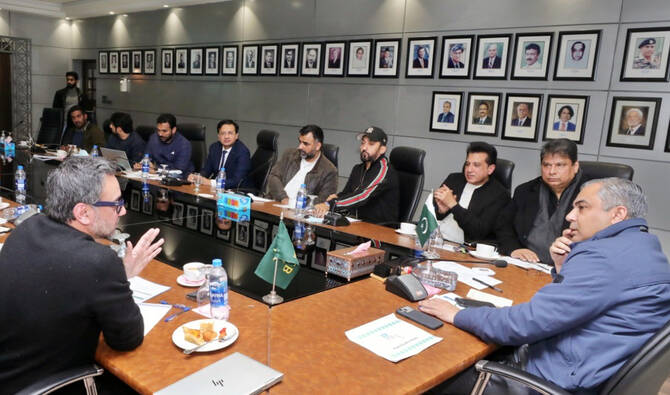
Pakistan Cricket Board Chairman Mohsin Naqvi (right) presides over a PSL governing council meeting at the National Cricket Academy in Lahore, Pakistan, on January 16, 2026. (PCB)
Short Url
Updated 17 January 2026
Follow

Pakistan Super League 11th edition to kick off on March 26

  • The PSL is Pakistan’s premier T20 cricket league which features a mix of local and international players
  • Hyderabad, Sialkot will join the 11th edition of PSL after they were bought for record prices this month

ISLAMABAD: The 11th edition of the Pakistan Super League (PSL) T20 tournament will kick off on March 26, the Pakistan Cricket Board (PCB) announced on Friday, which will feature eight franchises competing across multiple venues.

The statement came after a meeting of the PSL governing council at the National Cricket Academy in Lahore, which was presided over by PCB Chairman Mohsin Naqvi.

The meeting began with the PCB chairman and all participants congratulating and welcoming the new team owners of Sialkot and Hyderabad, according to the PCB.

“Detailed discussions were held on various matters including the schedule of the HBL PSL 11, player retentions, adoption of the player auction or a unique combination of auction and draft termed as ‘drauction’ and the option of opening direct signings,” the board said.

“It was decided that the HBL PSL 11 will kick off on Thursday, 26 March as the fans, players and stakeholders look forward to entering the new era of the league.”

The PSL is Pakistan’s premier T20 cricket league which features a mix of local and international players. The league already had six city-based teams which include Karachi Kings, Multan Sultans, Lahore Qalandars, Islamabad United, Peshawar Zalmi and Quetta Gladiators.

Hyderabad and Sialkot will join the 11th edition of PSL after they were bought for record prices at an auction organized by the PCB this month.

The board will run the Multan Sultans team for the 11th edition before looking for a potential buyer. The previous owner of Multan Sultans, Ali Tareen, announced last month he was walking away from his ownership of the franchise.


Pakistan sees 5% increase in overseas employment, remittance surge by 9% in 2025 — ministry

Updated 13 sec ago
Follow

Pakistan sees 5% increase in overseas employment, remittance surge by 9% in 2025 — ministry

  • Hundreds of thousands of Pakistanis annually travel abroad to seek jobs in Gulf, Europe, US and other nations
  • Hundreds of thousands of Pakistanis annually travel abroad to seek jobs in Gulf, Europe, US and other nations

ISLAMABAD: Pakistan reported a 5% increase in overseas employment and a 9% rise in workers’ remittances, Pakistani state media reported on Sunday, citing the Ministry of Overseas Pakistanis.

Hundreds of thousands of Pakistanis every year travel abroad for jobs in Gulf countries, Europe, the United States and other nations, who send back funds in foreign currencies that help Islamabad maintain its foreign exchange reserves.

Sharing key updates from the last year, the Ministry of Overseas Pakistanis said “tangible measures,” taken by the Bureau of Immigration to facilitate overseas job seekers, had yielded positive results in 2025, the Radio Pakistan broadcaster reported. 

“A total of 762,499 Pakistanis were sent abroad in 2025, while overseas Pakistanis remitted about 40 billion dollars during the year,” it reported, citing the ministry.

The ministry noted that it signed labor mobility agreements with Italy, Belarus and Iraq in 2025.

Pakistan currently seeks to diversify overseas employment destinations for its workforce and increase remittance inflows as it navigates a long path to economic recovery under a $7 billion International Monetary Fund (IMF) bailout.

“Italy’s allocation of 10,500 workers for Pakistan over three years was a major development providing opportunities for about 3,500 workers per year for three years,” the ministry said.

“Qatar’s resumption of work visas for Pakistani workers after 19 years expanded access to Gulf countries.”