Olive festival in Jouf attracts global producers

1 / 8
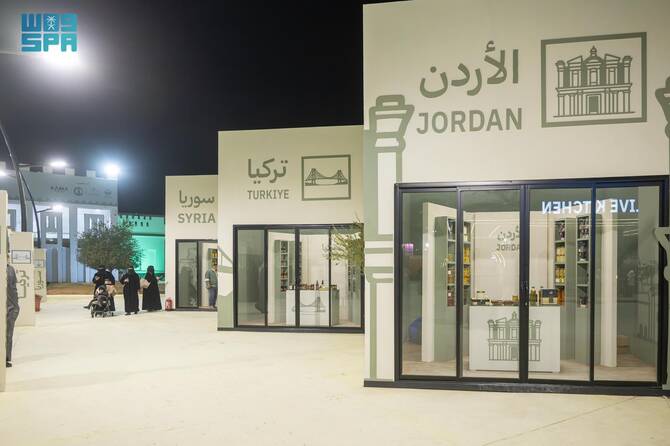
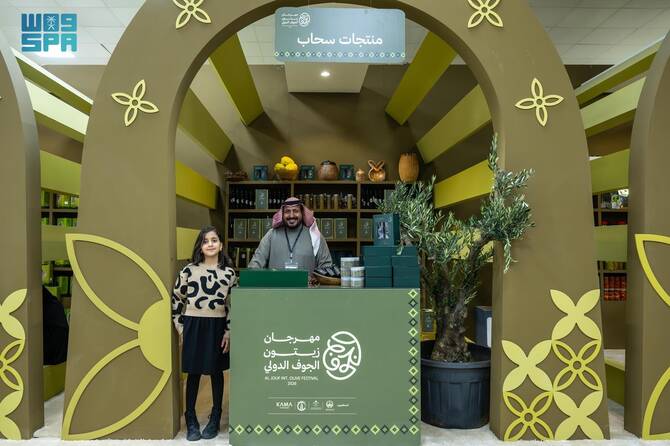
This year’s Olive Exhibition features seven producing countries, 45 local farmers, and 10 agricultural companies. (SPA)
2 / 8
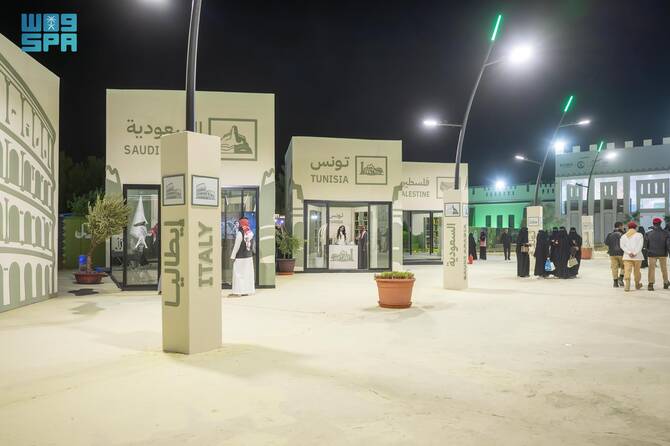
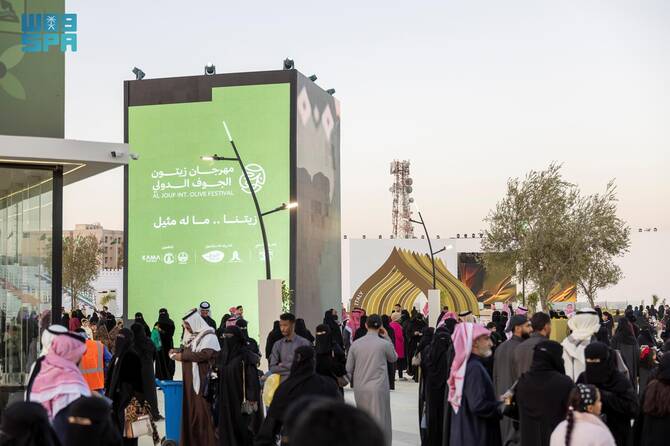
This year’s Olive Exhibition features seven producing countries, 45 local farmers, and 10 agricultural companies. (SPA)
3 / 8
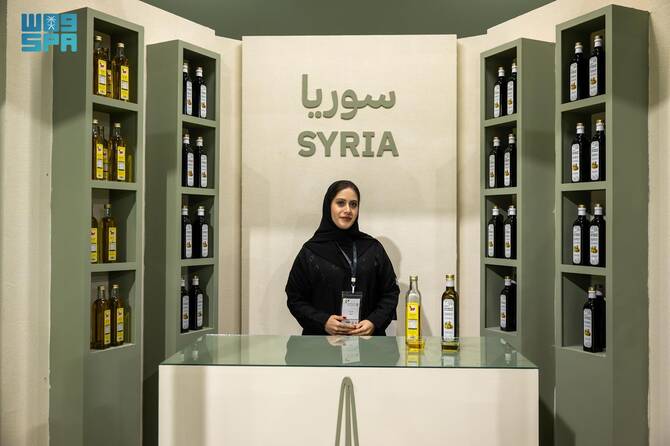
This year’s Olive Exhibition features seven producing countries, 45 local farmers, and 10 agricultural companies. (SPA)
4 / 8
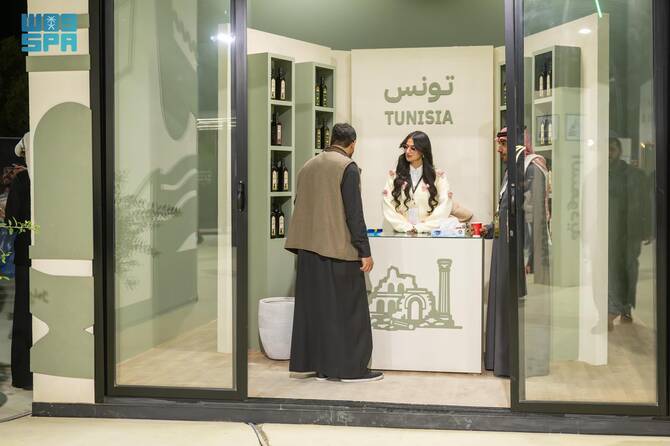
This year’s Olive Exhibition features seven producing countries, 45 local farmers, and 10 agricultural companies. (SPA)
5 / 8
This year’s Olive Exhibition features seven producing countries, 45 local farmers, and 10 agricultural companies. (SPA)
6 / 8
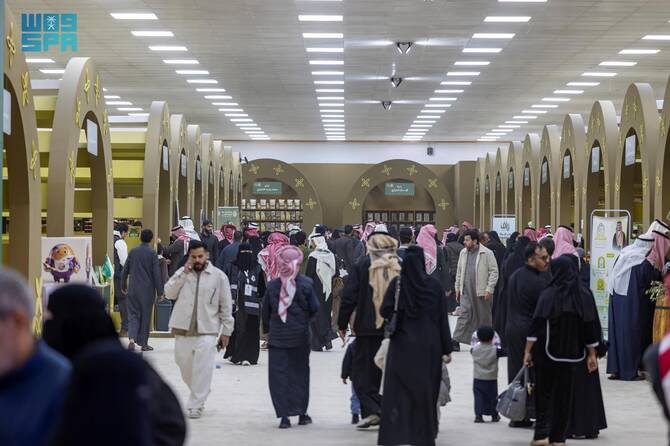
Running until Jan. 17, the festival has recorded high sales and visitor turnout. (SPA)
7 / 8
Running until Jan. 17, the festival has recorded high sales and visitor turnout. (SPA)
8 / 8
Running until Jan. 17, the festival has recorded high sales and visitor turnout. (SPA)
Short Url
Updated 12 January 2026
Follow

Olive festival in Jouf attracts global producers

JOUF: The 19th Jouf International Olive Festival in Sakaka continues to showcase the region’s role as a major producer, and is highlighting the process of planting, harvesting and production.

Organized by Jouf Municipality, this year’s Olive Exhibition features seven producing countries, 45 local farmers, and 10 agricultural companies, all presenting their finest crops and products, the Saudi Press Agency reported on Monday. 

The exhibition highlights the agricultural potential of the Jouf region, home to more than 23 million trees with an annual production exceeding 150,000 tonnes of table olives. 

To ensure exhibit quality, the municipality subjects products to seven rigorous laboratory tests, including acidity, rancidity, and commercial adulteration assessments. No product is allowed for sale without a valid approved label.

Festival CEO Omar Al-Hamwan said international participation over the years has strengthened the festival’s status as a global platform. 

The festival aims to leverage purchasing power, showcase the competitive advantages of Jouf olives, and build strategic partnerships between local producers and international markets, the SPA reported.

Running until Jan. 17, the festival has recorded high sales and visitor turnout. It features pavilions with family-run cottage industries, a shopping exhibition, and government and service organizations.


Saudi Arabia announces new financial support to the Yemeni government

Updated 16 January 2026
Follow

Saudi Arabia announces new financial support to the Yemeni government

RIYADH: Saudi Ambassador to Yemen and Supervisor of the Saudi Program for the Development and Reconstruction of Yemen Mohammed Al-Jaber announced that the Kingdom, under the directives of its leadership, has provided new support to the Yemeni government's budget, aimed at paying the salaries of state employees in all sectors.

In a post on X, Al-Jaber stated that this support complements a package of development projects and initiatives, amounting to SR1.9 billion, announced on Wednesday. The package includes provision of necessary petroleum derivatives to operate power plants, which will contribute to improving the living standards of people in Yemen and alleviating daily burdens on them.

Al-Jaber’s post emphasized, in particular, that all salaries of military and security forces linked to the the higher military committee linked to the Saudi led Coalition will be paid as of Sunday. 


The post is likely relate to Several Media reports which have suggested that disgraced former Southern Transitional Council (STC) chief Aidaroos Al Zubaidi — who has now fled Yemen — was taking advantage of military personnel and withholding salaries as means of pressure. Al-Zubaidi is wanted by the Yemeni government for acts of high treason and corruption. 

The ambassador emphasized that these steps come within the framework of supporting the Yemeni government's efforts to implement the economic reform program, which aims to achieve financial and economic stability and enhance the state's ability to meet its basic obligations.