

Pakistan to auction 600 MHz spectrum next month to boost Internet speeds

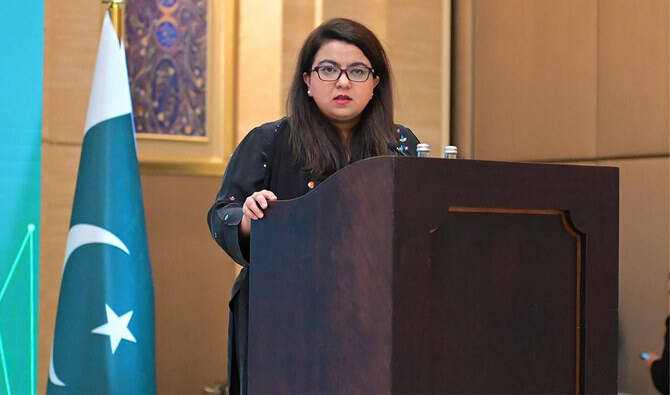
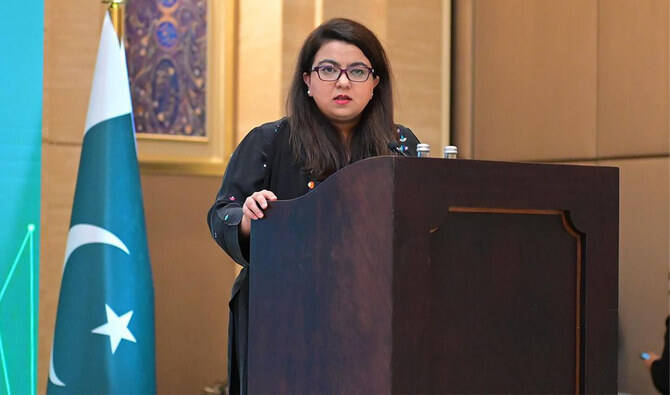
Pakistan’s State Minister for IT and Telecommunications Shaza Fatima Khawaja addresses a ceremony in Islamabad, Pakistan on May 23, 2024. (shazafkhawaja/Instagram)
Short Url
Updated 05 January 2026
Follow

Pakistan to auction 600 MHz spectrum next month to boost Internet speeds

  • Pakistan has more than 130 million broadband connections, but access remains uneven despite increasing IT exports
  • Pakistani Internet users currently operate on about 274 MHz of spectrum, compared to around 600 MHz in Bangladesh

ISLAMABAD: Pakistan is set to auction a 600-megahertz (MHz) spectrum next month to ensure high speed and reliable Internet services across the country, state media reported on Monday, citing Information Technology (IT) Minister Shaza Fatima Khawaja.

The development comes at a time of mounting pressure on Pakistan’s telecom networks, with users and businesses complaining of slow Internet speeds and frequent disruptions as a limited spectrum struggles to serve the South Asian country.

Pakistan has more than 130 million broadband connections but access remains uneven, though its IT exports reached a record $3.8 billion in FY 2024–25, up from $3.2 billion the previous year, marking an 18 percent year-on-year increase, according to the Pakistan Software Export Board.

Speaking at an event in Islamabad, the IT minister said the federal cabinet has ratified the decision of spectrum auction, the Radio Pakistan broadcaster reported.

“This will not only improve 4G speed but also help roll out 5G services,” Khawaja was quoted as saying.

Khawaja last month said the quality of Internet service in Pakistan is not at par with international best practices or even regional standards, and one of the fundamental reasons for this was the non-availability of the spectrum.

Pakistani Internet users currently operate on about 274 MHz of spectrum, compared with around 600 MHz in Bangladesh, that leads to congestion, she told a news conference on Dec. 23, likening the situation to “trying to run eight lanes of traffic through two lanes.”

Speaking at Monday’s event, Khawaja reaffirmed the government’s commitment to investing in capacity-building of the youth.

“Youth are the country’s greatest asset,” she said, highlighting that over half a million young Pakistanis had been trained in various fields over the past 18 months.


Islamabad reviews preparations for 2026 OIC ministerial conference on women

Updated 6 sec ago
Follow

Islamabad reviews preparations for 2026 OIC ministerial conference on women

  • The conference, held every three to four years, brings together OIC ministers to discuss progress on women’s rights
  • Pakistan’s foreign minister directs authorities finalize arrangements, priorities in coordination with OIC Secretariat

ISLAMABAD: Pakistani Foreign Minister Ishaq Dar on Friday presided over a meeting to review progress regarding the 9th OIC Ministerial Conference on Women, scheduled to be held in Islamabad in July, the Pakistani foreign ministry said.

The conference, held approximately every three to four years, brings together ministers from OIC member states to review progress on women’s rights, share national policies and adopt new frameworks.

This year’s conference is slated to be held in the Pakistani capital of Islamabad on July 12-13, according to a schedule of 2026 meetings shared on the OIC website.

“The meeting evaluated progress and emphasized timely coordination to ensure a successful event,” the ministry said in a statement on Friday.

“FM directed all relevant ministries and stakeholders to finalize logistical arrangements and thematic priorities in close collaboration with the OIC Secretariat.”

Previous ministerial meetings have focused on themes such as women’s economic empowerment, combating gender-based violence, and improving access to education and health care.

The exact agenda for the 2026 meeting has yet to be announced.

The previous OIC ministerial conference on women was held in Cairo in 2021 and focused on women’s empowerment, protection frameworks, and socio-economic participation.