Minzal returns to celebrate heritage of historic Diriyah

1 / 4
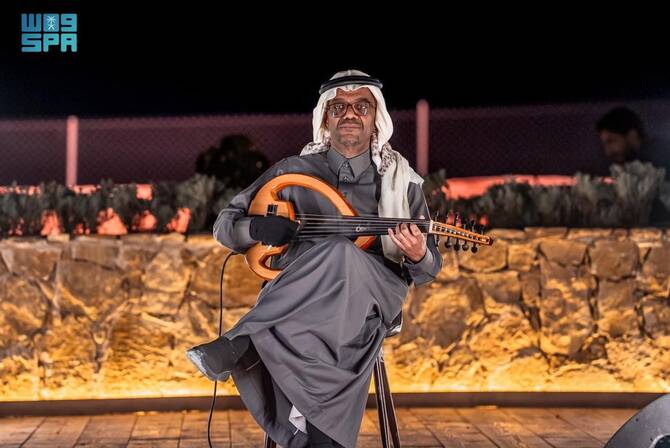
The program offers an experience inspired by traditional life and authentic Saudi hospitality. (SPA)
2 / 4
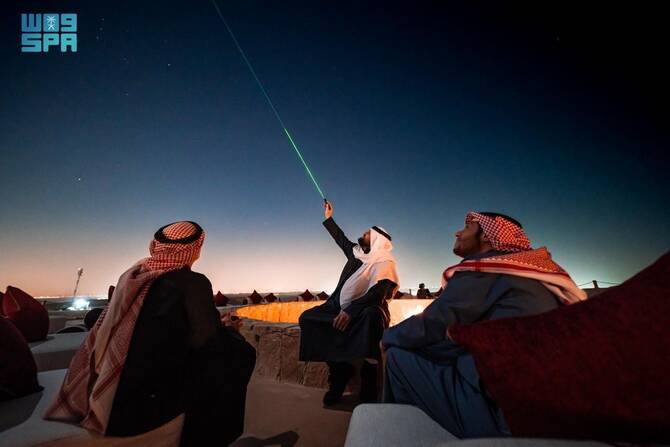
The program offers an experience inspired by traditional life and authentic Saudi hospitality. (SPA)
3 / 4
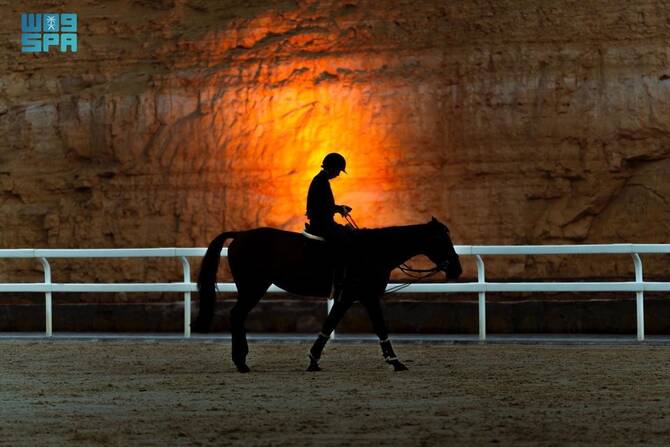
The program offers an experience inspired by traditional life and authentic Saudi hospitality. (SPA)
4 / 4
The program offers an experience inspired by traditional life and authentic Saudi hospitality. (SPA)
Short Url
Updated 03 January 2026
Follow

Minzal returns to celebrate heritage of historic Diriyah

RIYADH: The Minzal program, part of this year’s Diriyah Season, celebrates the rich natural and cultural heritage of historic Diriyah, where history meets nature.

Overlooking Wadi Safar, the largest tributary of Wadi Hanifah, the program offers an experience inspired by traditional life and authentic Saudi hospitality.

Open daily from 5 p.m. until midnight, Minzal showcases Diriyah’s traditions through heritage storytelling, scenic views, poetry and traditional cuisine, the Saudi Press Agency reported on Saturday.

Running until Feb. 14, the event features horseback riding, falconry, archery, astronomy, and a selection of international restaurants, cafes and retail outlets.

Spread across four main zones highlighting Diriyah’s historical and cultural significance, visitors can enjoy the “Al-Uloom” experience for leather-working, carpet-weaving and wood-working, and the “Sloom” experience for Saudi coffee, desert plants, fire-lighting, camel-milking and tent-making.

The “Faris Al-Badiyah” experience offers horse-riding and archery, while the “Falconry” experience teaches the art of hunting with Arabian falcons.

The “Al-Mushrif” zone provides stargazing under Diriyah’s clear skies, creating a serene atmosphere amid the natural surroundings.

Diriyah Season serves as a global destination for history enthusiasts, offering journeys through heritage sites that once formed the political and cultural center of the region, the SPA reported.

The program combines Najdi authenticity with innovative designs and international standards, reflecting the values and vision of historic Diriyah alongside the Kingdom’s modern development.


Saudi Arabia’s KAUST named FIFA’s first research institute in MENA

The canal in the King Abdullah University of Science and Technology campus. (Shutterstock)
Updated 10 February 2026
Follow

Saudi Arabia’s KAUST named FIFA’s first research institute in MENA

  • KAUST President Prof. Sir Edward Byrne said that the university’s selection as the fifth FIFA Research Institute in the world — and the first in the region — marks a significant achievement, reflecting Kingdom’s growing presence in international football

RIYADH: FIFA has designated the King Abdullah University of Science and Technology as its first research institute in the Middle East and Asia to support the development of innovative football research, the Saudi Press Agency reported on Tuesday.

The recognition highlights KAUST’s commitment to integrating sports, academic research and industry through advanced, high-level initiatives grounded in rigorous scientific methodologies, contributing to the advancement of football studies.

KAUST President Prof. Sir Edward Byrne said that the university’s selection as the fifth FIFA Research Institute in the world — and the first in the region — marks a significant achievement, reflecting Saudi Arabia’s growing presence in international football.

The accreditation aligns with national efforts to invest in research and development and promote the knowledge economy, supporting Saudi Vision 2030’s goals of building an advanced sports system based on innovation and sustainability.

The collaboration’s first project focuses on developing advanced AI algorithms to analyze historical FIFA World Cup broadcast footage, transforming decades of match videos into structured, searchable data, according to the KAUST website.

This work opens new opportunities to apply state-of-the-art computer vision techniques and deepen understanding of how football has evolved over time.

The second project uses player and ball tracking data from the FIFA World Cup 2022 in Qatar and the FIFA Women’s World Cup 2023 in Australia and New Zealand to compile comprehensive datasets capturing in-game dynamics.

These datasets provide deeper insights into human movement, playing techniques and performance dynamics through AI-driven analysis.