

 The rise of of Generation Alpha in Saudi Arabia
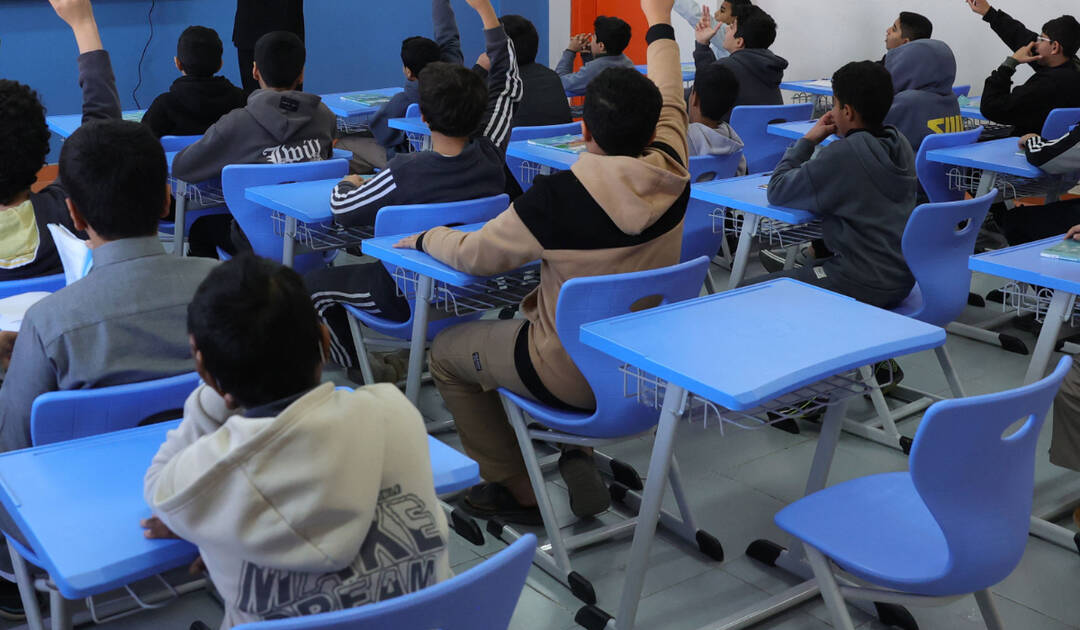

Recently, the phrase “Six Seven,” has emerged as a global trend, specifically among Generation Alpha — the 2 billion people born between 2010 and 2024. This took the form of collective, repeated chanting of the words “Six Seven,” particularly among school students.
Some attribute the origins of the phenomenon to the rapper Skrillex, because he has a song titled “Doot Doot (6 7).” Others link it to the height of American basketball player LaMelo Ball, who stands six feet and seven inches. The phenomenon has even featured in well-known American programs like “South Park.”
It is notable that the phrase “at sixes and sevens” to refer to something confusion or chaos has been used in English since the 14th century AD. England’s most famous playwright, William Shakespeare, used it in his works in Elizabethan times.
The agreed-upon view is that those chanting “Six Seven” in the present day are not referring to anything specific; it merely serves as a shared trait among them, giving them a distinct identity. They are indeed different in many ways from the generations before them.
Evidence of this is found in a report by the public relations company DKC, published in August 2025, stating that this generation’s spending in America alone exceeds $100 billion annually, reaching up to $167 weekly, and $3,500 annually for each child. They receive money as a reward for achievements, for completing chores inside and outside the house, or from digital commerce and resale.
The consulting firm McCrindle indicated that, by 2029, with the older segment of Gen Alpha reaching adulthood and the younger segment reaching five years of age, their global economic contribution will exceed $5.046 trillion, meaning their economic weight will be significant. Major brands have noticed and are currently targeting them with their products. Generation Alpha boys and girls tend to spend on major brands, most notably Nike, Amazon, Shein, Sephora, and Lego.
In contrast, in Britain, data from the company GoHenry showed that 27 percent of Gen Alpha children achieve high income by influencing on social media, especially YouTube. Examples include 14-year-old Ryan Kaji — who ranked 21st on Forbes’ list of top content creators in 2025, with revenues exceeding $35 million — along with names like Nastya, Diana, Roma, Vlad, Niki, and others.
Interestingly, the passion for traditional education has declined in this generation. They have been connected to technology since their early days. According to specialists, what people from earlier generations learned by the age of 25, Gen Alpha has often learned by the time they are six. Therefore, current education systems do not suit them, particularly those based on rote learning and ready-made answers that conflict with their critical and creative way of thinking, which refuses to accept what is said without discussion or understanding its reasons, even if it comes from their parents, something that is to be welcomed, in my opinion.
Schools and public education as a whole, both in the Kingdom and worldwide, need to determine whether their function is to impart knowledge or provide life experiences, especially regarding Gen Alpha and Generation Beta, which began in 2025. Their tech or artificial intelligence-based competitors in the former are both faster and more capable. The competitive advantage of educational institutions may be focusing on skills rather than knowledge, curriculae and teachers. Achieving high scores in exams does not mean that students are prepared to face life’s challenges or that they have sufficient problem-solving abilities.
The oldest among Saudi Gen Alphas will reach working age in 2030, and informed individuals believe that their ability to distinguish between fabricated information and facts is greater than their predecessors, that their ethical standards are high, as are their decision-making capabilities, and that they have a strong sense of responsibility, clearly reflected in their concern for the environment and their commitment to sports and overall health.
Play, for them, takes a ludic rather than epistemic form, meaning they do not care for information but rather for creativity and innovation. Their daily internet use is moderate, not exceeding four hours — equivalent to 45 percent of Gen Z’s usage. There must be a focus on developing their emotional intelligence, as they are a more rigid and serious generation due to their prolonged interaction with machines. They have been raised on the voices of Siri and Alexa and have used Google Assistant for help at home, and they were born in the same era as the iPad and Instagram.
I imagine this generation will be a rich source of future leaders and will represent the optimal investment for Saudi Vision 2040.
• Dr. Bader bin Saud is a columnist for Al-Riyadh newspaper, a media and knowledge management researcher, an expert and university professor in crowd management and strategic planning, and the former deputy commander of the Special Forces for Hajj and Umrah in Saudi Arabia. X: @BaderbinSaud.


