




DUBAI: With more than 200 nationalities living side by side, it is no wonder Christmas in the UAE is a bustling, festive affair.
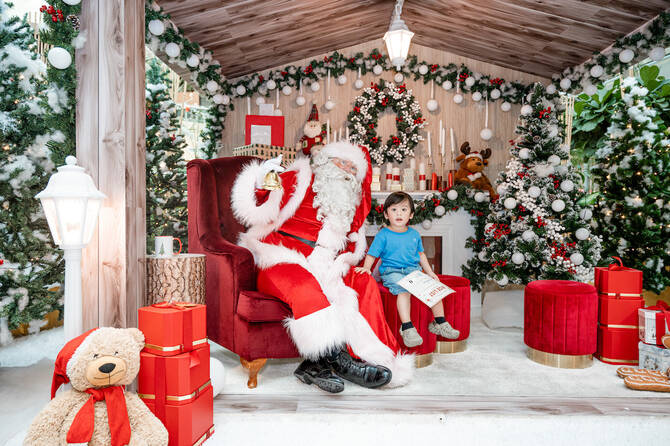
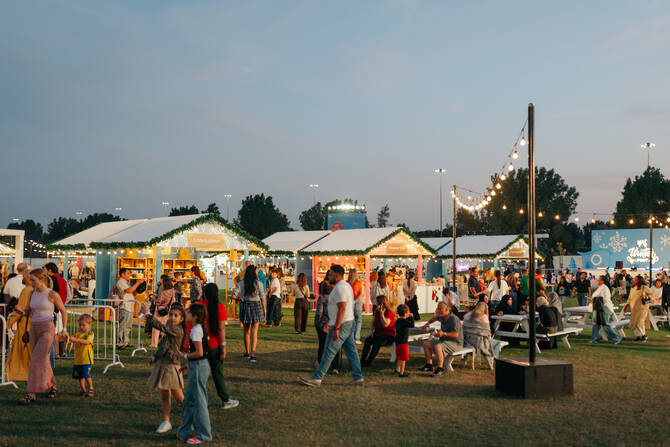
Christmas trees dot the malls and seasonal jingles blaring from speakers create a celebratory atmosphere for shoppers, while Christmas markets, children’s events and special festive menus can be found across Dubai and Abu Dhabi.
However, the festive season in the UAE is about more than rockin’ around the Christmas tree, with Christians from diverse ethnic backgrounds coming together to celebrate with their families and friends.
“Being able to celebrate Christmas alongside people from many different nationalities and religions means that I can share my traditions with those who may not know much about them and show them how we celebrate,” Vedrana Milic, a UAE resident from Bosnia and Herzegovina, told Arab News.
“Every religion is beautiful in its own way, and it is amazing to learn about meaningful traditions we may not have encountered before,” she added.
According to government statistics, about 12.6 percent of the UAE’s population practices Christianity, and the Emirates are now home to approximately 40 churches and roughly 700 ministries.
A crowning moment in that journey of interfaith openness came in March 2023 when the Abrahamic Family House in Abu Dhabi officially opened to the public. The complex is home to a mosque, church, and synagogue.
Designed by renowned Ghanaian-British architect Sir David Adjaye, the church’s modern facade is only the most recent incarnation of Christianity’s long history in the region.
In 1992, archaeologists on Sir Bani Yas Island in Abu Dhabi discovered a Christian monastery they believe was built around 600 CE and in 2022, while another ancient monastery was unearthed on Al-Siniya Island in the emirate of Umm Al-Qaiwain.
Radiocarbon dating of pottery excavated at the site suggested it was inhabited between the late sixth to mid-eighth centuries.
In modern times, the first communities of Christian oil and gas workers were welcomed to the area by Sheikh Shakhbut bin Sultan Al-Nahyan, the then-ruler of Abu Dhabi, in the late 1950s. A portion of land was donated for the St. Andrew’s Anglican Church, which opened in 1968.
Other denominations also found a home in the region, with the Vatican moving the See of Southern Arabia from Aden to Abu Dhabi in the 1970s, while the first Roman Catholic mass was held in Abu Dhabi in 1960, followed by the opening of St. Joseph’s Church in 1965.
For Briton Emilene Parry, whose family moved to Dubai in the early 1990s, that sense of inclusivity has long been ingrained in the country.
“I remember attending family Christmas brunches as a child and it was always lovely because it was so international,” Parry told Arab News.
“You could eat dishes from around the world — from German gingerbread to typical English puddings — and celebrate with expats from so many different countries.
“The fun, joyful aspect of Christmas was always prevalent here. It’s something that has only gotten bigger and better in recent years … It is also extremely meaningful that I can celebrate the season with friends from different religious backgrounds.”
The ability to spread festive cheer is something Palestinian Leanne Farah wholeheartedly agrees with.
“Celebrating Christmas in Dubai feels super special because you’re not celebrating alone. The city does it with you,” she told Arab News.
“It’s really meaningful to mark the season alongside people from so many cultures and religions, all bringing their own traditions and perspectives — the same way myself and my family celebrate Ramadan with those who celebrate it too.”
Egyptian resident Marina Gamil agrees. “It feels amazing to be able to fully have that Christmas spirit in a country where the majority are not Christians. It gives it an even higher and more special value,” she told Arab News.
While some Christmas traditions practiced in the country are known around the world — think “secret Santa” office parties and building gingerbread houses — the sheer diversity of the country’s expatriate population means there are always new traditions to explore.
“As people with very strong religious and traditional beliefs, I have shared many of our customs with friends from different backgrounds,” said Milic.
“One example is the special bread we make on Christmas Day. Before baking it, we place various items inside, which are a coin, corn, and a small piece of wood. When the bread is cut and shared with family and friends, each item has a special meaning.
“The person who finds a coin is believed to become wealthy that year, the one who finds a corn will have a successful and prosperous year, and the person who finds the piece of wood is expected to enjoy happiness and good health throughout the year.”
Other traditions are not dissimilar from any religious celebrations the world over, with family time, a sumptuous meal and gift-giving a mainstay for many Christians in the UAE.
“As most of my family live in the UAE, we make it a priority to be together from early in the morning around the Christmas tree at my grandparents’ home, exchanging gifts, sharing a meal, and spending the day enjoying each other’s company and quality time,” said Farah.
Gamil echoed the sentiment, sharing her family’s Christmas Eve schedule.
“We head to church to attend the prayer and once we’re done and we get back home we sit, celebrate and feast. The next morning, we start the day by opening our Christmas gifts and then we go out to Madinat Jumeirah and attend the Christmas market.”
The desire to spend time with loved ones and enjoy an off-key Christmas karaoke session is one that transcends borders — my own British-Asian Muslim family are particular fans.
“I love it. I don’t think you have to be Christian to appreciate the core values — enjoying quality time with family and friends and getting into the spirit,” Saif Ansari, this writer’s brother, said in a candid conversation about inter-faith celebrations.
“It may be a surface-level celebration, but we always put up a tree and Christmas dinners are always good fun — crackers, a roast and terrible dad jokes all around,” he said.
“Beyond the fun, I think it’s important to respect the core religious aspect. At the end of the day, (Christianity) is an Abrahamic faith and we have more in common than divisive politicians would have us believe.”
Farah concurs. “To me, the defining message of Christmas is love — through kindness, generosity, and making time for people you care about.
“It’s a reminder to slow down, be a little softer with each other, and enjoy the simple moments. And maybe one extra dessert.”
GET FESTIVE
Activities for those celebrating in the UAE
Expo City Dubai
Expo City Dubai remains one of the most popular festive destinations. Its annual winter festival turns the former Expo site into a family-friendly Christmas village, complete with snow-themed attractions, live performances, festive food stalls and a towering Christmas tree.
Madinat Jumeirah
Another longstanding favorite is the Festive Market at Madinat Jumeirah, which channels a European-style Christmas village. Wooden chalets offer gifts, decorations and seasonal treats, while visitors can enjoy a live band as they take in the 11-meter tall Christmas tree
Kite Beach
The popular beach is hosting an array of Christmas events this season, including festive movie nights on the sand — including “Home Alone” and “Elf” — kids’ workshops (bead making, Christmas tree decorating, and snowman crafting) as well as a Santa’s grotto.
Yas Island
Abu Dhabi’s celebrations are equally impressive. Yas Island hosts a Winter Fest experience each year, featuring festive shows, themed attractions and family activities across its entertainment venues, with Santa’s Village and Snowfall Park standing out as family favorites.
The Galleria Al-Maryah Island
The mall transforms into a festive hub this season, with Santa’s grotto, arts and crafts workshops for kids and a giant Christmas tree.


