

 Saudi Arabia’s future as the top Arab destination for international tourists
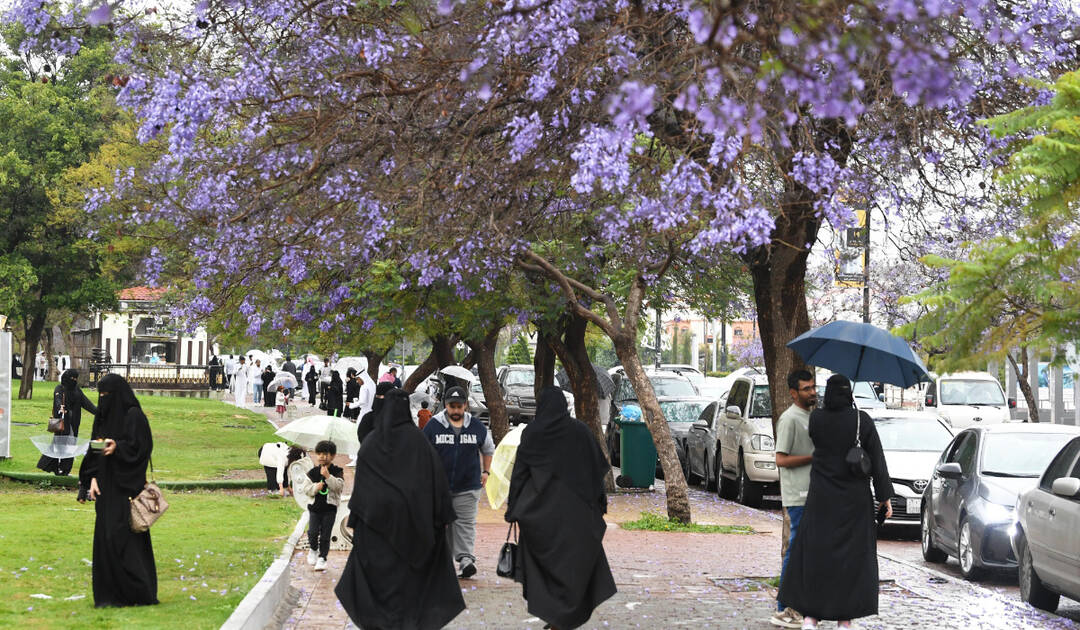

Last month, the inaugural session of the Turaiz International Tourism Forum was held in Riyadh, gathering 50 ministers and tourism leaders along with decision-makers from more than 100 countries.
They converged to chart the future of global tourism, focusing on enhancing sustainability and growth within the sector.
This international assembly mobilized investments worth $113 billion and presented to major global cities awards for outstanding experiences in adventure, cuisine and business tourism.
Currently, 60 percent of these investments, amounting to $68 billion, are concentrated in the Kingdom.
Notably, since the launch of Vision 2030, Saudi Arabia’s investment in tourism exceeded $200 billion.
This significant investment landscape is reflected in major projects like The Red Sea, AlUla, and Qiddiya, alongside the implementation of an electronic tourist visa system.
The Red Sea project aims to develop ultra-luxury resorts spanning 28,000 sq. km, equivalent to the area of Armenia, establishing Saudi Arabia as a leading destination for luxury and wellness tourism in the Middle East and Asia over the next five years.
AlUla is recognized as the first Saudi city to receive a listing on the UNESCO World Heritage list, serving as an archaeological testament to 200,000 years of shared human history, with investment in its tourism development anticipated to reach $20 billion by 2030.
Moreover, AlUla is projected to create 38,000 job opportunities and 9,000 hotel rooms by 2035, potentially boosting the Kingdom’s domestic product by approximately $32 billion, as reported by CNN.
Qiddiya, a massive entertainment project located southwest of Riyadh, aims to become a global hub for entertainment, sports and arts, officially opening its doors in late December 2025.
The electronic visa system, operational since 2019, has enabled international tourists from 66 countries to enter Saudi Arabia, with the list expected to grow continuously.
Globally, France, Spain, the US and Turkiye rank as the most visited countries, accommodating between 100 million tourists in France, retaining its top position for 33 years, and 60 million in Turkiye, according to figures from 2024.
Saudi Arabia is increasingly part of this landscape, having welcomed 30 million international tourists that year and ranking as the leading Arab nation for foreign visitors, surpassing the UAE, Morocco, Egypt and Oman.
France’s steadfast position in tourism stems from its romantic association with Paris, leisure and fine dining in the countryside and the luxury of its southern coast, making each region synonymous with distinct tourist experiences.
In contrast, Spain and Turkiye have developed different tourism dynamics. Spain has transformed Madrid and Barcelona into significant cultural destinations, revisiting the history of Al-Andalus in Granada, Cordoba and Seville, while focusing on urban tourism.
Notably, despite France receiving six million more tourists than Spain, traveler spending in the latter outpaced that of France by $73 billion in the same year, emphasizing that sheer numbers are less important than the economic impact of tourist spending.
Meanwhile, Turkiye has positioned itself as a bridge between East and West, with Istanbul reflecting its Byzantine, Roman and Ottoman heritage, alongside significant investments in competitive price-quality ratios, particularly in medical tourism and beach tourism in Antalya.
Tourism represents the economy of the future, being an industry that remains vibrant and does not deplete.
It taps into people’s curiosity and desire for discovery, offering immersive experiences across diverse cultures and creating lasting memories.
The Kingdom stands among the world’s top investors in tourism, recognizing its potential as a dynamic and crucial sector.
According to the UN World Tourism Organization, 357 million jobs globally were supported by tourism in 2024.
As reported by the World Travel & Tourism Council for 2024, tourism activity contributed $11 trillion to global domestic product, with one in every 10 dollars generated from tourism activities.
It is regarded as a significant job creator, accounting for one job out of every 10 created, with projections indicating an increase to one job in three by 2035.
Furthermore, tourism is the most equitable distributor of wealth globally, engaging large numbers of individuals and reaching the grassroots levels of local economies, providing job opportunities for those without advanced skills or university degrees, thus playing a crucial role in alleviating poverty and unemployment.
• Dr. Bader bin Saud is a columnist for Al-Riyadh newspaper, a media and knowledge management researcher, an expert and university professor in crowd management and strategic planning, and the former deputy commander of the Special Forces for Hajj and Umrah in Saudi Arabia. X: @BaderbinSaud.


