BERLIN: Germany has said it will send a group of soldiers to Poland to help with a project to fortify the country’s eastern border as worries mount about the threat from Russia.
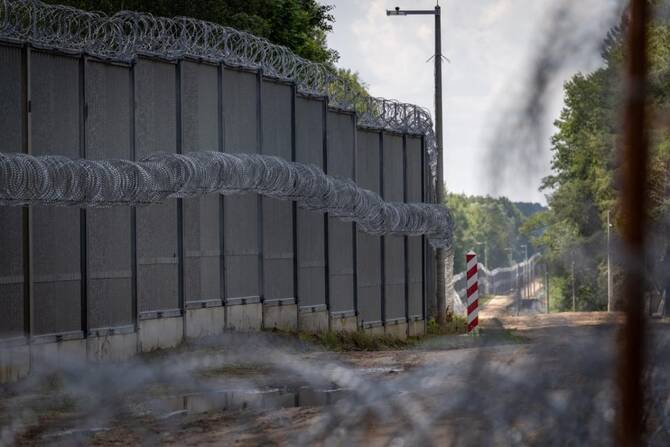
Poland, a strong supporter of Ukraine in its fight against Moscow, announced plans in May last year to bolster a long stretch of its border that includes Belarus and the Russian exclave of Kaliningrad.
The main task of the German soldiers in Poland will be “engineering activities,” a spokesman for the defense ministry in Berlin said late Friday.
This could include “constructing fortifications, digging trenches, laying barbed wire, or erecting tank barriers,” he said.
“The support provided by German soldiers as part of (the operation) is limited to these engineering activities.”
The spokesman did not specify the exact number of troops involved, saying only it would be a “mid-range two-digit number.”
They are expected to participate in the project from the second quarter of 2026 until the end of 2027.
The spokesman stressed that parliamentary approval was not needed for the deployment as “there is no immediate danger to the soldiers from military conflicts.”
Except for certain exceptional cases, the German parliament has to approve the deployment of the country’s armed forces overseas.
Since Russia’s full-scale invasion of Ukraine in 2022, Warsaw has staunchly backed Kyiv and been a transit route for arms being supplied by Ukraine’s Western allies.
Warsaw has also modernized its army and hiked defense spending.
Germany is Ukraine’s second-biggest supplier of military aid after the United States and has sent Kyiv a huge quantity of equipment ranging from air defense systems to armored vehicles.

Germany to send soldiers to fortify Poland border
Short Url
https://arab.news/8q4gy
Germany to send soldiers to fortify Poland border
Spanish PM vows justice, defends rail safety after deadly accidents
- The back-to-back disasters in January shocked the country and raised doubts about the safety of train travel in Spain
MADRID: Spanish Prime Minister Pedro Sanchez vowed Wednesday that justice would be done following two train accidents that claimed 47 lives last month, and insisted the country’s rail system “is safe.”
The back-to-back disasters in January shocked the country and raised doubts about the safety of train travel in Spain, which boasts the world’s second-largest high-speed network after China.
“The entire state is doing — and will continue to do — everything possible to support the injured and the victims’ families, clarify the causes of the accident, and, if necessary, ensure justice is done,” Sanchez told parliament.
Spain’s rail system “is not perfect, but it is safe,” the Socialist premier added, vowing to take all necessary measures to prevent similar tragedies in the future.
Shock hit the rail sector after a collision between two high-speed trains in the southern region of Andalusia on January 18 resulted in the death of 46 people — one of Europe’s deadliest such disasters this century.
Two days later, a commuter train in the Barcelona region plowed into the rubble of a collapsed wall, killing the driver and injuring dozens.
The government reached a deal with railway unions on Monday to invest 1.8 billion euros ($2.1 billion) to improve maintenance, create 3,650 jobs, and strengthen public rail safety.
The agreement prompted unions to call off a three-day strike that had begun on Monday to demand greater safety for their profession.
The back-to-back disasters in January shocked the country and raised doubts about the safety of train travel in Spain, which boasts the world’s second-largest high-speed network after China.
“The entire state is doing — and will continue to do — everything possible to support the injured and the victims’ families, clarify the causes of the accident, and, if necessary, ensure justice is done,” Sanchez told parliament.
Spain’s rail system “is not perfect, but it is safe,” the Socialist premier added, vowing to take all necessary measures to prevent similar tragedies in the future.
Shock hit the rail sector after a collision between two high-speed trains in the southern region of Andalusia on January 18 resulted in the death of 46 people — one of Europe’s deadliest such disasters this century.
Two days later, a commuter train in the Barcelona region plowed into the rubble of a collapsed wall, killing the driver and injuring dozens.
The government reached a deal with railway unions on Monday to invest 1.8 billion euros ($2.1 billion) to improve maintenance, create 3,650 jobs, and strengthen public rail safety.
The agreement prompted unions to call off a three-day strike that had begun on Monday to demand greater safety for their profession.
© 2026 SAUDI RESEARCH & PUBLISHING COMPANY, All Rights Reserved And subject to Terms of Use Agreement.


