

Jailed Tunisia opposition figure handed 12 years in third trial

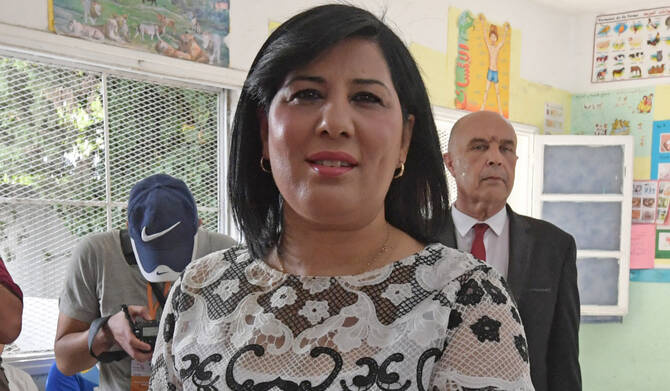
This is the third trial against Moussi, who was initially sentenced in August 2024 to two years in prison under Decree 54, a law Saied enacted in 2022 to combat “false news.” (AFP)
Short Url
Updated 13 December 2025
Follow

Jailed Tunisia opposition figure handed 12 years in third trial

  • Dozens of opposition figures were recently sentenced to harsh prison terms in a mass trial on charges of conspiracy against state security

TUNIS: Jailed Tunisian opposition figure Abir Moussi was sentenced to an additional 12 years in prison on Thursday under a law criminalizing any “attack aimed at changing the form of government,” her lawyer told AFP.
A fierce critic of both President Kais Saied and the Islamist-inspired opposition Ennahdha party, Moussi has been in custody since her arrest in October 2023 outside the presidential palace where her party says she was seeking to lodge appeals against Saied’s decrees.
The latest sentence was in connection to that incident.
This is the third trial against Moussi, who was initially sentenced in August 2024 to two years in prison under Decree 54, a law Saied enacted in 2022 to combat “false news.” That sentence was later reduced on appeal.
Last June, just after completing her first jail term, she was sentenced again under the same law to two years in prison. The appeal process in that case is underway.
In a statement released before Friday’s verdict, the Free Destourian Party condemned “the injustice suffered by the party’s president, Abir Moussi, who has been arbitrarily detained since October 3, 2023.”
She is suspected by her detractors of wanting to return to the authoritarianism of former president Zine El Abidine Ben Ali, overthrown in Tunisia’s 2011 revolt.
Meanwhile Saied, elected in 2019, has ruled by decree since a sweeping 2021 power grab and many of his opponents have been jailed.
Dozens of opposition figures were recently sentenced to harsh prison terms in a mass trial on charges of conspiracy against state security.
Others are being prosecuted under Decree 54, a law criticized by human rights advocates for its overly broad interpretation by the courts.


Flash floods kill 21 in Moroccan coastal town

Updated 15 December 2025
Follow

Flash floods kill 21 in Moroccan coastal town

RABAT: Flash-flooding caused by sudden, heavy rain killed at least 21 people in the Moroccan coastal town of Safi on Sunday, local authorities said.
Images on social media showed a torrent of muddy water sweeping cars and rubbish bins from the streets in Safi, which sits around 300 kilometers (186 miles) south of the capital Rabat.
At least 70 homes and businesses in the historic old city were flooded, authorities said.
Another 32 people were injured and taken to hospital, but most of them have been discharged.

Damage to roads cut off traffic along several routes to and from the port city on the Atlantic coast.
“It’s a black day,” resident Hamza Chdouani told AFP.
By evening, the water level had receded, leaving people to pick through a mud-sodden landscape to salvage belongings.
Another resident, Marouane Tamer, questioned why government trucks had not been dispatched to pump out the water.
As teams searched for other possible casualties, the weather service forecast more heavy rain on Tuesday across the country.
Severe weather and flooding are not uncommon in Morocco, which is struggling with a severe drought for the seventh consecutive year.
The General Directorate of Meteorology (DGM) said 2024 was Morocco’s hottest year on record, while registering an average rainfall deficit of -24.7 percent.
Moroccan autumns are typically marked by a gradual drop in temperatures, but climate change has affected weather patterns and made storms more intense because a warmer atmosphere holds more moisture and warmer seas can turbocharge the systems.