


LA PAZ: Bolivia’s new right-wing government said Tuesday that it restored diplomatic relations with Israel, the latest sign of the dramatic geopolitical realignment underway in the South American country that was once among the most vocal critics of Israeli policies toward Palestinians.
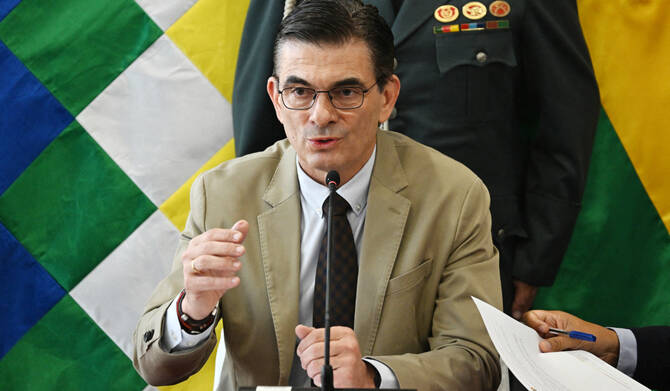
Bolivian Foreign Minister Fernando Aramayo met his Israeli counterpart Gideon Saar in Washington and signed a declaration agreeing to revive bilateral ties, which Bolivia’s previous left-wing government severed two years ago over Israel’s devastating campaign against Hamas in Gaza.
Bolivia’s ministry said the two countries would reinstate ambassadors in the near future and dispatch officials on visits.
As part of a new foreign policy strategy under conservative President Rodrigo Paz, the rapprochement “represents a return to trust, intelligent cooperation and the ties that have always existed, but which are now being revitalized with a modern perspective,” the ministry said in a statement after the meeting late Tuesday.
Aramayo, as well as Bolivian Economy Minister José Gabriel Espinoza, launched this week into a whirlwind of meetings with American officials as their government works to warm long-chilly relations with the United States and unravel nearly two decades of hardline, anti-Western policies under the Movement Toward Socialism, or MAS, party that left Bolivia economically isolated and diplomatically allied with China, Russia and Venezuela.
Paz’s government eased visa restrictions on American and Israeli travelers last week.
In announcing his meeting with Aramayo on Monday, Israeli Foreign Minister Saar thanked Bolivia for scrapping Israeli visa controls and said he spoke to Paz after the center-right senator’s Oct. 19 election victory to express “Israel’s desire to open a new chapter” in relations with Bolivia.
Paz entered office last month, ending the dominance of the MAS party founded by Evo Morales, the charismatic former coca-growing union leader who became Bolivia’s first Indigenous president in 2006. Not long after taking power, Morales sent Israel’s ambassador packing and cozied up to Iran over their shared enmity toward the US and Israel.
When protests over Morales’ disputed 2019 reelection prompted him to resign under pressure from the military, a right-wing interim government took over and restored full diplomatic relations with the US and Israel as it sought to undo many of Morales’ popular policies.
But 2020 elections brought the MAS party back to power with the presidency of Luis Arce, who in 2023 once again cut ties with Israel in protest over its military actions in Gaza.
Other left-wing Latin American countries, like Chile and Colombia, soon made similar moves, recalling their ambassadors and joining South Africa’s genocide case against Israel before the United Nations’ highest judicial body.


