

Cross-border clash breaks out between Pakistan and Afghanistan amid rising tensions

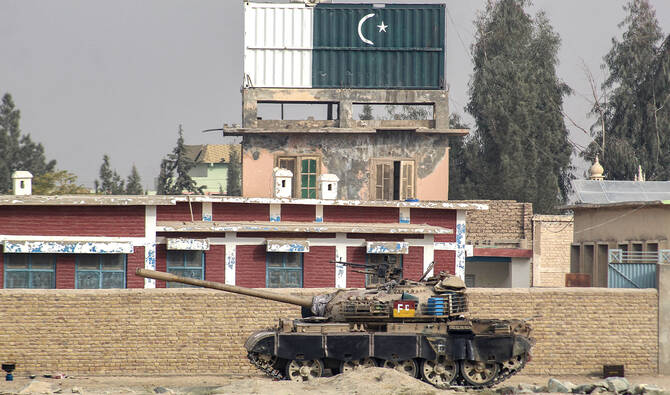
A Pakistani armored vehicle stands at the Pakistan-Afghanistan border in Chaman district of Balochistan province on December 6, 2025. (AFP)
Short Url
Updated 06 December 2025
Follow

Cross-border clash breaks out between Pakistan and Afghanistan amid rising tensions

  • Border residents say exchange of fire in the Chaman border sector lasted nearly two hours
  • Both governments issue competing statements blaming the other for initiating the violence

ISLAMABAD: Pakistan and Afghanistan witnessed yet another border clash, according to officials in both countries who spoke in the early hours of Saturday, with each side accusing the other of launching “unprovoked” attacks.

Fighting erupted in Pakistan’s southwestern Chaman border sector, with an AFP report saying that residents on the Afghan side of the frontier reported the exchange of fire began at around 10:30 p.m. (1800 GMT) and continued for roughly two hours.

The incident underscored how tensions remain high between the neighbors, who have seen deadly clashes in recent months despite several rounds of negotiations mediated by Qatar and Türkiye that resulted in a tenuous truce in October.

“There has been unprovoked firing by Afghan Taliban elements in the Chaman Sector which is a reckless act that undermines border stability and regional peace,” said a Pakistani security official on condition of anonymity.

“Pakistani troops responded with precision, reinforcing that any violation of our territorial integrity will be met with immediate and decisive action,” he continued.
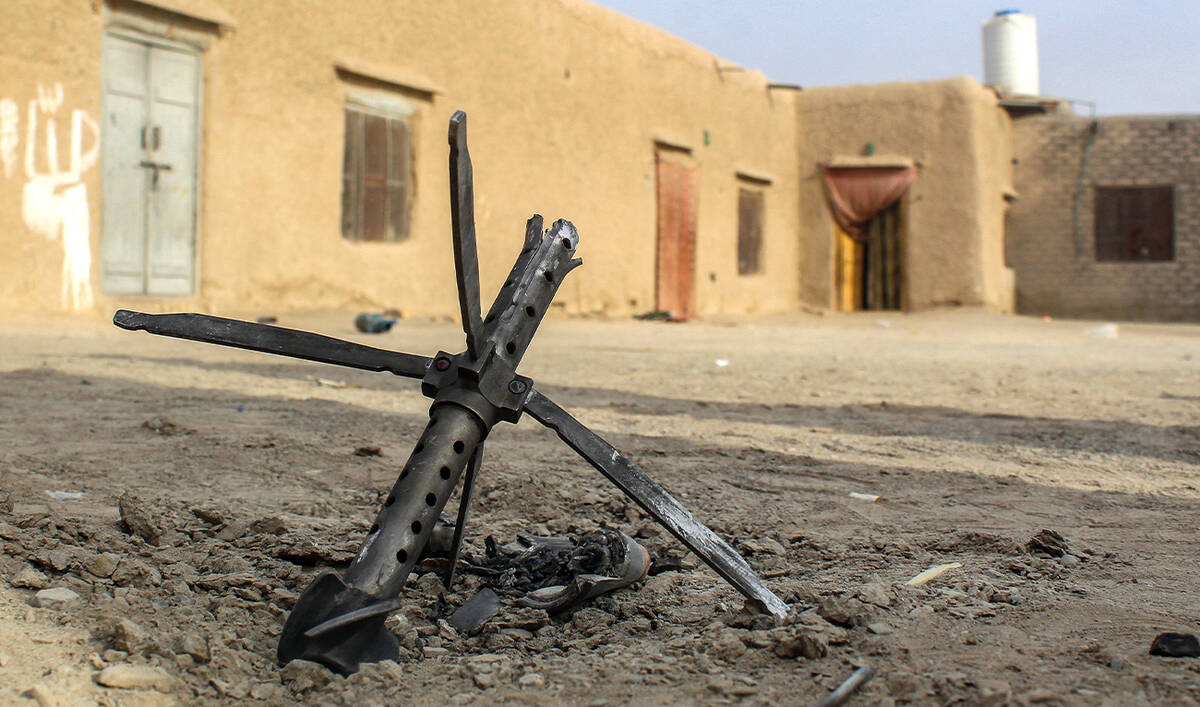


A mortar lies on the ground near a damaged house in Chaman district of Balochistan province, near Pakistan-Afghanistan border, on December 6, 2025. (AFP)

The official described Pakistan’s response as “proportionate and calibrated” that showed “professionalism even in the face of aggression.”

“The Chaman Sector exchange once again highlights the need for Kabul to rein in undisciplined border elements whose actions are destabilizing Afghanistan’s own international standing,” he added.

Relations between Pakistan and Afghanistan have grown increasingly bitter since the Taliban seized power in Kabul following the withdrawal of international forces in August 2021.
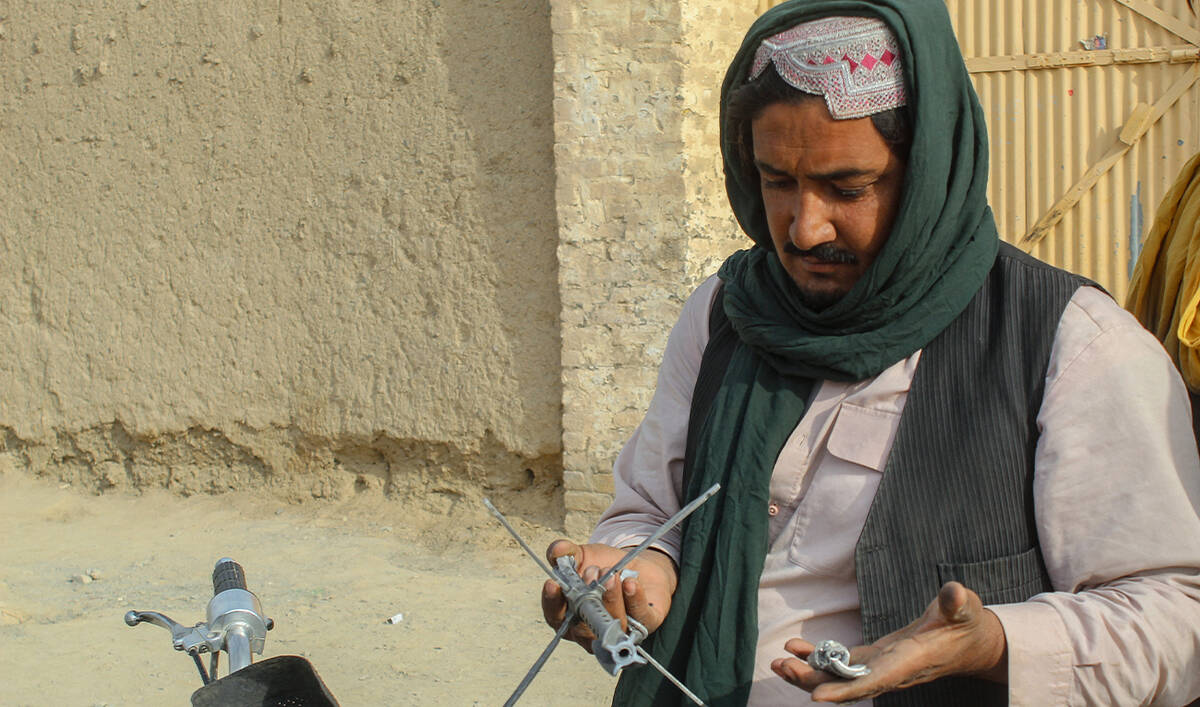


A man shows fragments of a fired mortar outside a damaged house in Chaman district of Balochistan province, near Pakistan-Afghanistan border, on December 6, 2025. (AFP)

Islamabad accuses the Taliban administration of sheltering anti-Pakistan militant groups such as the Baloch Liberation Army (BLA) and Tehreek-e-Taliban Pakistan (TTP), which have carried out deadly attacks in its western provinces bordering Afghanistan, targeting civilians and security forces.

The Taliban deny the charge, saying Pakistan’s internal security challenges are its own responsibility.

The Pakistani security official said his country remained “committed to peaceful coexistence, but peace cannot be one-sided.”

“Attempts to pressure Pakistan through kinetic adventurism have repeatedly failed and will continue to fail,” he said. “The Chaman response has reaffirmed that message unmistakably.”

He added that Pakistan’s security forces were fully vigilant and that responsibility for any escalation “would solely rest with those who initiated unprovoked fire.”
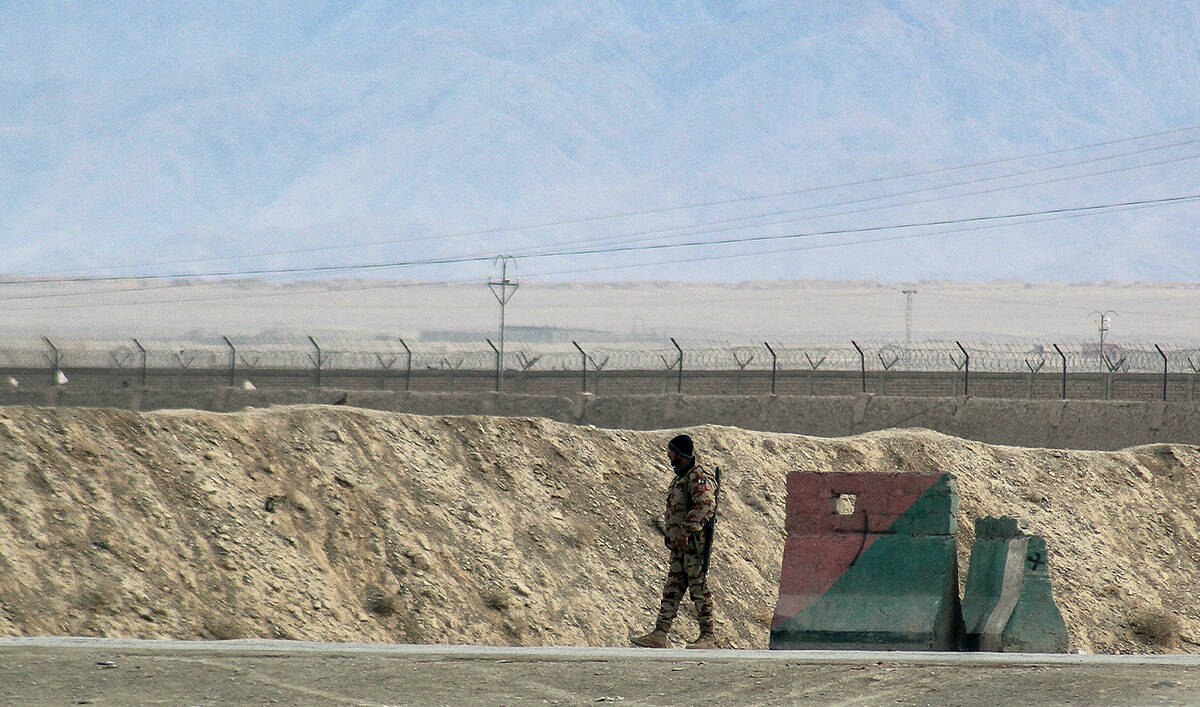


Security personnel stands guard at the Pakistan-Afghanistan border in Chaman district on December 6, 2025. (AFP)

Mosharraf Zaidi, spokesman for Pakistan’s prime minister, also commented on the clashes in a social media post, saying the Afghan Taliban had “resorted to unprovoked firing along the border.”

“An immediate, befitting and intense response has been given by our armed forces,” he wrote.

Afghan authorities, however, blamed Pakistan for the hostilities.

“Unfortunately, tonight, the Pakistani side started attacking Afghanistan in Kandahar, Spin Boldak district, and the forces of the Islamic Emirate were forced to respond,” Taliban spokesman Zabihullah Mujahid said on X.

Border clashes that began in October have killed dozens of people on both sides.

The latest incident comes amid reports of back-channel discussions between the two governments, although neither has publicly acknowledged such talks.



Curfew extended in Gilgit-Baltistan, probe ordered after deadly Khamenei protests

Updated 03 March 2026
Follow

Curfew extended in Gilgit-Baltistan, probe ordered after deadly Khamenei protests

  • At least 15 people were killed in clashes with law enforcement agencies over the weekend in Gilgit-Baltistan
  • Government also announces a de-weaponization campaign, crackdown on hate speech and cybercrime in region

ISLAMABAD: The government in Pakistan’s Gilgit-Baltistan (GB) region on Tuesday extended a curfew in Gilgit district and ordered a judicial probe into violent protests over the killing of Iranian Supreme Leader Ali Khamenei in US-Israeli strikes last week, an official said.

At least 15 people were killed in clashes with law enforcement agencies over the weekend in GB, where protesters torched and vandalized several buildings, including United Nations regional offices, an army-run school, software technology park and a local charity building.

The violence prompted regional authorities to impose curfew in Gilgit and Skardu districts on March 2-4 as officials urged people to stay indoors and cooperate with law enforcers, amid widespread anger in Pakistan, particularly among members of the Shiite minority, over Khamenei’s killing.

On Tuesday, the GB government convened to review the situation and announced the extension of curfew in Gilgit among a number of security measures as well as ordered the establishment of a judicial commission to investigate the weekend violence in the region.

“The government has made it clear that the law will strictly take its course against elements involved in vandalism at government institutions, private properties and incidents of vandalism in Gilgit and Skardu and no kind of mischief will be tolerated,” Shabbir Mir, a GB government spokesperson, said in a statement.

“In view of the security situation, curfew will remain in force in Gilgit, while the decision to extend the curfew in Skardu will be taken keeping the ground realities and the changing situation in view.”

The statement did not specify how long the curfew will remain in place in Gilgit.

Besides the formation of the judicial commission to investigate the violent clashes, the government also decided to launch a large-scale de-weaponization campaign in the entire Gilgit district, for which relevant institutions have been directed to immediately complete all necessary arrangements, according to Mir.

In addition, a crackdown has been ordered on hate speech, spread of fake news and cybercrime.

“The aim of these decisions is to ensure the rule of law, protect the lives and property of citizens and crack down on miscreants,” he said. “Approval has also been given to immediately survey the affected infrastructure and start their restoration work on priority basis.”

Demonstrators in Pakistan’s southern port city of Karachi also stormed the US Consulate on Sunday, smashing windows and attempting to burn the building. Police responded with batons, tear gas, and gunfire, leaving 10 people dead and more than 50 injured.

Pakistani authorities have since beefed up security at US diplomatic missions across the country, including around the US consulate building in Peshawar, to avoid any further violence.