

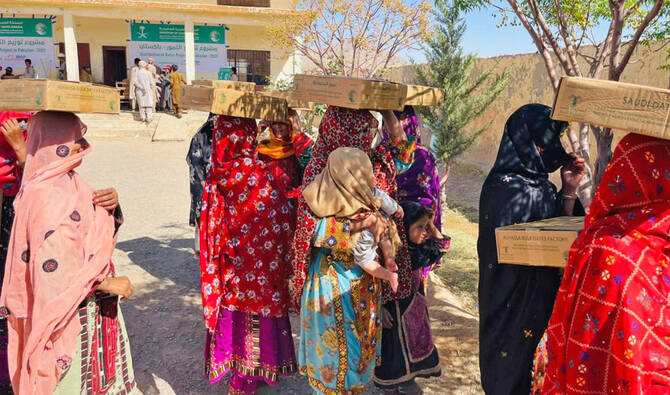

ISLAMABAD: Saudi Arabia’s King Salman Humanitarian Aid and Relief Center (KSrelief) on Thursday distributed 360 tons of dates to communities affected by floods in northwestern and southwestern Pakistan, as authorities continue to support households facing food shortages after months of severe monsoon damage.
The distribution comes after torrential rains and cloudbursts triggered widespread flooding across the provinces of Khyber Pakhtunkhwa (KP) and Balochistan in June. Between June 26 and Oct. 1, floods killed 1,037 people, including 509 in KP and 38 in Balochistan, according to Pakistan’s National Disaster Management Authority (NDMA).
KSrelief said 180 tons of dates were sent to nine districts in KP — Buner, Swat, Kolai Palas, Mansehra, Charsadda, Peshawar, Bannu, Bajaur and Kurram — while the remaining 180 tons reached eight districts of Balochistan: Khuzdar, Surab, Kachhi, Pishin, Killa Saifullah, Ziarat, Jhal Magsi and Quetta.
“KSrelief in collaboration with NDMA, Provincial Disaster Management Authority (PDMA) and its implementing partners Peace and Development Organization and the Balochistan Rural Support Program has successfully distributed a total of 360 tons of dates to flood-affected, internally displaced and food-insecure communities across KP and Balochistan provinces of Pakistan,” the organization said in a statement.
“This initiative aims to provide immediate nutritional support to households affected by floods, displacement, and chronic food insecurity.”
Dates are a key emergency food source in humanitarian response efforts due to their long shelf life and concentration of energy, nutrients and natural sugars, critical for families recovering from disaster-related losses of crops, income and access to food.
KSrelief said the aid reflects Saudi Arabia’s “sustained commitment to standing in solidarity with the people of Pakistan,” where the Kingdom has funded multiple relief, health, food security and education programs in recent years.
Pakistan’s annual monsoon season provides essential water for agriculture, the backbone of the national economy, but extreme rainfall in recent years has also triggered deadly floods, landslides and crop destruction. Scientists have linked the intensification of seasonal weather swings to global climate change, leaving rural households more vulnerable to food scarcity.


