
LONDON: Famine conditions in Gaza have eased somewhat since the Oct. 10 ceasefire enabled limited aid deliveries into the enclave. But months of hunger and trauma had already inflicted profound, and in many cases irreversible, harm.
Although a formal declaration of famine did not come until August, Gazans had been cut off from adequate, nutritious food for close to two years. The effects, families say, began long before the crisis was officially classified.
“Just two days ago, we ate meat for the first time in a long while after prices dropped slightly,” said Maysa Yousef, an artist and mother of four based in central Gaza. “The last time anyone in my family tasted eggs was last Ramadan (March 2025).”

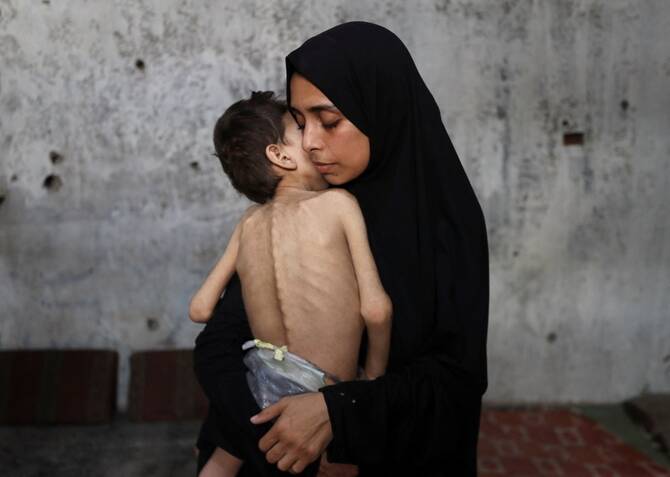
Months of hunger and trauma had already inflicted profound, and in many cases irreversible, harm. (Reuters)
The crisis has reshaped children’s understanding of food.
“Children born during the war do not know sweets, eggs, chicken, fish or fruit,” Yousef told Arab News. “They have not eaten vegetables or protein, so their bodies are extremely weak and their ability to focus is almost nonexistent. All of this is the result of prolonged malnutrition.”
A friend’s toddler, she said, calls all round fruit “koora,” or “ball,” because she cannot identify even the most common produce. The little girl has never tasted candy, biscuits or fresh fruit. “She only knows bread and basic canned food. Nothing else.”
Yousef, who lives with her family among the rubble of their former home in Deir El-Balah, said that “for two full years, we survived mostly on canned food — peas, beans and processed meats like luncheon.”
Compared to the days of famine, “this feels like a blessing,” she added. However, her children remain deprived of a basic nutritious diet.
The hunger started soon after the Hamas-led attack on Oct. 7, 2023, triggered Israel’s offensive in Gaza. By December that year, international monitors, including Human Rights Watch, said starvation was being used as a weapon of war.
In March 2024, the first major alerts warned that famine was imminent. Aid organizations and UN bodies accused Israel of impeding deliveries of relief goods — claims Israel has consistently denied.
By Aug. 22 this year, the Integrated Food Security Phase Classification estimated that more than 500,000 people had reached catastrophic levels of hunger.
The IPC projected the risks would persist for years, warning more than 132,000 children under the age of five could suffer acute malnutrition by June 2026.
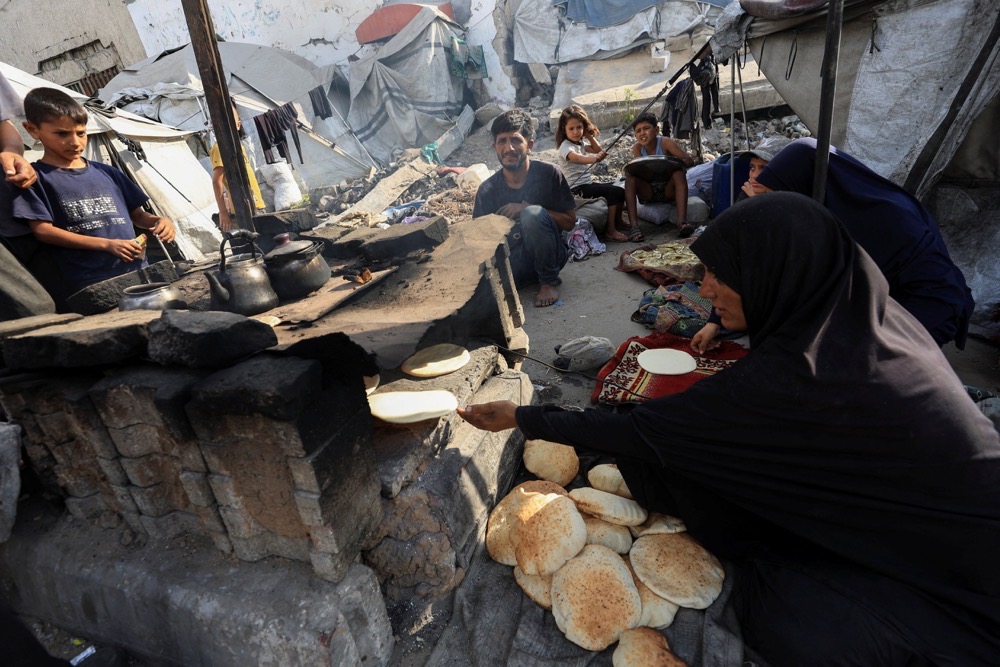
Aid organizations and UN bodies accused Israel of impeding deliveries of relief goods. (Reuters/File)
Israel dismissed the findings, with its foreign ministry accusing the IPC of publishing a “tailor-made fabricated report to fit Hamas’s fake campaign.”
Since 2023, Gaza has endured a near-total blockade of food, fuel, power and commercial goods, marking its most extreme embargo since 2007.
The territory’s health system has been shattered by bombardment, displacement and fuel shortages, contributing to malnutrition-related deaths.
As of Sept. 19, the local health authority reported at least 440 starvation-related deaths, including 147 children.
The real figure is likely far higher. The IPC’s report says malnutrition frequently contributes to fatalities recorded under other causes such as injury, infection or delayed trauma recovery.
Many deaths in homes, it added, likely go uncounted due to displacement, a lack of transport and collapsed medical access.
Children have been among the most visibly impacted.
“Our children carry water, search for firewood, and walk long distances just to get bread if it is available, or to look for flour, canned goods and other basic necessities,” Yousef said. “Their bodies were not built during the war — they have been severely weakened and broken down.”
Her own young daughter suffers from malnutrition, persistent headaches and abnormal dental development.

As of Sept.19, the local health authority reported at least 440 starvation-related deaths, including 147 children. (Reuters/File)
“During the famine, she lost all her baby teeth, and until now, some still have not grown back, and those that did are deformed or crooked,” Yousef said.
UN officials say progress is fragile and incomplete.
“Despite progress, thousands of children under the age of five remain acutely malnourished in Gaza, while many more lack proper shelter, sanitation and protection against winter,” Catherine Russell, executive director of the UN children’s fund, UNICEF, said in a Nov. 28 statement.
“Too many children in Gaza are still facing hunger, illness and exposure to cold temperatures, conditions that are putting their lives at risk. Every minute counts to protect these children.”
More aid has entered since mid-October, easing prices and improving meal frequency. The UN says households are now having two meals per day, up from one meal in July.
But access to produce, eggs, meat and other high-nutrient foods remains limited or is unaffordable for most families.
The IPC noted in its August report that short periods of minimal food availability cannot restore the body after months or years of deprivation.
Recovery requires sustained surplus calories, protein, and nutrient-rich foods — as much as 25 percent more than normal intake over multiple months.
Minimum aid levels, it warned, are not sufficient at this stage. Distribution systems, it added, must change urgently for the most vulnerable to consistently receive food.
US President Donald Trump’s 20-point plan requires “full aid” to be “immediately sent into the Gaza Strip” as an initial step to mitigate the famine. Yet the agreement has fallen short of its targets, as Israel is still accused of limiting the delivery and distribution of aid.

The ceasefire agreement demands that an average of 600 aid trucks enter Gaza per day. Israel says it is meeting its obligations and blames Hamas for the shortages, alleging that fighters are diverting deliveries before distribution.
Hamas rejects the claims.
Independent monitors offer a different assessment. The World Food Programme said in early November that about half of the necessary food assistance was reaching the population, while local relief agencies reported October deliveries totaled roughly a quarter of pledged levels.
Abeer Etefa, senior spokesperson for WFP, described a “race against time,” as people “are still suffering from hunger, and the needs are overwhelming.”
Despite a drop in prices since the ceasefire, cash liquidity remains another barrier, with withdrawal fees of between 20 and 24 percent.
“Cash money has become a thing of the past for us,” Yousef said. “We have practically forgotten it as we are no longer able to hold a single shekel in our hand.
“During the height of the famine, 1 kg of flour cost $50, and later reached $100 per kg, after we once used to buy 4 kg for just $1. As a mother, it was unbearable to watch my children sleep hungry.
“I worked and walked and struggled for hours just to secure a single loaf of bread — that was our greatest challenge.
“Imagine having money in the bank but not being unable to buy anything or manage your life, because not everyone uses banking apps, and some people refuse to accept payment through those apps.”
Humanitarian needs remain vast. The WFP said it provided food parcels to 1 million people in the first three weeks after the ceasefire — still some way below its 1.6 million target. Aid flows are restricted further by the limited number of active border crossings.
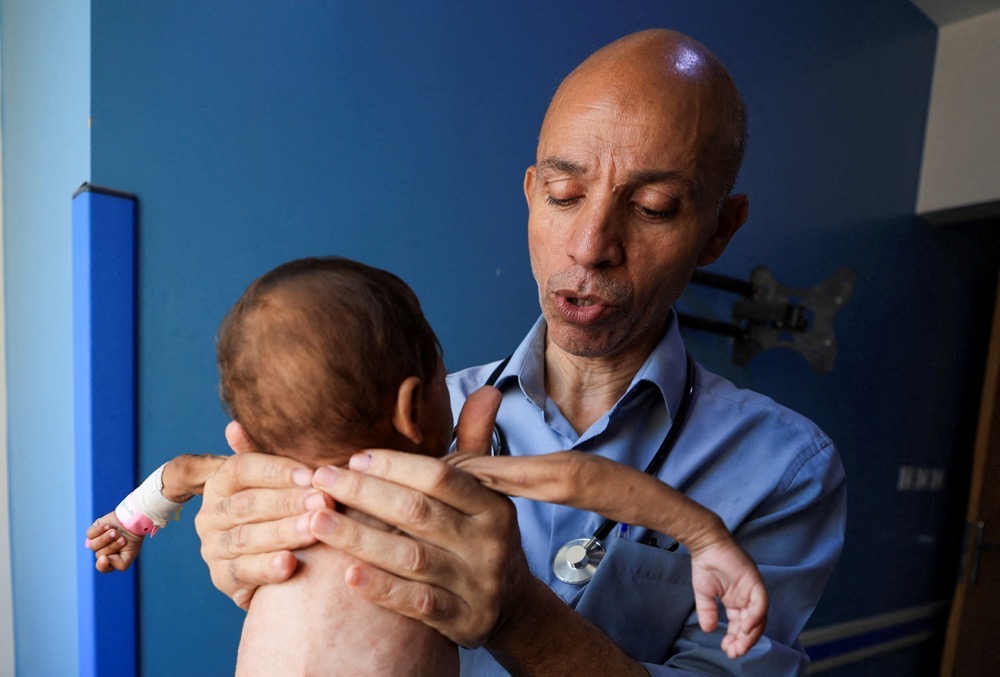
The territory’s health system has been shattered by bombardment, displacement and fuel shortages, contributing to malnutrition-related deaths. (Reuters/File)
Fuel shortages compound the health crisis. More than 60 percent of households are cooking by burning debris or waste, according to the UN humanitarian agency OCHA, heightening infection and respiratory risks.
OCHA said in early November that acute malnutrition among screened children in Gaza had fallen to 10 percent, down from 14 percent in September, but more than 1,000 remained severely affected.
Even if a child survives and receives adequate nutritious food, they will likely still face long-term health impacts.
A January health study, published in Frontiers in Public Health, found exposure to famine during infancy and toddler years sharply increases the risk of later-life chronic diseases, including hypertension, diabetes, stroke, kidney disease, cancer and cognitive disorders.
Tedros Adhanom Ghebreyesus, the director-general of the World Health Organization, warned that Gaza is experiencing a health “catastrophe” that will last for “generations to come.”
“If you take the famine and combine it with a mental health problem, which we see is rampant, then the situation is a crisis for generations to come,” Ghebreyesus told BBC Radio 4’s Today program on Oct. 22.
With pregnant and lactating mothers among those most affected by malnutrition, one in five babies are born prematurely or underweight and one in seven needs emergency neonatal care, according to UN figures.
INNUMBERS
• 132k Children in Gaza who require nutrition treatment over 12 months.
• 9.3k Under-5s who suffered acute malnutrition in October alone.
(Source: UNICEF)
In August, more than 40 percent of pregnant and breastfeeding women in Gaza were severely malnourished, according to the UN Population Fund.
The UN body warned that surviving children may face stunted growth, developmental delays, weakened immunity, and increased risk of chronic disease in adulthood.
The risk is also there for unborn children.
Dutch epidemiologist Tessa Roseboom, whose research tracks the long-term impact of prenatal malnutrition, says famine can leave a lasting imprint on fetuses.
She told France24 on Nov. 17 that malnutrition may leave epigenetic markers on a fetus’s DNA that affect how genes function. “The genetic code itself is not changed, but the expression of the DNA changes,” she said.

Access to produce, eggs, meat and other high-nutrient foods remains limited or is unaffordable for most families. (Reuters/File)
She also highlighted that the production of protective maternal enzymes is impacted during famine, exposing fetuses to elevated stress hormones, potentially increasing sensitivity to stress in adulthood.
This damage is irreversible, Roseboom said, but it can still be reduced. “Food safety has to come quickly, prioritizing women and children.
“The scientific evidence is clear. The repercussions will continue for generations, and I’m incredibly worried about this generation and the next.”
UN agencies say treatment demands will shape the year ahead. In a report covering the month of October, UNICEF estimated that 132,000 children and 55,500 pregnant and breastfeeding women in Gaza will require nutritional care over the next 12 months.

The UN says households are now having two meals per day, up from one meal in July. (Reuters/File)
Taken together, aid agencies, physicians and researchers warn the crisis has triggered a collapse in mental and physical health, childhood development, labor participation, and life expectancy.
For Yousef and other parents in Gaza who have struggled to feed their children, the warnings from health experts make for painful listening.
“One of the most painful moments I’ve lived through in the past two years was hearing my children say they were hungry — and having to tell them I had nothing to give them,” she said.
“All while we still had money in the bank.”