JOHANNESBURG: South African President Cyril Ramaphosa accused the United States late on Sunday of peddling “blatant misinformation” by claiming his country was killing white people.
US President Donald Trump has repeatedly attacked South Africa since returning to the White House earlier this year, pointing to false claims of “white genocide” of Afrikaners, a minority population descended from European colonizers.
The US boycotted last weekend’s G20 summit in Johannesburg and Trump announced on Wednesday that he would not invite South Africa to the next gathering of the world’s leading economies, which he plans to host at a golf course in Miami owned by his family.
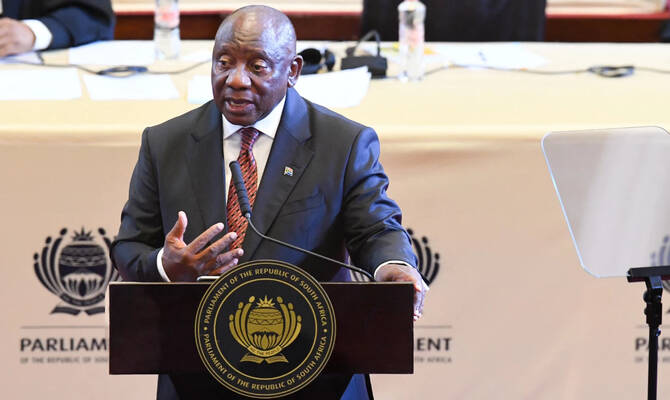
Ramaphosa said in a televised address the reasons the US gave for its “non-participation” were informed by “baseless and false allegations that South Africa is perpetrating genocide against Afrikaners and the confiscation of land from white people.”
“This is blatant misinformation about our country,” the president said on the SABC broadcast.
“As a country, we are aware that the stance taken by the US administration has been influenced by a sustained campaign of disinformation by groups and individuals within our country, in the US and elsewhere.
“These people who are spreading disinformation are endangering and undermining South Africa’s national interests, destroying South African jobs and weakening our country’s relations with one of our most important partners.”
Ramaphosa however said South Africa was willing “to continue to engage in dialogue with the United States government, and to do so with respect and with dignity as equal sovereign countries.”


![]()

Ramaphosa labels US attacks on South Africa ‘misinformation’
Short Url
https://arab.news/w4zqd
Ramaphosa labels US attacks on South Africa ‘misinformation’
- Ramaphosa said in a televised address the reasons the US gave for its “non-participation” were informed by “baseless and false allegations that South Africa is perpetrating genocide against Afrikaners”


Latest updates


© 2026 SAUDI RESEARCH & PUBLISHING COMPANY, All Rights Reserved And subject to Terms of Use Agreement.