

Saudi students bring back internet cafe nostalgia at Dhahran exhibition

1 / 5
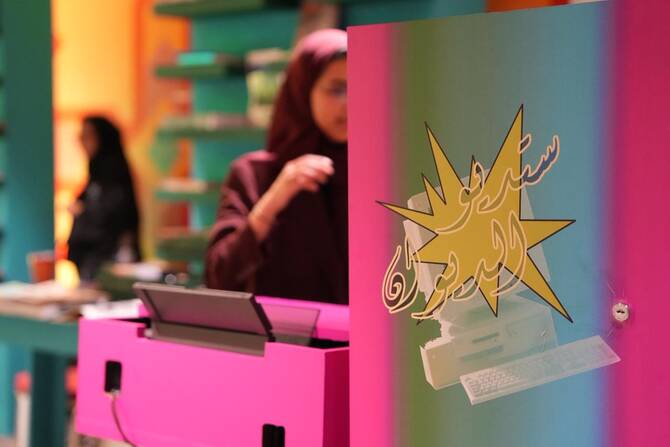
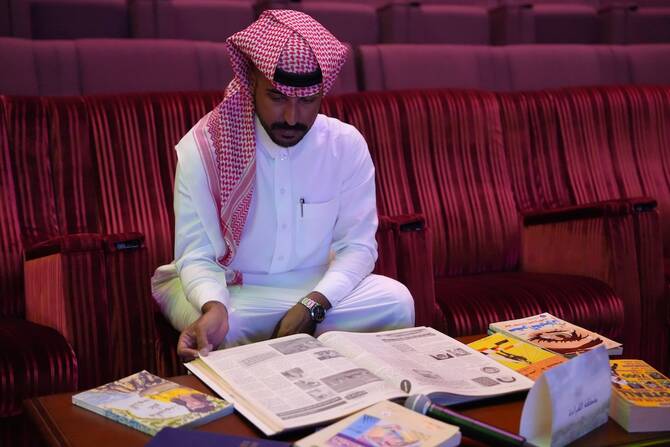
The exhibition recreated the era of internet cafes — once-popular hangouts where visitors paid to check emails or browse the web in the late 1990s and early 2000s. (Supplied)
2 / 5
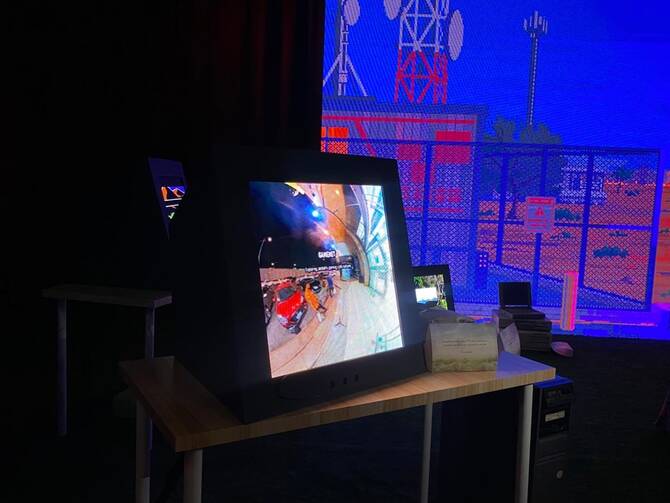
The exhibition recreated the era of internet cafes — once-popular hangouts where visitors paid to check emails or browse the web in the late 1990s and early 2000s. (Supplied)
3 / 5
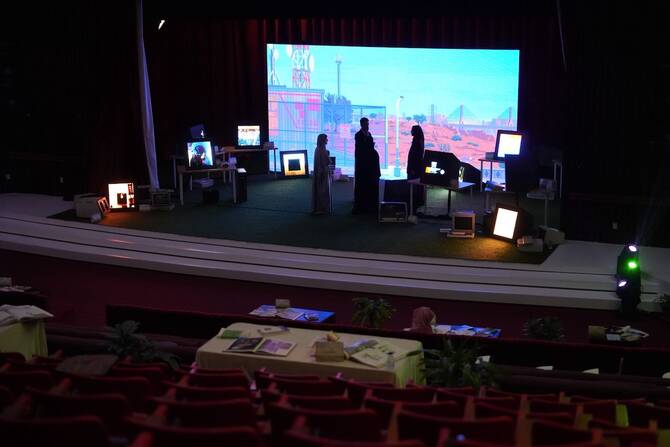
The exhibition recreated the era of internet cafes — once-popular hangouts where visitors paid to check emails or browse the web in the late 1990s and early 2000s. (Supplied)
4 / 5
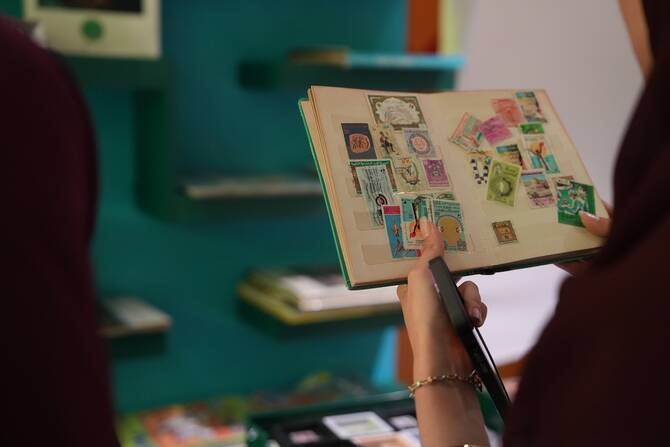
The exhibition recreated the era of internet cafes — once-popular hangouts where visitors paid to check emails or browse the web in the late 1990s and early 2000s. (Supplied)
5 / 5
The exhibition recreated the era of internet cafes — once-popular hangouts where visitors paid to check emails or browse the web in the late 1990s and early 2000s. (Supplied)
Short Url
Updated 29 November 2025
Follow

Saudi students bring back internet cafe nostalgia at Dhahran exhibition

DHAHRAN: A three-day “Internet Cafe” exhibition hosted by King Fahd University of Petroleum and Minerals in Dhahran drew to a close on Friday.

Organized by Diwan and Estiraha in partnership with KFUPM Student Affairs, the exhibition recreated the era of internet cafes — once-popular hangouts where visitors paid to check emails or browse the web in the late 1990s and early 2000s.

Although led by Gen Z students in their early 20s, including Diwan founder Fajer Al-Mindeel and creative director Wateen Al-Zahrani, the event appealed to all ages.

Born after the height of the internet cafe era, they decided to revive the experience in a modern setting, giving visitors a chance to relive memories or discover a piece of digital history.

Al-Mindeel said they were inspired to create the exhibition after spending more time on campus and discovering the stories behind its buildings.

KFUPM, founded in 1963 as an all-boys school, recently began enrolling women. Those featured here will be among the first graduating batch.

Al-Zahrani said: “One of the most fun parts of assembling this was that KFUPM alumni really love the university. Retrieving personal archives and connecting with them was very fulfilling."

Al-Mindeel said: “Building 10, the space we are standing in, we were so mindful and insistent on using this building to host the event because it was a cultural hub. In the 1980s and ’90s, they held performances and movie nights here. Recently, it’s only been used for exams.”

She added: “One of our goals at the Diwan was to revive that cultural spirit. Queen Elizabeth II even gave her speech on this same stage.”

The exhibition featured 14 artists, including Saudi and international creators Mohammad Al-Faraj, Basmah Felemban, Sarah Abu Abdullah, Asaad Badawi, Ally Yanxiu Liu, Abdulelah Quttub, Fai Ahmed, Rama Saputra, Sumayah Fallatah, Dalal Madhi, Hamdan Ahmed, Khaled Makhshoush and Studio Bin Hattan.

All works were either bespoke for the exhibition or created in recent years. Potted plants near the devices created an immersive space that encouraged visitors to reflect on their use of technology.

The exhibition featured 12 computers from the university archive and historic books from the library, blending retro tech, contemporary art and sound design.

“Some works discuss serious issues — we don’t always consider the environmental impact when we ask ChatGPT ‘how’s the weather today,’ for example,” said Al-Mindeel.

Jood Alshikhi, a current KFUPM student, told Arab News about her experience.

“What drew me most was how it mixed the past with the present — it opened with students’ old memories and first encounters with computers, then moved into a modern digital world of contemporary art,” she said.

“That leap made me realize how much our relationship with technology has shifted, from small, shared moments to a vibrant space shaped differently by each artist.”


Kingdom key player in regional peace, EU official says

Updated 15 sec ago
Follow

Kingdom key player in regional peace, EU official says

  • Hana Jalloul Muro highlights Riyadh’s role in regional stability, economic growth and advancing EU-Saudi strategic ties

Riyadh: Hana Jalloul Muro, vice-chair of the European Parliament’s Foreign Affairs Committee, has praised Saudi Arabia’s role as a “reliable partner” to the EU.

Describing the Kingdom as a “key international actor,” she highlighted its pivotal role in regional stability, including brokering peace talks on Ukraine, promoting peace in Palestine, and supporting stable governments in Lebanon and the Syrian Arab Republic.

“Saudi is a reliable partner because it is a country that has demonstrated that with Vision 2030, only in the last five, six years, it has changed impressively. It has a major women’s labor force, a very low youth unemployment rate and is growing very fast,” Muro told Arab News.

Speaking on the sidelines of the Future Minerals Forum in Riyadh, she added: “Saudi Arabia is becoming a key major player in the international arena now — for peace conversations on Ukraine, supporting the Syrian government, paying Syria’s external debt, stabilizing the government in Lebanon, promoting peace in Gaza, in Palestine and pushing for a ceasefire, too.

“So, I think it is a very key international actor, very important in the region for stability,” Muro added.

Explaining why she considers the Kingdom a reliable partner, Muro said: “It’s a country that knows how to see to the East and to the West.”

Muro also serves as the European Parliament’s rapporteur for Saudi Arabia, and is responsible for drafting reports on legislative and budgetary proposals and other key bilateral issues.

In mid-December 2025, the European Parliament endorsed a road map to elevate EU-Saudi relations into a full-fledged strategic partnership, which Saudi Ambassador to the EU Haifa Al-Jedea described as “an important milestone” in bilateral ties.

The report highlighted the possibility of Saudi-EU visa-free travel, reaffirming the EU’s commitment to advancing a safe, mutually beneficial visa-free arrangement with the five GCC countries to ensure equal treatment under the new EU visa strategy.

“One of the key hot topics is the visa waiver to Saudi Arabia, which I always support,” Muro said. “Saudi Arabia has, as you are aware, been in cascade for five years, and I think we need to work toward a visa waiver.”

The report also highlighted the economic significance of Saudi tourists to EU member states, particularly for the hospitality, retail and cultural sectors, while emphasizing that Saudi citizens do not pose a source of irregular migration pressure.

When asked about the status of the visa waiver, Muro said: “The approval, it is the recommendation to the commission to take into account its importance. We need to advance on that because we are in the framework of this strategic partnership agreement that covers many topics, so this is why the visa waiver is a central key issue.”

She added: “I think by now we recognize the international role of Saudi Arabia and how important it is to us as a neighbor — not only for security, counter-terrorism and energy, but for everything. We need to get closer to partners like the GCC, Saudi specifically.

“And I think that we need to take Saudi Arabia as a very big ally of ours,” Muro said.

During her time in Riyadh, Muro took part in a panel at the forum focused on the EU-KSA business and investment dialogue, and advancing the critical raw materials value chain.

On the sidelines, she met Saudi Vice Foreign Minister Waleed Elkhereiji to discuss ways to further strengthen Saudi-EU relations.

She also met Hala Al-Tuwaijri, chairwoman of the Saudi Human Rights Commission, saying: “I have to congratulate you and the government, your country, on doing a great job.”