


DAKAR: Corruption, instability and poverty have opened the door to powerful narcotics traffickers in Guinea-Bissau, where the military justified this week’s coup by alleging “drug barons” were plotting against the state.
Wednesday’s military takeover cast a harsh light on how the murky links between traffickers, politicians and officials deepen political turmoil in the coup-prone West African nation.
Luxury 4x4 vehicles cruising through the streets and lavish villas, suddenly acquired by owners with no visible income, are tell-tale signs in Guinea-Bissau, described by the United Nations as a gateway for drugs from Latin America bound for Europe.
“Guinea-Bissau has long been a central cog in the international cocaine trafficking system,” said the Global Initiative Against Transnational Organized Crime (GI-TOC) in an August report.
“Today, Bissau’s cocaine market is booming once again, and has arguably become more profitable than at any point in the country’s history,” it added.
“Colombians can be spotted at the top hotels in the capital, and retail prices for cocaine and crack are falling.”
- Cocaine fuels instability -
The country’s history has been marked by military coups and violence since independence from Portugal in 1974.
The drug trade has fueled the instability, prompting some analysts to brand Guinea-Bissau a “narco-state,” with the United States even labelling certain officials drug barons.
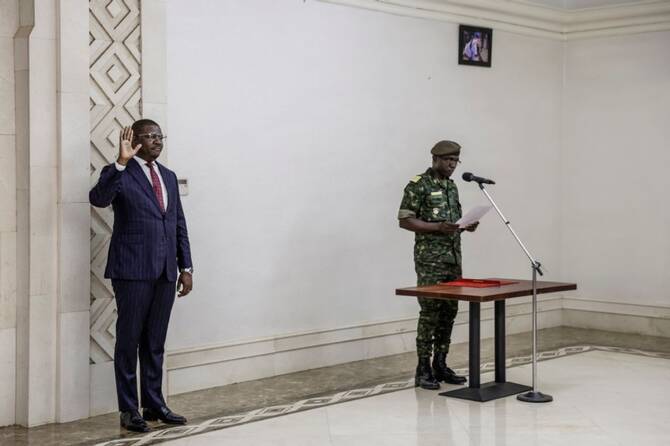
On Wednesday, General Denis N’Canha, head of the presidential military office, told reporters that officers launched the coup to protect security in response to a plot involving “national drug lords.”
Citing intelligence reports, he said the plan to destabilize Guinea-Bissau had included “the introduction of weapons into the country to alter the constitutional order.”
More than a quarter of the country’s population lived below the poverty line in 2023, according to the World Bank, while the vast sums generated by drug trafficking fuel envy and corruption.
The coup struck as the nation awaited the results of presidential and legislative elections held on November 23.
“The cocaine economy is inextricably linked to the Machiavellian politics of the tiny West African state,” GI-TOC said.
Following drug-related violence months ahead of the polls, GI-TOC warned that “with a flourishing cocaine market and expensive election campaigns looming... Guinea-Bissau appears to be yet again entering a period of significant upheaval.”
- Drugs and politics -
Foreign traffickers maintain links with local accomplices, who have contacts within the security forces to guarantee safe passage for drug shipments, a source close to the matter told AFP on condition of anonymity.
“Scouts” within the network alert contacts in the capital Bissau to the arrival of ships or planes from Latin America, the source said. “Handlers” then accompany the “product” and travel with it to Bissau.
Senior military figures and top civil servants have repeatedly been implicated in the drug trade in recent years.
The son of a former president, Malam Bacai Sanha Junior, was sentenced in March 2024 to several years in prison in the United States for involvement in an international heroin-trafficking scheme.
President Umaro Sissoco Embalo, ousted in Wednesday’s coup, had in August 2021 refused to extradite General Antonio Indjai, a former coup leader wanted by the United States for alleged drug trafficking linked to Colombia’s FARC rebels.
Some political campaigns have been suspected to have been financed by traffickers, with parties suddenly acquiring gleaming 4x4s to criss-cross the country.
- Drug convictions -
Increased police cooperation between Guinea-Bissau, Brazil, Colombia, Venezuela and the United States has helped deal some blows to the traffickers, however.
The Guinea-Bissau courts sentenced four Latin Americans in January to 17 years each for drug trafficking.
They were handed over in April to the US Drug Enforcement Administration (DEA), which transferred them to the United States.
West Africa has long been a natural staging post for drugs, mainly cocaine from Latin America, en route to North Africa and Europe, mostly by sea but increasingly by land, according to a 2024 report by the UN Office on Drugs and Crime (UNODC).
Drug trafficking is also a scourge in other regional states, notably Guinea and Sierra Leone, which face epidemics of kush, a locally used synthetic cannabinoid, and crack cocaine.


