
ISLAMABAD: Reko Diq’s Country Manager Zarrar Jamali said on Thursday the gold-copper mine’s $7 billion Phase 1 was fully financed and on schedule, with first copper exports expected in early 2029, calling it Pakistan’s largest-ever foreign investment project.
Reko Diq, located in Pakistan’s southwestern Balochistan province, is one of the world’s largest undeveloped copper and gold deposits. The project is jointly owned by the government of Pakistan and Canada’s Barrick Gold, and is considered central to Islamabad’s plan to revive foreign investment, stabilize its mineral sector and spur long-term exports after years of economic turbulence. The mine sits in a remote region near the border with Iran and Afghanistan, where security, infrastructure and development challenges have historically deterred global investors.
The first phase of the mine involves building a large open-pit copper operation, a 2,000-acre mining site, one of the world’s biggest copper processing plants and related infrastructure. The $5.66 billion construction cost increases to around $7 billion when financing charges and contingencies are included. The government sees the project as a long-term anchor of Pakistan’s economic diplomacy, with Barrick’s participation viewed as a signal to other multinational investors.
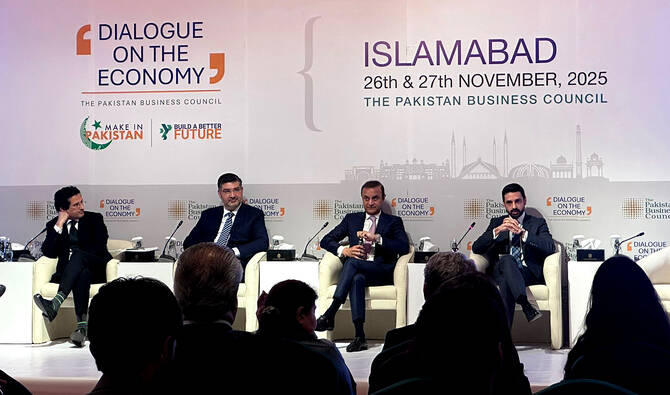
“The phase 1 of the project will take around $5.66 billion to construct… and that $5.66 billion rounds up to 7 because of the financing costs and lenders and contingencies,” Jamali said in an address at a Pakistan Business Council conference in Islamabad.
“The financing is secure. Whether that’s Barrick or someone else, we are going to go full steam ahead. Because our future depends on this project.”
Jamali confirmed the project has secured $3.5 billion in external lending from a consortium of 11 international banks spanning Japan, the United States, Sweden and Canada. Approvals from state-owned entities and project partners have also been finalized, he said.
Under the current schedule, the mine will begin ore processing by late 2028 and export its first consignment of copper concentrate in early 2029. Reko Diq is expected to operate for at least 40 years.
Jamali also highlighted the project’s local hiring and development model.
“In totality, 77 percent of our employees are from Balochistan. Out of 77, 65 percent are from Chagai district,” he said, adding that hiring was structured by priority tiers: villages near the site, then Chagai district, then the rest of the province.
He said the company had spent $10 million this year on health, education and water initiatives, including rehabilitating seven schools and setting up two medical centers.
“All of this… is decided by the local community,” Jamali said. “It’s all about the people, for the people, by the people.”
Despite reports of Barrick Gold reviewing some of its global growth projects, Jamali said the company’s board and leadership had repeatedly reaffirmed their commitment to Pakistan. He referenced comments by Barrick CEO officials earlier this week restating the company’s long-term engagement in Reko Diq.
Reko Diq’s development is seen as a major test case for Pakistan’s ability to manage large-scale foreign investments, diversify exports and improve stability in resource-dependent regions. If completed on schedule, the mine is expected to become one of Pakistan’s largest sources of foreign exchange.
Speaking to Arab News last week, finance minister Muhammad Aurangzeb said the long-awaited financial close for Reko Diq was now imminent.
“The financial close, from my perspective, is around the corner,” he said.
He explained that the International Finance Corporation (IFC) was leading the debt consortium, a role that signals strong due diligence and comfort for global lenders because IFC typically structures and anchors large, complex resource-sector financings.
One of the final elements, the minister noted, was the participation of the US Export-Import Bank (US Exim), which had temporarily paused new approvals during the recent US government shutdown. With the US government now fully reopened, he said Exim’s involvement should resume “relatively soon.”
Aurangzeb said the financing structure was now essentially in place, with the IFC-led consortium having assembled roughly $3.5 billion in project debt, and only final lender approvals remaining.
“Everything is complete. I think in the coming weeks, this should be finalized and the financial close should be there.”
He added that he met the IFC managing director and all consortium partners during a recent visit to Washington, reinforcing his confidence that closure was near.
The minister underscored Reko Diq’s transformative potential for Pakistan’s stagnant export base. With annual exports stuck at roughly $30 billion, the mine’s first year of operation alone is expected to generate $2.8 billion in export potential, nearly 10 percent of Pakistan’s total exports today.