

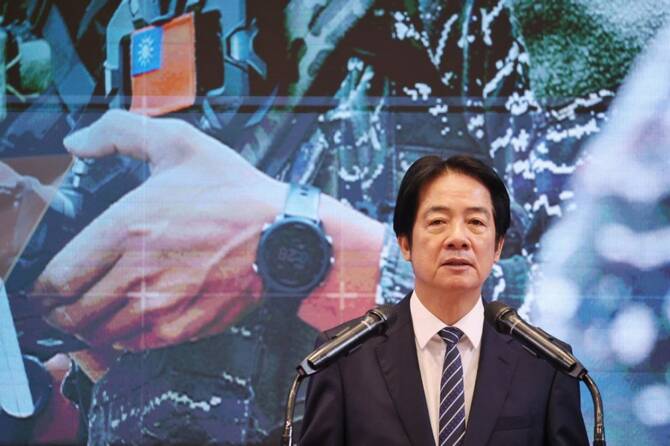

TAIPEI: Taiwan has already held preliminary talks with the United States about what weapons it wants to buy as part of a $40 billion supplementary defense budget, Defense Minister Wellington Koo said on Thursday. Taiwan President Lai Ching-te announced the previous day the new spending plan, which runs from 2026-2033, to underscore the island’s determination to defend itself in the face of a rising threat from China.
China, which views democratically governed Taiwan as its own territory, has ramped up military and political pressure over the past five years to assert its claims, which Taipei strongly rejects.
Speaking to reporters in Taipei, Koo said purchases from the United States naturally constitute a significant part of the spending plans.
“We have already completed preliminary coordination with the United States on the planning for this military procurement project,” he said.
Taiwan has formally obtained from the US Department of Defense the procurement item quantities, quotation information, transaction timelines, and other relevant details, showing the United States is willing to provide the weapons, Koo added.
But no details can be revealed before a formal notification to the US Congress, he said.
The Pentagon did not immediately respond to a request for comment sent outside of business hours in Washington.
PARLIAMENTARY APPROVAL NEEDED
The spending will need to be passed by Taiwan’s opposition-dominated parliament. Taiwan’s largest opposition party, the Kuomintang, on Wednesday criticized the announcement, which Lai made first in a Washington Post op-ed, saying he had not told parliament first.
“National defense investment is essential, but leaning primarily on massive borrowing is neither fiscally prudent nor responsible governance,” the party said in a statement.
Taiwan Premier Cho Jung-tai, speaking at the same news conference as Koo, appealed for legislative support for the spending given the threat level from China.
“If you don’t have a country, how can you have a home?” Cho said.
Koo said the budget would also generate 90,000 jobs and bring a direct economic benefit to Taiwan of T$400 billion.
The United States is Taiwan’s most important international backer and arms supplier, despite the lack of formal diplomatic ties. As Taiwan faces calls from Washington to spend more on its own defense, mirroring US pressure on Europe, Lai said in August he hoped for a boost in defense spending to 5 percent of gross domestic product by 2030. But since US President Donald Trump took office in January, only one new arms sale to Taiwan has been approved, a $330 million package for fighter jets and other aircraft parts announced this month. The United States plans to ramp up weapons sales to Taipei to a level exceeding Trump’s first term, as part of an effort to deter China, two US officials told Reuters in May.
China has condemned Taiwan’s new defense spending plans, as it always does.
Lai says only Taiwan’s people can decide their future. Beijing has rejected his repeated offers of talks, saying he is a “separatist.”


