

Pakistan, US firms launch joint venture to develop critical minerals

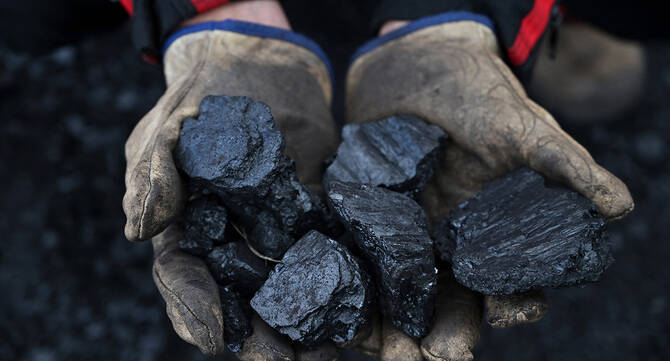
A miner shows coal rocks at the Mineria LyC coal mine in Tausa, Cundinamarca Department, Colombia, on August 20, 2025. (AFP/ file)
Short Url
Updated 25 November 2025
Follow

Pakistan, US firms launch joint venture to develop critical minerals

  • Joint venture to focus on critical minerals’ exploration, mining, processing, and trading, says Pakistani finance official
  • Says initial US investment of $100 million will be followed by more as projects shift to mining and local processing

ISLAMABAD: Pakistani private company Himalayan Earth Exploration (HEE) and an American listed company Nova Minerals Limited recently formed a joint venture to develop critical minerals in Pakistan, an official said. 

Islamabad has sought to attract foreign investment in its critical minerals sector in recent months. In April this year, Pakistan hosted an international minerals summit where top companies and government officials from the US, Saudi Arabia, China, Turkiye, the UK, Azerbaijan, and other nations attended. 

Pakistan is rich in gold, copper and lithium reserves as well as other minerals, yet its mineral sector contributes only 3.2 percent to the country’s GDP and 0.1 percent to global exports, according to official figures.

“Pakistan’s Himalayan Earth Exploration (HEE) and US-listed Nova Minerals (NASDAQ/ASX: NVA) sign strategic partnership to develop Pakistan’s critical minerals & rare earths,” Pakistan’s Adviser to Finance Minister Khurram Schehzad wrote on social media platform X on Sunday. 

HEE is a subsidiary of the Chinar and Gohar construction groups in Pakistan. The HEE is already leading mineral exploration across Pakistan with a 35 square kilometer placer gold project and a potential 111-kilometer mineral corridor in the northwestern Khyber Pakhtunkhwa province.

Meanwhile, Nova Minerals is a dual NASDAQ and ASX-listed gold, antimony and critical minerals mining exploration and development American company.

Schehzad said both companies will represent their interests in Pakistan and the US, adding that the joint venture will focus on critical minerals’ exploration, mining, processing, and trading.

The finance official said the agreement will ensure value addition in Pakistan as the partnership prioritizes the processing of critical minerals inside the country, which would create jobs and ensure skills are exchanged. 

He said the joint venture will see an initial US investment of $100 million, followed by “further phased investments” as projects move from exploration to mining and local processing. 

“This signals Pakistan is ready for serious mineral investment,” Schehzad wrote. “Critical minerals will be a game changer, boosting high-value exports, skilled jobs and industry.”

Washington has expressed interest in developing Pakistan’s critical minerals sector in recent weeks, saying they are essential in a variety of technologies related to advanced manufacturing and energy production.

In September, American firm US Strategic Metals and Pakistan’s Frontier Works Organization (FWO) signed an agreement to export readily available minerals from Pakistan, including antimony, copper, gold, tungsten, and rare earth elements, to the US.


Pakistan, global crypto exchange discuss modernizing digital payments, creating job prospects 

Updated 05 December 2025
Follow

Pakistan, global crypto exchange discuss modernizing digital payments, creating job prospects 

  • Pakistani officials, Binance team discuss coordination between Islamabad, local banks and global exchanges
  • Pakistan has attempted to tap into growing crypto market to curb illicit transactions, improve oversight

ISLAMABAD: Pakistan’s finance officials and the team of a global cryptocurrency exchange on Friday held discussions aimed at modernizing the country’s digital payments system and building local talent pipelines to meet rising demand for blockchain and Web3 skills, the finance ministry said.

The development took place during a high-level meeting between Finance Minister Muhammad Aurangzeb, Pakistan Virtual Assets Regulatory Authority (PVARA) Chairman Bilal bin Saqib, domestic bank presidents and a Binance team led by Global CEO Richard Teng. The meeting was held to advance work on Pakistan’s National Digital Asset Framework, a regulatory setup to govern Pakistan’s digital assets.

Pakistan has been moving to regulate its fast-growing crypto and digital assets market by bringing virtual asset service providers (VASPs) under a formal licensing regime. Officials say the push is aimed at curbing illicit transactions, improving oversight, and encouraging innovation in blockchain-based financial services.

“Participants reviewed opportunities to modernize Pakistan’s digital payments landscape, noting that blockchain-based systems could significantly reduce costs from the country’s $38 billion annual remittance flows,” the finance ministry said in a statement. 

“Discussions also emphasized building local talent pipelines to meet rising global demand for blockchain and Web3 skills, creating high-value employment prospects for Pakistani youth.”

Blockchain is a type of digital database that is shared, transparent and tamper-resistant. Instead of being stored on one computer, the data is kept on a distributed network of computers, making it very hard to alter or hack.

Web3 refers to the next generation of the Internet built using blockchain, focusing on giving users more control over their data, identity and digital assets rather than big tech companies controlling it.

Participants of the meeting also discussed sovereign debt tokenization, which is the process of converting a country’s debt such as government bonds, into digital tokens on a blockchain, the ministry said. 

Aurangzeb called for close coordination between the government, domestic banks and global exchanges to modernize Pakistan’s payment landscape.

Participants of the meeting also discussed considering a “time-bound amnesty” to encourage users to move assets onto regulated platforms, stressing the need for stronger verifications and a risk-mitigation system.

Pakistan has attempted in recent months to tap into the country’s growing crypto market, crack down on money laundering and terror financing, and promote responsible innovation — a move analysts say could bring an estimated $25 billion in virtual assets into the tax net.

In September, Islamabad invited international crypto exchanges and other VASPs to apply for licenses to operate in the country, a step aimed at formalizing and regulating its fast-growing digital market.