- Pakistan has 10 million acres of land suitable for olive farming but only 55,000 acres have been developed so far
- Officials say the olive sector offers a promising alternative to more than $3 billion imports of edible oil annually
KARACHI: Pakistan’s National Food Security Minister Rana Tanveer Hussain on Friday said the country has established 51 olive extraction units, four laboratories and launched more than 90 startups, in a push to develop a profitable olive industry.
The food security minister made the remarks while addressing a World Olive Day event held during the 122nd Session of the International Olive Council (IOC) in Córdoba, Spain.
Pakistan has about 10 million acres of land suitable for olive farming but only 55,000 acres have been developed so far, according to data shared at Pakistan Olive Summit 2.0 held last month.
Of the 1.3 billion olive plants required, only about seven million have been planted so far. At full production capacity, the sector could generate more than $3 billion annually in olive oil exports.
“Pakistan has now established 51 olive oil extraction units, six fruit processing facilities, five weather stations, fourteen nurseries, and four olive oil quality laboratories, including a sensory evaluation laboratory to support scientific excellence and quality assurance,” Hussain was quoted as saying by his ministry.
“Thousands of women and youth have received training in various segments of the olive value chain, and more than 90 entrepreneurs have successfully launched olive-based startups, contributing to rural livelihoods, local economic growth, and value addition.”
Pakistan spends more than $3 billion a year on edible oil imports, according to government data. Officials say the olive sector offers a promising alternative, particularly in the northwestern and Potohar regions, where climate conditions are well suited for cultivation.
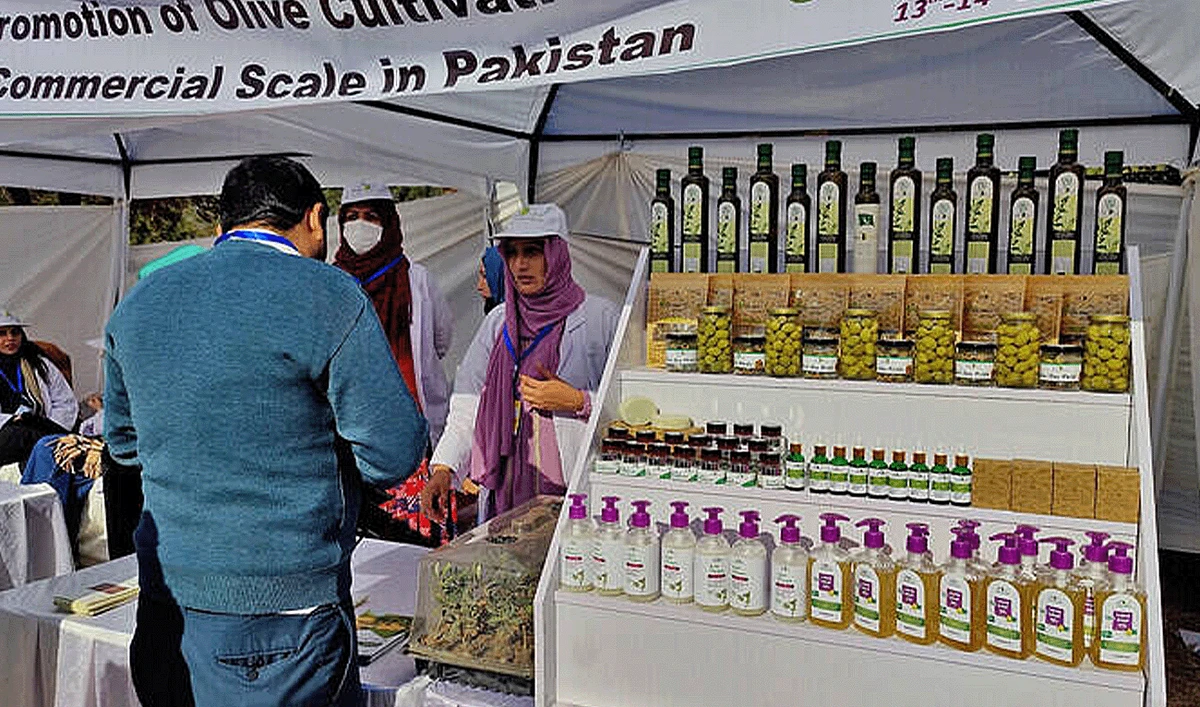
In October, the country hosted Pakistan Olive Summit 2.0 in Islamabad, aimed at accelerating investment and innovation in the emerging olive sector.
Hussain noted the recognition of Pakistani startup “LO – Loralai Olives” with a silver award at the New York Olive Oil Quality Competition this year.
“This recognition is a testament to the dedication of Pakistani farmers, researchers, and young innovators who are shaping the future of the olive industry,” he added.