

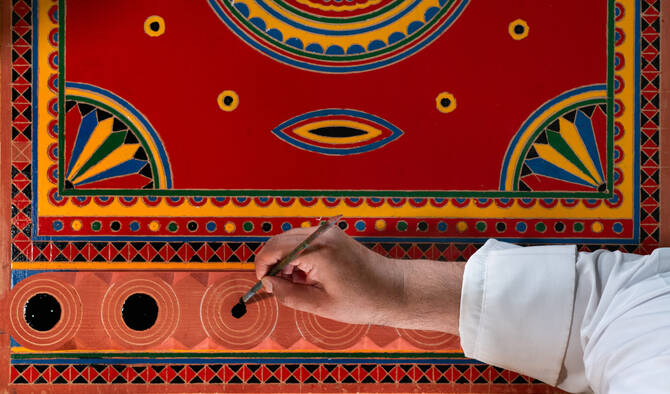

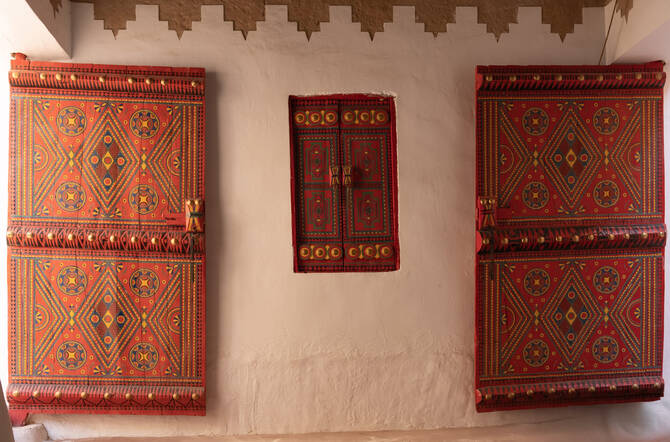
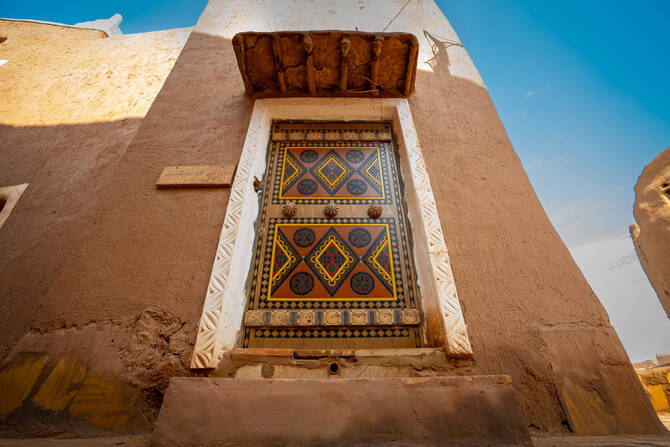


RIYADH: In traditional Najdi homes, doors were never merely entrances; they reflected the identity of a household, showcased the artistic taste of its owners, and carried the signature of craftsmen who spent countless hours transforming wood into intricate works of art designed to endure for generations.
Today, the Royal Institute of Traditional Arts, otherwise known as Wrth, is helping preserve that legacy by opening registration for a new cohort of its Najdi Woodworking and Door Arts Apprenticeship Program, which aims to pass down the skills and knowledge behind one of the Kingdom’s most distinctive architectural traditions.
The 18-month apprenticeship will be held at the institute’s campus in Unayzah, in the Qassim region, where participants will receive hands-on training in traditional woodworking, Najdi carving and ornamentation, and the construction of traditional doors using both heritage techniques and modern tools.
For Basmah Al-Muqbil, a former graduate of the program and a woodcraft artisan, the appeal of the apprenticeship was immediate.
“Najdi doors are heritage artworks that tell the story of the Najd region and its culture,” she told Arab News. “Learning the details of this rich legacy gives artisans a sense of pride and of responsibility to preserve it.”
Among the many skills she acquired, Al-Muqbil said mastering precision and control while working with traditional tools proved particularly challenging.
“The work requires a high degree of accuracy,” she said. “Even a slight increase in pressure or a small deviation in alignment can distort the geometric patterns and potentially ruin the entire design.”
The apprenticeship also changed her perception of Saudi Arabia’s traditional crafts.
“Learning directly from master craftsmen was not just technical training,” she said. “It completely transformed the way I view traditional Saudi handicrafts. I moved from admiring the finished product to understanding the artistic journey behind every piece.”
One of the most fascinating discoveries during the program was learning about the sophisticated design philosophy embedded in traditional Najdi doors.
“What amazed me most was the social and security thinking behind the old locking systems,” Al-Muqbil said. “The mechanism, including components such as pegs and channels, was crafted entirely from wood without the use of any metal parts.”
Looking ahead, she plans to incorporate the knowledge she gained into her professional and creative work by blending traditional Najdi motifs and carvings with contemporary materials and designs. “I do not see these skills as simply another addition to my résumé,” she said. “They are the foundation of a new chapter in my professional and artistic journey.”
Beyond technical instruction, the apprenticeship offers participants an immersive learning experience that reconnects them with one of the most recognizable artistic elements of Najdi architecture while providing pathways to transform traditional craftsmanship into contemporary creative practice.
The program forms part of Wrth’s broader mission to safeguard and sustain Saudi Arabia’s traditional arts through practice-based education and direct knowledge transfer from master artisans to new generations, strengthening the presence of national crafts within the Kingdom’s cultural and architectural landscape.
The next apprenticeship begins Aug. 23. The program is offered free of charge to Saudi citizens, and registration is available through Wrth’s official website.




