
RIYADH: In the heart of the Kingdom’s deserts, an invisible yet dedicated army is quietly protecting plants, improving soil, and supporting the ecological balance.
While Saudi Arabia is commonly known for its arid landscapes, it is also home to various insect species that play an essential role in environmental protection.
As the country moves forward with its green agenda and continues to support it with sustainable initiatives, understanding the science and benefits of insects becomes critical to achieving these objectives.
One of the sustainability initiatives took place last summer when the National Center for Wildlife launched its “Decade Land Expedition to Explore Terrestrial Ecosystems.”
The NCW’s initiative is a comprehensive research mission for terrestrial ecosystems, to document the biodiversity, density and distribution of wildlife, with local and international experts and researchers.

Mohammed Qurban, CEO of the NCW, said the data enables the organization to “develop effective strategies for protecting species and raising awareness of the importance of preserving biodiversity.”
And also to “document this great biological richness at the global level, and enhancing the Kingdom’s role in regional and international environmental agreements.”
Through the study and many other initiatives, officials are highlighting the seriousness of securing a thriving environment for the future, including protecting the smallest contributors.
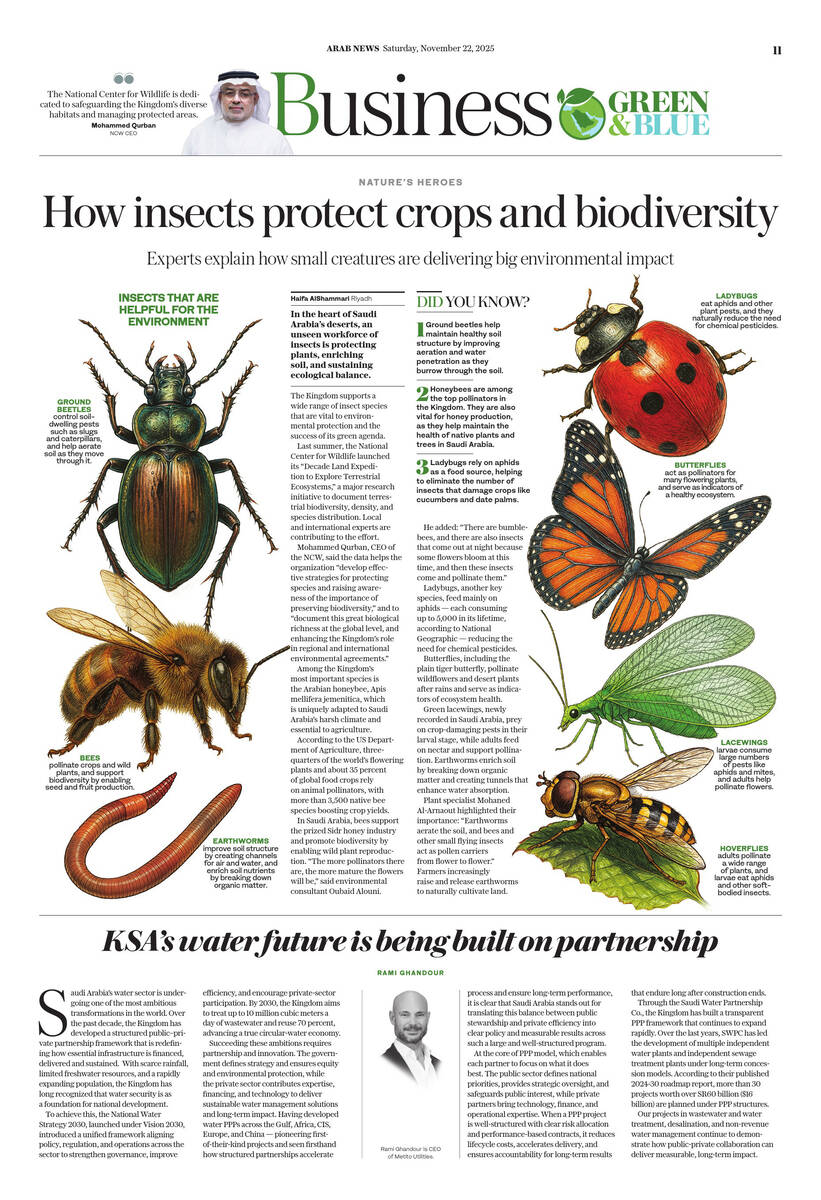
No insect is more critical to the Kingdom’s environment than the honeybee. The Arabian honeybee, scientifically known as Apis mellifera jemenitica, is unique for its adaptation to the country’s harsh climate and is essential to the agricultural industry.
In addition, according to the US Department of Agriculture, three-quarters of the world’s flowering plants and around 35 percent of the world’s food crops rely on animal pollinators for reproduction. And over 3,500 species of native bees contribute to increased crop production.
Animal pollinators such as bees, butterflies and moths, birds and bats, beetles, and other insects are responsible for one out of every three bites of food people eat daily, reported the USDA.
DID YOU KNOW?
• Ground beetles help maintain healthy soil structure by improving aeration and water penetration as they burrow through the soil, and they also support the growth of palm trees, grain crops, and garden plants.
• Honeybees are among the top pollinators in the Kingdom. They are also vital for honey production, as they help maintain the health of native plants and trees in Saudi Arabia.
• Ladybugs rely on aphids as a food source, helping to eliminate the number of insects that damage crops like cucumbers and date palms.
In the Kingdom, bees support the Sidr honey industry, which is both a cultural and economic treasure. But beyond their agricultural importance, bees promote biodiversity by helping plants reproduce in the wild, thereby maintaining a balanced ecosystem.
“The more pollinators there are, the more mature the flowers will be,” said environmental consultant Oubaid Alouni.
He added: “There are bumblebees, and there are also insects that come out at night because some flowers bloom at this time, and then these insects come and pollinate them.”
Another example is ladybugs which are beneficial for farmers and home gardeners. This species relies mainly on aphids as a food source and each has the ability to consume up to 5,000 insects in its lifetime, according to National Geographic.
Reducing the number of harmful pests lowers the need for chemical pesticides and provides healthier soil and safer food. Releasing ladybugs is also encouraged by environmentalists as it is a sustainable alternative to traditional pest control methods.
Opinion
This section contains relevant reference points, placed in (Opinion field)
Another tiny friend of the environment is the butterfly. Butterflies are important pollinators for wildflowers and desert plants after seasonal rains. One type, the plain tiger butterfly, thrives in warm climates and helps maintain plant diversity in the Kingdom.
They are also sensitive to their surroundings, making their presence in the wild an indicator of the ecosystem’s health.
Green lacewings are another species with powerful environmental benefits. Although they are typically native to North America, three lacewing species have been newly recorded in Saudi Arabia, according to the National Institutes of Health.
Like ladybugs, green lacewing larvae prey on aphids, mites, and other pests that ruin crops and threaten agriculture. Adult lacewings, however, feed on nectar, contributing to the pollination process of native plants and agricultural fields.
For local farmers looking to reduce chemical use, adding lacewings to the field could offer a greener alternative to traditional pesticides and a safer solution for people and the soil.
Further, living mainly underground or in shaded areas, ground beetles are also beneficial insects. They hunt harmful pests including slugs and caterpillars that attack plant roots, and improve aeration and water penetration as they burrow through the soil.

Mohammed Qurban, CEO of the National Center for Wildlife. (Supplied)
Also, earthworms break down organic matter into nutrient-rich compost, helping plants grow stronger and healthier. These small species make tunnels to allow better water absorption.
Additionally, as the country invests in sustainable farming, earthworms have become key partners in building fertile and productive soil.
Mohaned Al-Arnaout, a plant specialist with over 32 years of experience, explained how earthworms enhance soil quality and support the plant cycle.
“Vegetation cover always multiplies with weather factors, most of which are insects and dust, like beneficial insects such as bees and earthworms. Earthworms aerate the soil, and bees and other small flying insects act as pollen carriers from flower to flower,” he said.
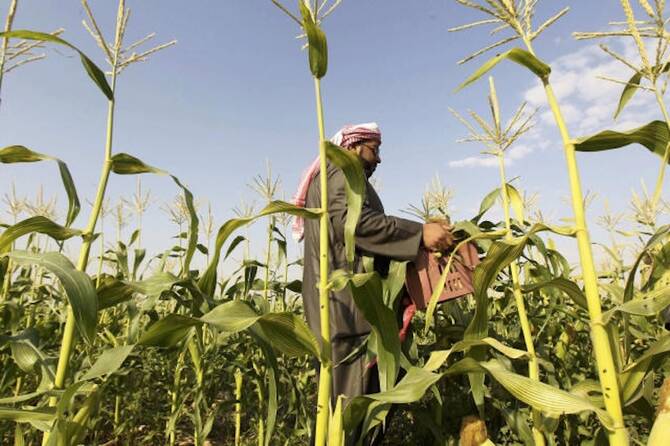
“Some farmers produce earthworms and release them into the soil to aerate it naturally. They raise them in enclosures to reproduce, and then, before the planting process, they plow the land, release the earthworms, and then plant seeds.
“The earthworms then perform the same function as humans, plowing and aerating the soil, and creating air pockets between the roots.”
Insects, whether honeybees or earthworms, are all natural support systems for the environment and agriculture, and protecting them is one strategy to secure the Kingdom’s future.