KFAR SABA, Israel: Tens of thousands of people packed a cemetery in central Israel on Tuesday for the funeral of an Israeli soldier whose body had been held in Gaza for 11 years, overflowing and blocking surrounding streets as somber crowds stood with Israeli flags.
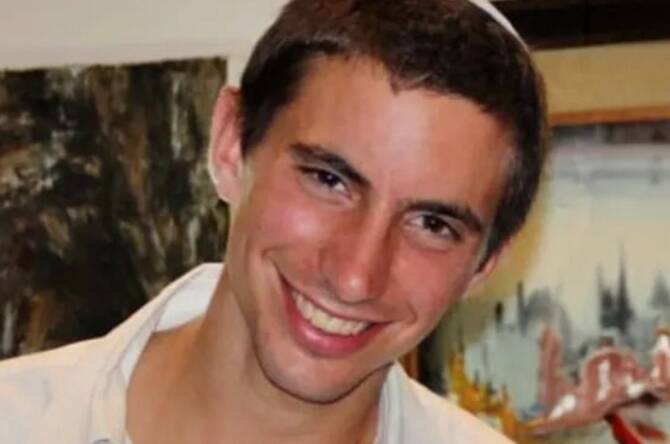
The burial of Lt. Hadar Goldin was a moment of closure for his family, which has traveled the world in a public campaign seeking his return. The huge turnout also reflected the importance of the case for the broader public in Israel, where Goldin became a household name during the struggle to bring his remains home after 4,117 days.
Hamas returned his remains on Sunday as part of the Trump-brokered ceasefire deal that began last month. The bodies of four hostages taken in the Hamas-led attack on Oct. 7, 2023, which sparked the current war, are still in Gaza.
Goldin was 23 when he was killed two hours after a ceasefire took effect in the 2014 war between Israel and Hamas. For years before the Oct. 7 attack, posters with the faces of Goldin and Oron Shaul, another soldier whose body was abducted in the same war, stared down from intersections as their families campaigned for the return of their bodies.
Israel’s military long ago determined that Goldin had been killed based on evidence found in the tunnel where his body was taken, including a blood-soaked shirt and prayer fringes. The military retrieved Shaul’s body in January.
“Hadar, we waited for you 11 years, that’s a long time. A very long time. I honestly can’t explain how we did it,” Goldin’s mother, Leah, said as she stood next to his grave. Even though there was never any doubt that Goldin had been killed, being able to reach out and touch his body finally allowed her to let go of her last hopes. “I still believed you would jump up and say ‘Everything is fine!’” she said.
Eulogies from Goldin’s siblings, parents, and former fiancée at his funeral never mentioned Prime Minister Benjamin Netanyahu, who was also prime minister when Goldin was kidnapped and for most of the period since. They continuously thanked the Israeli military, including reserve soldiers, who tirelessly searched for Goldin’s body over the years.
Netanyahu did not attend the funeral, though Israel’s military chief of staff, Lt. Gen. Eyal Zamir gave a eulogy on behalf of the military, and Benny Gantz, an opposition lawmaker who was the chief of staff during Goldin’s abduction, attended with former military leaders.
’Destroy Israel from the inside’
For years, Israel had four hostages in Gaza: Goldin, Shaul, and two Israelis with mental health issues who had crossed into Gaza on their own and were held since 2014 and 2015.
All four have been returned from Gaza in the past year. Many who spoke at his funeral noted how, with the return of Goldin’s body, the 2014 war had finally ended.
His parents traveled around Israel and around the world, meeting with politicians and leaders, and testifying at the UN in their desperate bid to retrieve his body for burial.
“Hamas’ kidnapping of bodies is attempting to destroy families and destroy Israel from the inside,” said Tzur Goldin, the twin brother of Hadar. He noted how many hundreds of thousands of Israelis over the years had prayed for his brothers return, lit candles, came to protests, wore t-shirts with his photo, or hung up signs in support.
His sister, Ayelet, called it a “historic moment” to finally be able to stand with her family and say the mourner’s kaddish, the traditional Jewish prayer for the dead, over her brother’s body and not over an empty grave. “Suddenly, now that you’re here, I understand how sacred and profound it is to bring you home, because this is where you belong and this is where you need to be,” said Edna Sarusi, Hadar’s former fiancee.
Leah Goldin told The Associated Press earlier this year that recovering her son’s body is part of the social contract between Israel and its citizens, who are required by law to serve in the military.
“Hadar is a soldier who went into combat and they abandoned him, and they destroyed his humanitarian rights and ours as well,” Goldin said. She said that her family often felt frustrated by the lack of support from the government in their struggle to bring Hadar, an artist with a talent for drawing who had just become engaged, home for burial.
Hannibal directive
Dozens of Palestinians were killed in Israel’s initial efforts to recover Goldin, in what Palestinian witnesses described as heavy and indiscriminate shelling.
Fearing a soldier had fallen into enemy hands, Israel invoked its so-called “Hannibal” directive, a protocol that allowed the heavy use of force to prevent the capture of a comrade, and Israeli forces attacked a neighborhood on the outskirts of the southern Gaza city of Rafah with artillery fire, tanks shells and airstrikes, killing over 110 Palestinians.
Palestinian residents described a terrifying ordeal as they fled their homes and searched for cover amid heavy shelling of the area. Human rights groups identified 121 people killed and accused Israel of committing war crimes by allegedly using disproportionate or indiscriminate force and failing to distinguish between civilians and combatants.
The directive was canceled by the military in 2016 following heavy criticism. In 2017, the military introduced a revised version.
In the 2014 war, over 2,200 Palestinians were killed, including hundreds of civilians, and widespread damage was inflicted on Gaza’s infrastructure. Another 73 people were killed on the Israeli side during 50 days of fighting.
On Tuesday, the Israeli military announced it had dismantled the tunnel shaft in Rafah where Goldin’s body was kidnapped.
Palestinians in Gaza still struggling to access food
The war began with a Hamas-led attack on Israel on Oct. 7, 2023, when around 1,200 people, mostly civilians, were killed, and 251 people were kidnapped. Four bodies of hostages remain in Gaza.
On Tuesday, Gaza’s Health Ministry said the number of Palestinians killed in Gaza has risen to 69,182. Its count — generally considered by independent experts as reliable — does not distinguish between militants and civilians, but the ministry says more than half of those killed were women and children.
Displaced Palestinians in central Gaza say they continue to rely heavily on charity kitchens for their only daily meal, as soaring market prices and the lack of income have left them struggling to afford daily living costs.
Scores of people, most of them children, lined up with empty pots at a charity kitchen in Nuseirat refugee camp on Tuesday waiting to be served rice — the only food available that day.
“The rockets and planes stopped but increasing living costs has been the hardest weapon used against us,” said Mohamed Al-Naqlah, a displaced Palestinian living in Nuseirat.


![]()

Tens of thousands attend funeral of Israeli soldier whose remains were held in Gaza for 11 years
Short Url
https://arab.news/ctj88
Tens of thousands attend funeral of Israeli soldier whose remains were held in Gaza for 11 years
- The huge turnout also reflected the importance of the case for the broader public in Israel
- Hamas returned his remains on Sunday as part of the Trump-brokered ceasefire deal that began last month


Latest updates


© 2026 SAUDI RESEARCH & PUBLISHING COMPANY, All Rights Reserved And subject to Terms of Use Agreement.