SHANGHIA: Takashi Ito, owner of a restaurant in Shanghai, had been looking forward to China’s lifting of a ban on imports of Japanese seafood — only to have his hopes dashed this week amid an increasingly heated diplomatic spat between Beijing and Tokyo.
Tensions between the Asian neighbors flared up after new Japanese Prime Minister Sanae Takaichi said this month that a Chinese attack on Taiwan threatening Japan’s survival could trigger a military response.
China, which regards the democratically governed island as its own, responded with ire. In addition to reinstating a ban on Japanese marine produce, it has boycotted travel to Japan, and threatened stern countermeasures. Numerous meetings and cultural events have also been canceled.
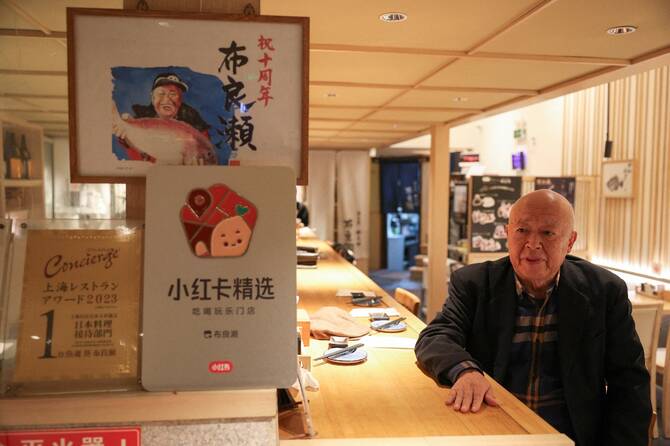
“Every time a major incident like this happens, we are in great pain because our hearts rise and fall as the relationship between Japan and China rattles every time. It’s very painful,” Ito told Reuters at his Japanese seafood restaurant Merase.
In perhaps a worrying sign, the restaurant also had a few cancelations on Wednesday night, although the potential customers didn’t say why. Chinese customers generally account for half of Merase’s bookings.
Beijing had only recently partially eased restrictions on Japanese seafood that had been imposed due to Tokyo’s decision two years ago to release treated wastewater from its Fukushima power plant, the site of a 2011 nuclear meltdown that followed a massive earthquake and tsunami.
Ito has tried to source locally as much as possible but some types of fish can only be procured from Japan.
“This incident is one of the biggest incidents so far,” he said, adding that he believes it’s unlikely there will be any good news about seafood imports soon.
“Takaichi said what she said and I don’t think she will change it. If possible, I hope diplomats in Japan and China can work together to improve the situation. I hope that the people of China and Japan will be able to enjoy the same foods without fighting each other,” he said.
The dispute has seen vitriolic responses by a Chinese diplomat in Japan and Chinese state media aimed at Takaichi. That’s prompted Japan to warn its citizens in China to step up safety precautions and avoid crowded places.
But both Ito and fellow Shanghai-based restaurateur Kazuaki Sone say they are not concerned about their own safety — only about the potential that problems between governments will make it harder for people to continue connecting for business, food or cultural exchange.
“I’ve lived a long time in China and I have experienced diplomatic tensions between Japan and China several times,” said Sone who moved to China in 2012 and opened a yakitori restaurant, Hyakumanben, two years ago.
“But people in general, especially good friends, don’t treat me any differently ... That’s why I am still able to work here in China,” he said.


![]()

Japanese restaurant owners in China lament flare-up in diplomatic tensions
Short Url
https://arab.news/cqdk9
Japanese restaurant owners in China lament flare-up in diplomatic tensions
- Beijing had only recently partially eased restrictions on Japanese seafood that had been imposed due to Tokyo’s decision two years ago to release treated wastewater from its Fukushima power plant


Latest updates


© 2026 SAUDI RESEARCH & PUBLISHING COMPANY, All Rights Reserved And subject to Terms of Use Agreement.