



ALKHOBAR: Saudi professionals who studied in the US are returning home with skills that are driving the Kingdom’s industries forward.
More than 14,000 Saudi students are currently enrolled in American universities, according to the Saudi Press Agency.
The Cultural Mission in Washington says the Kingdom is now focusing on placing students in elite institutions and advanced training programs, building a talent pipeline that supports key sectors, including aviation, engineering and medicine in line with Vision 2030.
The University of New Haven also announced a new strategic partnership with Saudi Arabia’s Takamol Holding on Wednesday, aiming to develop leadership and workforce programs aligned with Vision 2030.
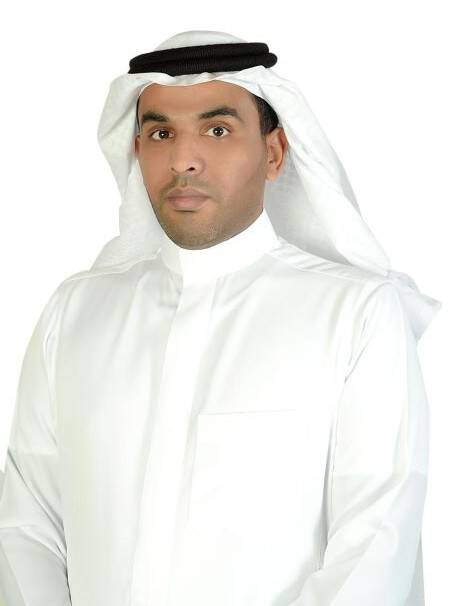
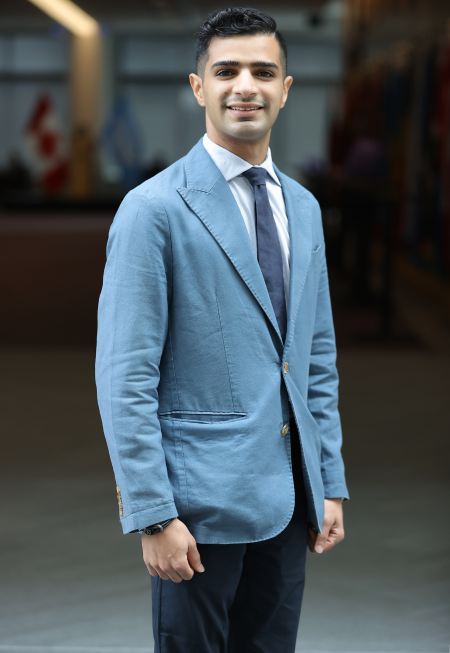
Among the Saudi talent trained in the US are Majdi Al-Amri and Rakan Al-Obaid, two graduates whose paths show how education abroad is shaping Saudi Arabia’s next generation of aviation leaders.
Majdi Al-Amri, director of risk management at the General Authority of Civil Aviation, told Arab News that his US education was a turning point.
“Studying for my bachelor’s degree at the University of New Haven in the United States was one of the most valuable and inspiring experiences of my life,” he said.
“It shaped not only my academic abilities but also my character, vision and global outlook.”
He credits his professors for that change.
“I am especially grateful to Dr. Sorens, the chair of the Fire Science Department, whose guidance inspired me to pursue excellence,” he said.
“I also deeply appreciate Dr. Robert Hurley, my academic adviser, for creating a rich and supportive academic environment that nurtured ambition and innovation.”
He said: “It remains a defining chapter in my academic and personal life, one that continues to inspire me to contribute meaningfully to my country’s growth.”
After returning to Saudi Arabia, Al-Amri joined GACA determined to put his training to use, eventually rising to the position of general manager of aerodrome standards.
In 2023, Al-Amri worked to establish the Enterprise Risk Management Department at GACA, using his US education and experience in aviation safety and regulation.
For Rakan Al-Obaid, a pilot with Saudia Group, the classroom was the cockpit.
“In 2017, I began my studies at the Florida Institute of Technology as a sponsored student of Saudia Airlines and MOE,” he said.
“I chose Florida Tech because it offered a full academic aviation program integrated with live flight training at Melbourne International Airport.
“Learning theory in class and applying it directly in the cockpit shaped how I think and fly.”
The experience went beyond flying.
“Courses such as Business and Corporate Communication and Critical Thinking enhanced my soft skills,” he said.
“I enrolled in Aviation Safety Program Management, which taught me to see aviation as a human-centered system where communication, situational awareness and organizational culture determine safety.”
A key lesson came during advanced flight training in 2019.
“Real-time decisions taught me the meaning of Crew Resource Management under pressure,” he said.
“The United States did not just train me to fly but to think critically, communicate effectively and lead.”
After graduation, Al-Obaid joined NEOM’s early planning team for its airline and airport before becoming an Airbus A320 pilot with Saudia.
“I apply best aviator practice in a complicated operation by flying scheduled flights, Hajj flights, and delivery flights from Airbus to the Kingdom,” he said.
Looking to the future of educational collaboration between the two countries, Al-Obaid proposed a joint center for students to strengthen communication and leadership.
“A realistic partnership that could be launched within the next 12 months is a joint center for graduates and high school students between educational institutions to develop the Saudi scholars’ soft skills,” he said.
Al-Amri believes the next step is linking education directly with employment.
He proposed a “Future Leaders Track” to connect US educated Saudis with private-sector employers through structured rotations, mentorship and international certifications.
The program, he said, would prepare young professionals to apply their skills across key sectors and build a sustainable leadership pipeline for the Kingdom’s long-term transformation.
Scholars such as Dr. Huda Asiri at the University of Colorado Boulder, Dr. Reem Khoja at UC San Diego and Dr. Faisal Nawab at UC Irvine are among the many who are highlighting the Kingdom’s rising scientific footprint across leading research institutions.
Their paths, some from flight decks, others from boardrooms, show how US education continues to empower Saudis to lead at home.


