LONDON: A man convicted of terrorism offenses won a legal challenge against the British government on Tuesday for being unlawfully held in segregation for 22 hours a day after prison guards were attacked by another terrorism inmate.
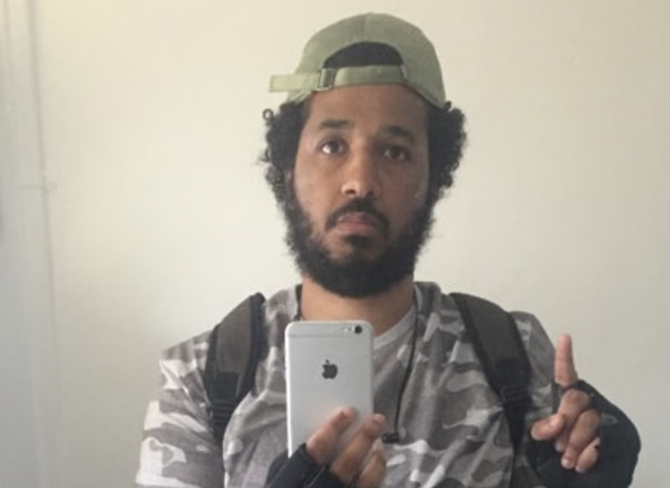
Sahayb Abu, who is serving a minimum 19-year prison term for planning an attack in Britain, took legal action against the Ministry of Justice.
He was one of several prisoners who were segregated after Hashem Abedi, the brother of a man who detonated a suicide bomb after an Ariana Grande concert in Britain in 2017, attacked prison guards in April at Frankland prison in northern England.
In response, Abu – who had previously been put in a separation center over concerns he could radicalize fellow inmates – and other people convicted of terrorism charges were relocated and put under strict segregation measures for staff safety.
Abu, who had pre-existing mental health issues, was locked in his cell for more than 22 hours per day and not permitted to associate with any other prisoner for more than four months, his lawyers told London’s High Court.
They said Abu’s segregation was severely detrimental to his mental health, triggering panic attacks and acts of self-harm, and that his segregation was unlawful.
Judge Clive Sheldon ruled that officials unlawfully failed to obtain information about Abu’s mental health condition, when they were aware segregation could make it worse.
The judge also ruled that Abu’s human right to freedom from inhuman or degrading treatment had been breached from mid-August, when he wrote to say that he would self-harm.
Sheldon said the segregation measures could have been lessened “without unduly compromising the safety of the staff,” though he added he might not have found a breach of the human rights of a prisoner “with an ordinary level of resilience.”
The Ministry of Justice did not immediately reply to a request for comment.

Convicted terrorist wins UK legal case over ‘unlawful’ prison segregation
Short Url
https://arab.news/9k8sr
Convicted terrorist wins UK legal case over ‘unlawful’ prison segregation
- Lawyers said Abu’s segregation was severely detrimental to his mental health, triggering panic attacks and acts of self-harm
Iceland joins Eurovision boycott over Israel’s participation
- Decision follows similar moves by Spain, the Netherlands, Ireland and Slovenia over the Gaza war
- Iceland’s national broadcaster says it pulled out 'given the public debate' in the country
LONDON: Iceland’s national broadcaster said Wednesday it will boycott next year’s Eurovision Song Contest because of discord over Israel’s participation, joining four other countries in a walkout of the pan-continental music competition.
Broadcasters in Spain, the Netherlands, Ireland and Slovenia told contest organizer the European Broadcasting Union last week that they will not take part in the contest in Vienna in May after organizers declined to expel Israel over its conduct of the war against Hamas in Gaza.
The board of Iceland’s RÚV met Wednesday to make a decision.
At its conclusion the broadcaster said in a statement that “given the public debate in this country ... it is clear that neither joy nor peace will prevail regarding the participation of RÚV in Eurovision. It is therefore the conclusion of RÚV to notify the EBU today that RÚV will not take part in Eurovision next year.”
“The Song Contest and Eurovision have always had the aim of uniting the Icelandic nation but it is now clear that this aim cannot be achieved and it is on these program-related grounds that this decision is taken,” the broadcaster said.
Last week the general assembly of the EBU — a group of public broadcasters from 56 countries that runs Eurovision — met to discuss concerns about Israel’s participation. Members voted to adopt tougher contest voting rules in response to allegations that Israel manipulated the vote in favor of its competitor, but took no action to exclude any broadcaster from the competition.
The pullouts include some big names in the Eurovision world. Spain is one of the “Big Five” large-market countries that contribute the most to the contest. Ireland has won seven times, a record it shares with Sweden.
Iceland, a volcanic North Atlantic island nation with a population of 360,000, has never won but has the highest per capita viewing audience of any country.
The walkouts cast a cloud over the future of what’s meant to be a feel-good cultural party marked by friendly rivalry and disco beats, dealing a blow to fans, broadcasters and the contest’s finances.
The contest, which turns 70 in 2026, strives to put pop before politics, but has repeatedly been embroiled in world events. Russia was expelled in 2022 after its full-scale invasion of Ukraine.
It has been roiled by the war in Gaza for the past two years, stirring protests outside the venues and forcing organizers to clamp down on political flag-waving.
Opponents of Israel’s participation cite the war in Gaza, where more than 70,000 Palestinians have been killed, according to the territory’s Health Ministry, which operates under the Hamas-run government and whose detailed records are viewed as generally reliable by the international community.
Israel’s government has repeatedly defended its campaign as a response to the attack by Hamas-led militants on Oct. 7, 2023. The militants killed around 1,200 people — mostly civilians — in the attack and took 251 hostage.
A number of experts, including those commissioned by a UN body, have said that Israel’s offensive in Gaza amounts to genocide, a claim Israel has vigorously denied.
Wednesday marked the final day for national broadcasters to announce whether they planned to participate. More than two dozen countries have confirmed they will attend the contest in Vienna, and the EBU says a final list of competing nations will be published before Christmas.
Broadcasters in Spain, the Netherlands, Ireland and Slovenia told contest organizer the European Broadcasting Union last week that they will not take part in the contest in Vienna in May after organizers declined to expel Israel over its conduct of the war against Hamas in Gaza.
The board of Iceland’s RÚV met Wednesday to make a decision.
At its conclusion the broadcaster said in a statement that “given the public debate in this country ... it is clear that neither joy nor peace will prevail regarding the participation of RÚV in Eurovision. It is therefore the conclusion of RÚV to notify the EBU today that RÚV will not take part in Eurovision next year.”
“The Song Contest and Eurovision have always had the aim of uniting the Icelandic nation but it is now clear that this aim cannot be achieved and it is on these program-related grounds that this decision is taken,” the broadcaster said.
Last week the general assembly of the EBU — a group of public broadcasters from 56 countries that runs Eurovision — met to discuss concerns about Israel’s participation. Members voted to adopt tougher contest voting rules in response to allegations that Israel manipulated the vote in favor of its competitor, but took no action to exclude any broadcaster from the competition.
The pullouts include some big names in the Eurovision world. Spain is one of the “Big Five” large-market countries that contribute the most to the contest. Ireland has won seven times, a record it shares with Sweden.
Iceland, a volcanic North Atlantic island nation with a population of 360,000, has never won but has the highest per capita viewing audience of any country.
The walkouts cast a cloud over the future of what’s meant to be a feel-good cultural party marked by friendly rivalry and disco beats, dealing a blow to fans, broadcasters and the contest’s finances.
The contest, which turns 70 in 2026, strives to put pop before politics, but has repeatedly been embroiled in world events. Russia was expelled in 2022 after its full-scale invasion of Ukraine.
It has been roiled by the war in Gaza for the past two years, stirring protests outside the venues and forcing organizers to clamp down on political flag-waving.
Opponents of Israel’s participation cite the war in Gaza, where more than 70,000 Palestinians have been killed, according to the territory’s Health Ministry, which operates under the Hamas-run government and whose detailed records are viewed as generally reliable by the international community.
Israel’s government has repeatedly defended its campaign as a response to the attack by Hamas-led militants on Oct. 7, 2023. The militants killed around 1,200 people — mostly civilians — in the attack and took 251 hostage.
A number of experts, including those commissioned by a UN body, have said that Israel’s offensive in Gaza amounts to genocide, a claim Israel has vigorously denied.
Wednesday marked the final day for national broadcasters to announce whether they planned to participate. More than two dozen countries have confirmed they will attend the contest in Vienna, and the EBU says a final list of competing nations will be published before Christmas.
© 2025 SAUDI RESEARCH & PUBLISHING COMPANY, All Rights Reserved And subject to Terms of Use Agreement.


