


RIYADH: Construction, real estate, and digital infrastructure dominated this week’s venture landscape across the Middle East and beyond, with startups securing strategic funding, forging cross-border acquisitions, and unveiling innovative financial tools.
Builtop, a Saudi digital procurement startup focused on the construction and real estate sectors, has raised $11 million in a funding round led by TAM Capital, with participation from other investors.
The company, founded in 2024 by Ayman Al-Johani, provides embedded finance tools including “pay-later” trade credit to improve cashflow and streamline project delivery for contractors and suppliers. The platform integrates digital procurement with AI-driven tools to enhance transparency and operational efficiency.
The newly raised funds will be used to expand Builtop’s presence across Saudi Arabia, improve its AI-based systems, and develop solutions tailored to large-scale infrastructure projects aligned with Vision 2030.
WakeCap acquires Brazil’s Trackfy
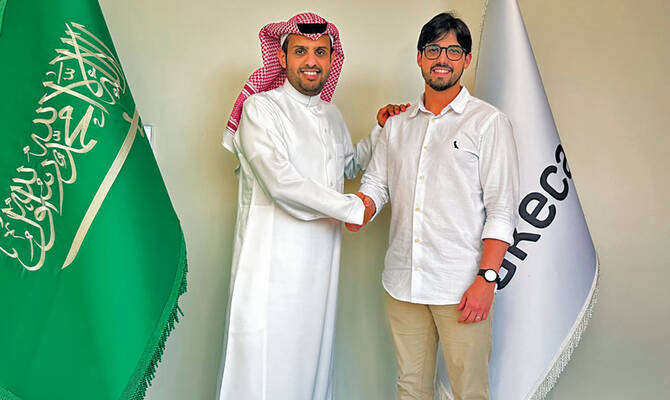
WakeCap, a Saudi construction tech company specializing in wearable technology for building sites, has acquired Brazil-based Trackfy, a workforce safety and operational intelligence platform. The acquisition gives WakeCap a foothold in Latin America, establishing Brazil as its new regional headquarters.
Founded in 2017 by Hassan Al-Balawi and Ishita Sood, WakeCap enables real-time workforce monitoring to improve safety and productivity.
The deal also extends WakeCap’s platform beyond construction into operations and maintenance, allowing clients to manage projects through the entire facility lifecycle. The acquisition follows WakeCap’s $28 million investment round closed in May.
Binbar and Joa Capital launch $133.33m fund
Binbar Investment has signed a strategic partnership with Joa Capital, with Rabeh as technical adviser, to launch the Marhoon Fund — Saudi Arabia’s first direct financing outlet secured through lease and usufruct contracts.
The SR500 million($133.33 million) fund aims to provide companies with access to alternative financing tools backed by operational assets.

Hotdesk, Al Maryah Community Bank, Emirates Coin Investment, and Singularity Venture Hub have announced the upcoming launch of DESK Token pending regulatory approval. (Supplied)
Nasser Al-Majed, chairman of Binbar Real Estate, said the company is focused on “creating differentiated real estate products,” and the Marhoon Fund represents a key step in offering direct financing solutions for the Kingdom’s rental market.
CEO Majed Al-Zahrani added that it “fosters trust among investors, developers, and tenants alike” and that “direct financing backed by usufruct contracts represents a transformative shift.”
Yousef Al-Yousefi, CEO of Joa Capital, stated the partnership reflects confidence in the real estate market’s strength and is aligned with their mission to “develop innovative financial solutions to support private sector growth.”
Hotdesk, partners unveil first-of-its-kind real estate investment tech
In a multi-stakeholder initiative, Hotdesk, Al Maryah Community Bank, Emirates Coin Investment, and Singularity Venture Hub have announced the upcoming launch of DESK Token, described as the world’s first asset-backed hybrid token combining real estate investment and utility.
The token is expected to launch in the second quarter of 2026, pending regulatory approval.
Mohamed Khaled, founder and CEO of Hotdesk and co-founder of DESK, said the token aims to “make real estate investment borderless, liquid, and useful in the real world,” enabling users to access yield-generating office property through a blockchain-based model.
Al Maryah Community Bank CEO Mohammed Khayata emphasized the token’s role in bridging traditional finance and digital assets, while Robert Wils of Singularity Venture Hub described it as “the next evolution of tokenized finance.”
DESK holders will also have access to coworking spaces via Hotdesk’s global platform and can earn returns in stablecoins or cash.
DataCamp acquires Optima
DataCamp, the US- and London-based education tech platform, has acquired Optima, an AI-native adaptive learning startup.
The UAE-based firm, founded in 2023 by Yusuf Saber, delivers personalized lessons and real-time feedback to learners, helping individuals and enterprises build data and AI skills.
The company had previously raised $1.1 million in seed funding from COTU Venture and others.
The acquisition marks DataCamp’s first major expansion into the Middle East and will include the launch of DataCamp Classrooms in the UAE, offering free access to more than 500 interactive courses for students and educators in subjects such as Python, SQL, machine learning, and cloud computing.
Workey partners with Falak Investment Hub to support platform development
Saudi Arabia-based Workey has closed a funding round with Falak Investment Hub, a strategic move that will accelerate the launch of its initial platform version and the development of advanced features, including AI-powered services and customized tools for investors.
Workey offers digital business solutions across more than 200 locations in Saudi Arabia, including bookings for private offices, shared spaces, meeting rooms, and business services.
The partnership aims to enhance the startup ecosystem in the Kingdom and improve access to workspace and business infrastructure for both local and foreign entrepreneurs.
Quintas Capital backs Petal Group with $18m
UAE-based Quintas Capital has completed its first managed equity investment of $18 million in Petal Group, a floral gifting and e-commerce company operating in Ireland and the UAE.
Founded by Garreth Knowd, Petal Group operates a portfolio of online flower brands including Flowers.ie, BloomMagic.ie, and Flowers.ae.
The investment will support international expansion through strategic acquisitions and new market entry, focusing on strengthening the Irish–Middle East investment corridor.
Petal’s proprietary tech platform supports fulfillment and customer experience across its brands.
Tarmeez and Monsha’at launch $1.06bn financing portfolio
Tarmeez Capital, in collaboration with Saudi Arabia’s General Authority for Small and Medium Enterprises, has launched a SR4 billion financing portfolio targeting micro, small, and medium-sized enterprises.
The initiative, unveiled during Biban 2025 in Riyadh, focuses on Islamic finance-based solutions such as sukuk instruments.
Mansour Al-Saadoun, consultant to Tarmeez’s board and executive management, said: “The launch of this portfolio in partnership with Monsha’at reflects our vision to develop sustainable financing instruments that contribute to supporting economic growth and empowering entrepreneurs and enterprises.”
The program aims to expand financing access while promoting efficiency and economic sustainability in line with Vision 2030.


