

IMF mission in Pakistan to help authorities fix $1.5 million budget discrepancies

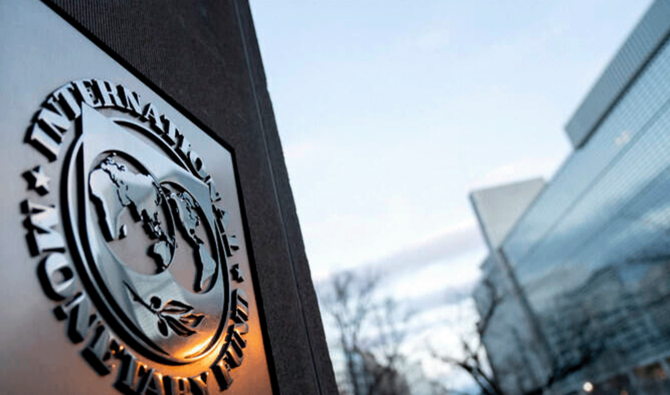
The seal for the International Monetary Fund is seen near the World Bank headquarters (R) in Washington, DC. (AFP/ file)
Short Url
Updated 13 November 2025
Follow

IMF mission in Pakistan to help authorities fix $1.5 million budget discrepancies

  • Budget discrepancies relate to first quarter of current fiscal year, confirms IMF official
  • Team will scrutinize local rules, suggest ways to fix statistical discrepancies, says official

KARACHI: A four-member International Monetary Fund (IMF) technical team is in Pakistan to assist local authorities in fixing budget discrepancies amounting to Rs448 million ($1.58 million), officials with direct knowledge of the development confirmed on Thursday. 

The IMF team will help Pakistani authorities in looking into and fixing the discrepancies reported in the July-September quarter of the fiscal year, the officials said. 

“Yes, there is a technical mission on the ground,” an IMF official said in response to Arab News’ queries, requesting anonymity as they were not authorized to speak to the media. 

“But there is nothing to add at the moment.”

The IMF team visited Pakistan at the government’s request and will stay for about two weeks in the country. During this time, the team will scrutinize local rules and regulations and standard practices, the IMF official said. 

The mission would then finalize its report, suggesting ways to fix statistical discrepancies in Pakistan’s budgetary management.

Pakistan’s finance ministry spokesperson Qamar Sarwar Abbasi did not respond to calls and messages seeking his comments.

However, a well-placed official at Pakistan’s finance ministry confirmed the IMF mission is in Pakistan and had visited the ministry on Thursday.

Pakistan works closely with the IMF in implementing economic reforms. The South Asian country secured a $7 billion bailout from the international lender in September 2024 after months of negotiations to stabilize its struggling economy, attract foreign investment and improve its foreign exchange reserves. 

These reforms include the privatization of state-owned enterprises, broadening Pakistan’s tax base and reforming the energy sector, among others.


At least 13 civilians killed in Pakistan strikes in Afghanistan, UN says

Updated 23 February 2026
Follow

At least 13 civilians killed in Pakistan strikes in Afghanistan, UN says

  • Pakistan said it launched the strikes after blaming recent suicide attacks on militants operating from Afghan territory
  • The reported toll adds to fears of a renewed cycle of retaliation between the neighbors, threatening a fragile ceasefire

ISLAMABAD/KABUL: At least 13 civilians ‌were killed and seven injured in Pakistani airstrikes in eastern Afghanistan, the United Nations said on Monday, as cross-border tensions escalated following a string ​of suicide bombings in Pakistan.

The reported toll adds to fears of a renewed cycle of retaliation between the neighbors, threatening a fragile ceasefire along their 2,600-km (1,600-mile) frontier and further straining ties as both sides trade blame over militant violence.

The United Nations Assistance Mission in Afghanistan (UNAMA) said it had received “credible reports” that overnight Pakistani airstrikes on February 21–22 killed at least 13 ‌civilians and injured ‌seven in the Behsud and Khogyani ​districts ‌of ⁠Nangarhar province.

Taliban ​spokesman Zabihullah ⁠Mujahid earlier reported dozens killed or wounded in the strikes, which also hit locations in Paktika province. Reuters could not independently verify the reported toll.

Pakistan said it launched the strikes after blaming recent suicide attacks, including during Ramadan, on militants operating from Afghan territory.

Pakistan’s information ministry in a post on X said ⁠the “intelligence-based” operation struck seven camps of the Pakistani Taliban ‌and Daesh (Islamic State) Khorasan Province ‌and that it had “conclusive evidence” the militant ​assaults on Pakistan were directed ‌by “Afghanistan-based leadership and handlers.”

Kabul has repeatedly denied allowing militants ‌to use Afghan territory to launch attacks in Pakistan.

The strikes took place days after Kabul released three Pakistani soldiers in a Saudi-mediated exchange aimed at easing months of tensions along the border.

Afghanistan’s defense ministry condemned ‌the strikes and called them a violation of sovereignty and international law, saying an “appropriate and measured ⁠response will ⁠be taken at a suitable time.” The Afghan foreign ministry said it had summoned Pakistan’s ambassador.

In a statement on the February 21-22 strikes, Afghanistan’s education ministry said eight school students; five boys and three girls, were killed in Behsud in Nangarhar province, and one madrasa student injured in Barmal in Paktika province, adding that dozens of other civilians were killed or wounded and educational centers destroyed. Reuters could not independently verify the information.

The latest strikes follow months of clashes and repeated border closures ​that have disrupted trade ​and movement along the rugged frontier.