

 The race to space: A global journey to the final frontier
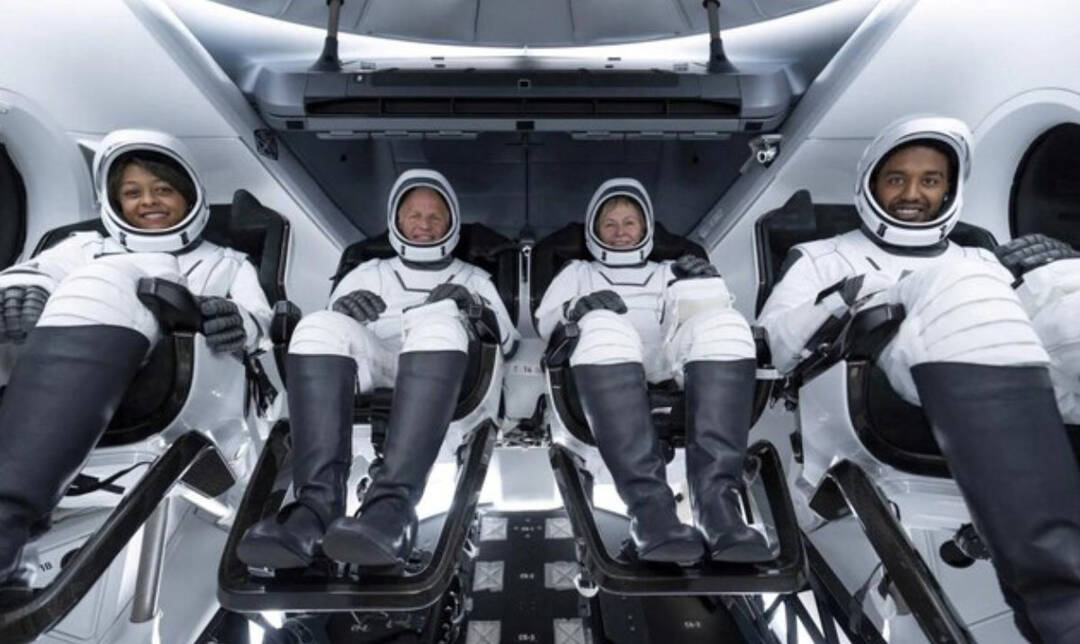

The Cold War witnessed fierce competition between the Soviet Union and the US in attempting to launch humanity into space.
Today, however, space exploration emphasizes cooperation, progress and practical applications over rivalry between nations.
Countries like China, India and Saudi Arabia are developing their own space programs, while private companies like Blue Origin and SpaceX lead in innovation.
China launched its Tiangong space station in 2021 and aims to send astronauts to the Moon by 2030.
In 2023, India carried out the Chandrayaan-3 mission at the Moon’s south pole and became the fourth nation to manage such a landing.
The UN, meanwhile, is working to ensure that all nations deal with space fairly and safely.
Its Office for Outer Space Affairs manages space-related issues, supporting countries to cooperate peacefully in outside of Earth’s atmosphere.
It aims to ensure that space projects are shared for the benefit of all instead of only chosen countries.
The 1967 Outer Space Treaty, established by the UN, outlines how space is intended for everyone and should be used only for peaceful means.
It also points out that each country has no authority to claim the moon or any other planet, and has been ratified by over 100 countries, including the US, Russia and China.
UNOOSA also supports developing countries that want to start space programs; they help these countries build skills and knowledge through training programs and workshops.
The UN has guidelines to reduce space debris, and also works on rules for using space resources, for instance mining the moon.
Since more countries and companies are planning missions to collect resources, having fair and transparent rules is indispensable.
The growing space economy
The global space economy reached $630 billion in 2023 and is growing 9 percent annually, with commercial activity comprising 80 percent of revenue. PricewaterhouseCoopers projections suggest growth to $2 trillion by 2040.
Space data is another growing part of the economy, with satellites collecting vast amounts of information that can be used in agriculture, shipping and disaster management.
Governments also use space data to track climate change and manage natural resources.
All these activities generate employment, drive innovation, and help access global challenges through technology.
Saudi Arabia’s journey into space
Saudi Arabia’s space journey began in 1985 when Prince Sultan bin Salman traveled on NASA’s Space Shuttle Discovery.
This achievement made him the first Arab and Muslim to travel into space, and was a proud moment for the Kingdom which indicated that Arab countries could be involved in space exploration.
In 2018, Saudi Arabia established the Saudi Space Commission, which later became the Saudi Space Agency.
The responsibility of this agency is to develop the country’s space strategy, assisting in scientific research and collaborating with foreign partners.
This goal aims to make Saudi Arabia a leading figure in the global space industry. As part of its Vision 2030 strategy, Saudi Arabia is investing significant resources in space development.
According to the country’s Communications, Space and Technology Commission, the overall Saudi space sector contributed approximately 0.046 percent to its GDP in 2022, and has seen substantial growth within the past year, with the overall space economy amounting to $8.7 billion in 2024.
Analysts estimate that this will increase significantly up to 31.6 billion in 2035 at a compound annual growth rate of 12 percent.
Other space investments consist of satellite development, scientific research, and even manned space missions.
Saudi Arabia designed its Human Spaceflight Program for the training of its astronauts and space science missions.
In 2023, Rayyanah Barnawi and Ali Alqarni, Saudi astronauts, traveled to the International Space Station to do microgravity research.
This was a significant milestone in the region, with Barnawi becoming the first Arab Muslim woman to travel into space.
The Kingdom also seeks to advance education by constructing new infrastructure of science and technology, and encouraging the pursuit of studies in the field of space.
Recent developments: US–Saudi space collaboration
On May 13, 2025, Saudi Arabia and the US signed deals worth $600 billion emphasizing collaboration in various sectors.
These included sharing technology, research and financing new space missions.
Saudi Arabia and the US will collaborate on space-related education programs and openly exchange satellite data for climate and security.
NASA and the SSA reached an agreement to include a Saudi CubeSat satellite on NASA’s Artemis II test mission.
It is set to be launched into high orbit around the Earth in 2026 by equipment attached to the Space Launch System.
Starlink’s arrival in Saudi Arabia and its benefits
The Saudi Minister of Communications and Information Technology Abdullah Al-Swaha, met with Elon Musk to discuss ongoing collaboration in the space industry, reflecting the Kingdom’s growing interest in the industry.
Musk confirmed that SpaceX’s Starlink internet service had been approved for use in Saudi Arabia’s maritime and aviation sectors.
Starlink could be an addition in advancing the country’s Vision 2030 by modernizing digital infrastructure and connecting its people across the country.
It also has the potential to enhance airline operations and allow ship crews to stay connected at sea.
While these prospects appear promising, significant challenges remain, mainly because the space industry is fragmented and lacks coordination to guarantee enduring progress.
Developing space use rules that encourage international collaboration and safe and sustainable space use is complicated, just as much as increasing research and development spending to help decrease costs and boost performance.
Space security is also becoming more critical because of the number of risks in space, such as debris and cyber-attacks.
From the Cold War rivalry to today’s global collaboration, the space race has ended up as a cooperative process among humanity.
Countries and corporations are discovering space not as a means of domination, but as a means of shared development.
Saudi Arabia’s expanding partnerships and investments indicate how its economy can contribute to shaping the future of exploration, science, and connectivity from a truly global perspective.
• Faisal Abdulrahman Alahmed is an accounting and finance student at Kingston University London with an interest in the space economy and national economic diversification. LinkedIn: Faisal A. Alahmed


