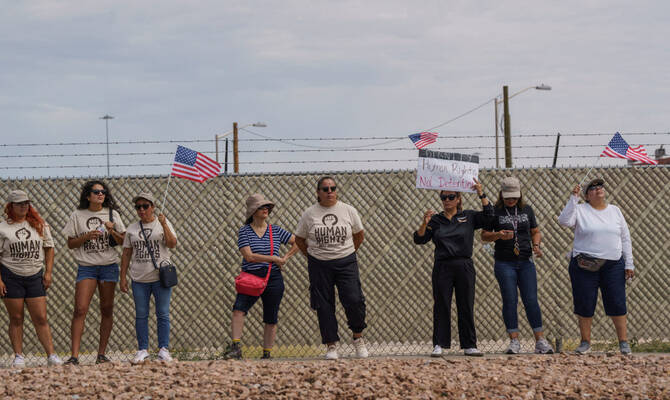
Detainees at the largest US migrant detention camp endure foul-tasting drinking water, rotten food and inadequate health care, according to a US congresswoman who called the tent facility in El Paso, Texas, “inhumane.” US Representative Veronica Escobar, a Texas Democrat, made the allegations in a letter last week to Department of Homeland Security Secretary Kristi Noem based on complaints from migrants at the new $1.2 billion facility, called Camp East Montana. “Conditions at Camp East Montana are dangerous and inhumane,” Escobar wrote. “It is increasingly clear that it is not a safe nor professionally managed facility.” Asked for comment on the letter, the Department of Homeland Security gave a statement issued in September that denied the center violated federal standards for immigrant detention, such as restricting access to legal representation, or was inhumane.
“All detainees are provided with proper meals, medical treatment, and have opportunities to communicate with lawyers and their family members,” DHS said. The center has become a target of criticism by Democratic legislators and immigrant advocates opposed to President Donald Trump’s immigration crackdown. Escobar wrote that conditions at the camp on the Fort Bliss US Army base had not improved since she first protested to Noem weeks after it opened in August.
“The drinking water at the facility continues to taste foul, the food quality for detainees has not improved,” said Escobar, who represents the El Paso area. She added that detainees faced sewage backups and flooding while only the most ill inmates were referred to the camp medical unit. The camp consists of temporary tent structures meant to house up to 5,000 detainees and relieve overcrowding at other Immigration and Customs Enforcement detention facilities. Trump has vowed record deportations of migrants with criminal records in the US illegally. Democrats have argued that federal agents are targeting people indiscriminately to achieve his goals. Immigrant advocate groups have called for the closure of another migrant detention camp in Florida due to alleged inhumane conditions.


![]()

Migrants at largest US detention camp face foul water, rotten food, congresswoman says
Short Url
https://arab.news/2ezjd
Migrants at largest US detention camp face foul water, rotten food, congresswoman says
- “The drinking water at the facility continues to taste foul, the food quality for detainees has not improved,” said Escobar, who represents the El Paso area


Latest updates


© 2026 SAUDI RESEARCH & PUBLISHING COMPANY, All Rights Reserved And subject to Terms of Use Agreement.