PARIS: As French police race to track where the Louvre’s stolen crown jewels have gone, a growing chorus wants a brighter light on where they came from.
The artifacts were French, but the gems were not. Their exotic routes to Paris run through the shadows of empire — an uncomfortable history that France, like other Western nations with treasure-filled museums, has only begun to confront.
The attention sparked by the heist is an opportunity, experts say, to pressure the Louvre and Europe’s great museums to explain their collections’ origins more honestly, and it could trigger a broader reckoning over restitutions.
Within hours of the theft, researchers sketched a likely colonial-era map for the materials: sapphires from Ceylon (Sri Lanka), diamonds from India and Brazil, pearls from the Arabian Gulf and Indian Ocean and emeralds from Colombia.
That doesn’t make the Louvre robbery less criminal. It does complicate the public’s understanding of what was lost.
“There is obviously no excuse for theft,” said Emiline C.H. Smith, a criminologist at the University of Glasgow who studies heritage crime. “But many of these objects are entangled with violent, exploitative, colonial histories.”
While there’s no credible evidence these specific gems were stolen — experts say that doesn’t end the argument: What was legal in the imperial age could still mean plunder in today’s lights. In other words, the paperwork of empire doesn’t settle the ethics.
Meanwhile, the heist investigation grinds on. Police have charged suspects, but investigators fear the jewels could be broken up or melted down. They are too famous to sell as they are, but easy to monetize for metal and stones.
Colonial-era jewels ‘made in France’
The Louvre provides scant information about how the gems in the French crown jewels – showcased in the Apollo Gallery until the theft — were originally extracted.
For example, the Louvre’s own catalog describes the stolen diadem of Queen Marie-Amélie as set with “Ceylon sapphires” in their natural, unheated state, bordered with diamonds in gold. It says nothing about who mined them, how they moved, or under what terms they were taken.
Provenance isn’t always a neutral ledger in Western museums. They sometimes “avoid spotlighting uncomfortable acquisition histories,” Smith said, adding that the lack of clarity about the gems’ origins is likely no accident.
The museum did not respond to requests for comment.
The stolen tiaras, necklaces and brooches were crafted in Paris by elite ateliers, and once belonged to 19th-century figures such as Marie-Amélie, Queen Hortense, and the wives of two Napoleons, Empress Marie-Louise of Austria and Empress Eugénie. Their raw materials, however, moved through imperial networks that converted global labor, resources — and even slavery — into European prestige, experts say.
Pascal Blanchard, a historian of France’s colonial past, draws a line between craftsmanship and supply. The jewels “were made in France by French artisans,” he said, but many stones came via colonial circuits and were “products of colonial production.” They were traded “under the legal conditions … of the time,” ones shaped by empires that siphoned wealth from Africa, Asia and South America.
Some French critics press the point further. They argue that national outcry over loss should sit beside the history of how imperial France acquired the stones that court jewelers later set in gold.
India and the British crown’s Koh-i-Noor
India is waging the best-known battle over a single colonial-era treasure — the Koh-i-Noor diamond.
India has repeatedly pressed the UK to return the mythologized 106-carat jewel, now set in the Queen Mother’s crown at the Tower of London. It likely originated in India’s Golconda diamond belt — much like the Louvre’s dazzling Regent diamond, one that was also legally acquired in imperial times and spared by the Oct. 19 robbers.
The Koh-i-Noor passed from court to court before landing in British hands, where it is hailed in London as a “lawful” imperial gift and denounced in India as a prize taken under the shadow of conquest. A 2017 petition to India’s Supreme Court seeking its return was dismissed on jurisdictional grounds, but the political and moral dispute endures.
France is not Britain, and the Koh-i-Noor is not the Louvre’s story. But it frames the questions increasingly applied to 19th-century acquisitions: not only “was it bought?” but “who had the power to sell?” On that measure, experts say, even jewels made in France can be considered products of colonial extraction.
The Louvre case lands in a world already primed by other fights. Greece presses Britain to reunite the Parthenon Marbles. Egypt campaigns for the Rosetta Stone in London and the Nefertiti bust in Berlin.
France has acted haltingly on restitutions
France has moved — narrowly. President Emmanuel Macron’s pledge to return parts of Africa’s heritage produced a law enabling the return of 26 royal treasures to Benin and items to Senegal. Madagascar recovered the crown of Queen Ranavalona III through a specific process.
Critics say restitution is structurally blocked: French law forbids removing state-held objects unless Parliament makes a special exception, and risk-averse museums keep the rest behind glass.
They also say that under former Louvre chief Jean-Luc Martinez, the museum’s narrow definition of what counts as “looted” — and its demand for near-legal levels of proof — created a chilling effect on restitution claims, even as the museum publicly praised transparency. (The Louvre says it follows the law and academic standards.)
Colonialism is a thorny issue for Western museums
Asking museum visitors to marvel at artifacts like the French crown jewels without understanding their social history is dishonest, says Erin L. Thompson, an art-crime scholar in New York. A decolonized approach, she and others argue, would name where such stones came from, how the trade worked, who profited and who paid — and share authorship with origin communities.
Egyptian archaeologist Monica Hanna calls the contradiction glaring.
“Yes, the irony is profound,” she said of the outcry over last month’s Louvre theft, “and it’s central to the conversation about restitution.” She expects the heist will trigger action on restitutions across Western museums and fuel debate about transparency.
At a minimum, Hanna and other experts say, what’s needed from museums are stronger words: plain-spoken labels and wall texts that acknowledge where objects came from, how they moved, and at whose expense. It would mean publishing what is known, admitting what isn’t, and inviting contested histories into the gallery — even when they cloud the shine.
Some offer a practical path.
“Tell the honest and complete story,” said Dutch restitution specialist Jos van Beurden. “Open the windows, not for thieves, but for fresh air.”


France mourns its stolen crown jewels as their uncomfortable colonial past returns to view

https://arab.news/8jdk5
France mourns its stolen crown jewels as their uncomfortable colonial past returns to view

- “There is obviously no excuse for theft,” said Emiline C.H. Smith, a criminologist at the University of Glasgow who studies heritage crime
- “But many of these objects are entangled with violent, exploitative, colonial histories”


‘Cake not hate’ campaign spreads love amid far-right rhetoric in UK
- Joshua Harris, 12, who is autistic, hands out cakes at mosques
- His father, Dan, tells Arab News they are welcomed by Muslims
LONDON: A 12-year-old boy, who is autistic and non-speaking, is visiting mosques across the country and handing out cakes to promote love and solidarity amid the rise of far-right rhetoric in the UK.
Joshua Harris, or “Joshie-Man” as he is known to his social media fans, has handed out hundreds of his baked treats to congregations in London, Leicester, Luton, Birmingham, and his home city of Peterborough.
The “Cake not hate” campaign came to life after an Islamophobic attack on a mosque in Peterborough in October this year.
The perpetrator, Alexander Hooper, 57, entered Masjid Darassalaam and abused worshipers preparing for the Fajr prayer, and physically assaulted a female police officer who arrived on the scene. Hooper later pleaded guilty to aggravated harassment and assaulting an emergency worker.
Harris’ father, Dan, is the founder of global charity Neurodiversity in Business, and told Arab News that soon after the attack, they both visited the mosque with cakes that Joshie-Man had baked and distributed them to worshipers.
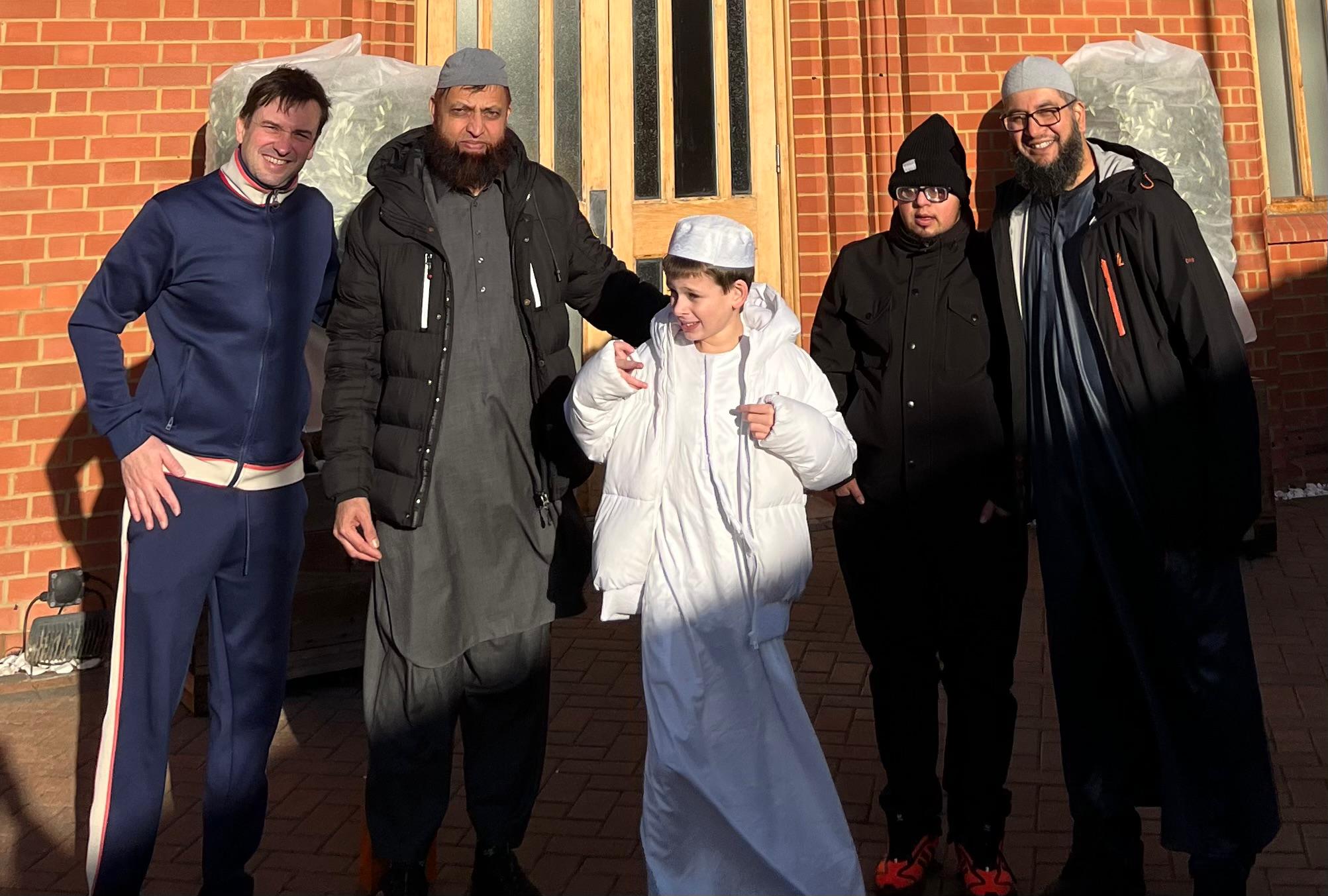
“We gave them to the imam and said we want you to know that this guy (Hooper) doesn’t represent Peterborough nor the great British public,” Harris said.
“So they really warmly received that and then they gave us contact details for the other five or six mosques in Peterborough.”
Harris said he received backlash and threats from far-right individuals after posting videos of Joshie-Man handing out his cakes. And this prompted him to think of how their racism is affecting Muslims.
“If me as a white middle-class guy in a nice part of the world could get this kind of hate from the far right, how bad must it be for a Muslim, a female Muslim, an immigrant Muslim, or a Muslim who doesn’t have English as their first language?
“They must be incredibly intimidated,” he said.
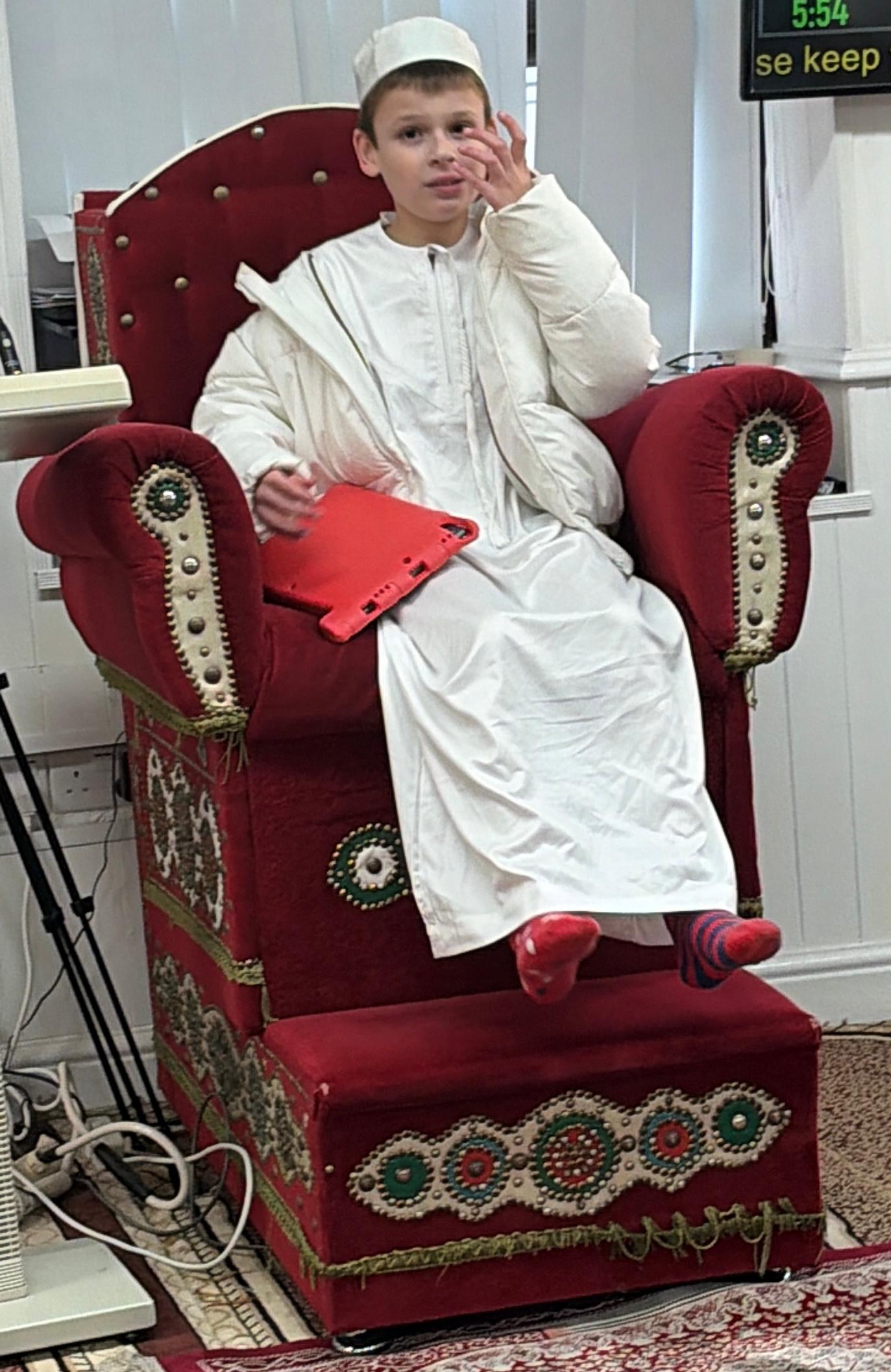
Harris said the Muslims he met told him that they do not go out at night or let their children walk home from school alone for fear of being attacked. They are scared of abuse if they wear traditional dress or speak a foreign language.
“This is not the Britain I want to bequeath to my child. I don’t want him growing up in a Britain which is really divided and I’ve always been proud of Britain being a really tolerant place which is very respectful,” he said.
Harris and his son also visited a mosque in Luton, the town where far-right activist and anti-Islam campaigner Tommy Robinson grew up.
He said it was “really profound” to meet Muslim children who said they had been attacked and shouted at by racists and Islamophobes.
Harris and his son are due to embark on a northern tour later this month to visit 12 mosques in three days. On Christmas Day, they will help cook meals for people who are lonely or need help at a Peterborough mosque, which will open its doors as a part of an outreach event.
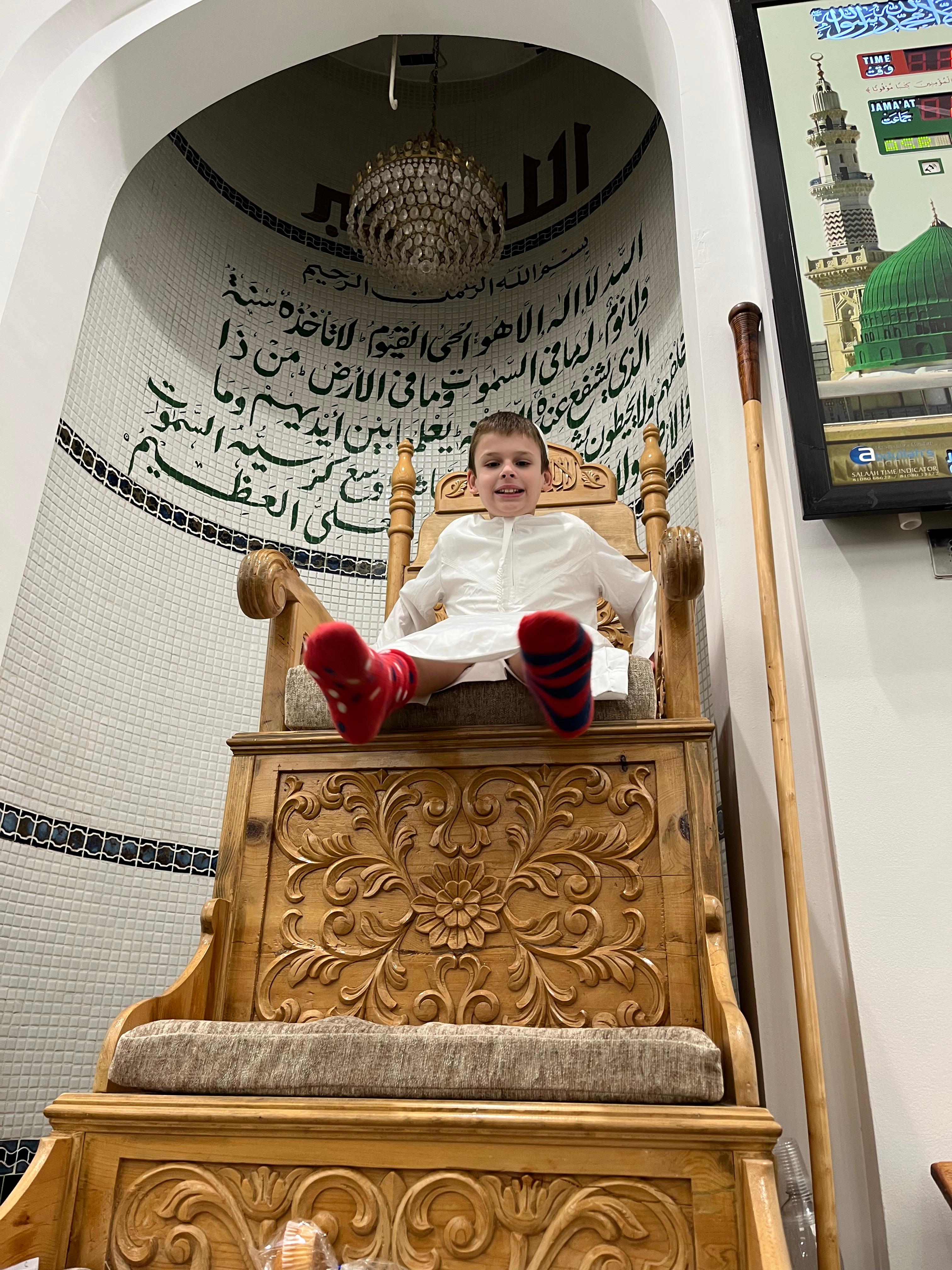
Harris said the Muslims he met have “conducted themselves with a lot of humility and kindness. That message has been lost because the far right are now saying that Islam is something to be feared.”
He added that Joshie-Man loves baking and distributing his cakes: “You only have to look at the video to see how he’s jumping with joy when he goes into these places.”
Harris is no stranger to far-right hate and had previously received abuse after speaking out against groups painting St. George’s cross and Union Jack flags on zebra crossings and roundabouts across the UK over the summer after anti-migrant protests.
“I put a post out on social media around how the far right in the UK need to stop painting over zebra crossings.
“Because there are a number of people in our community, the visually impaired, learning disabled, non-speaking autistic or even the colorblind, who find it harder to use zebra crossings if they have the England flags painted on them.
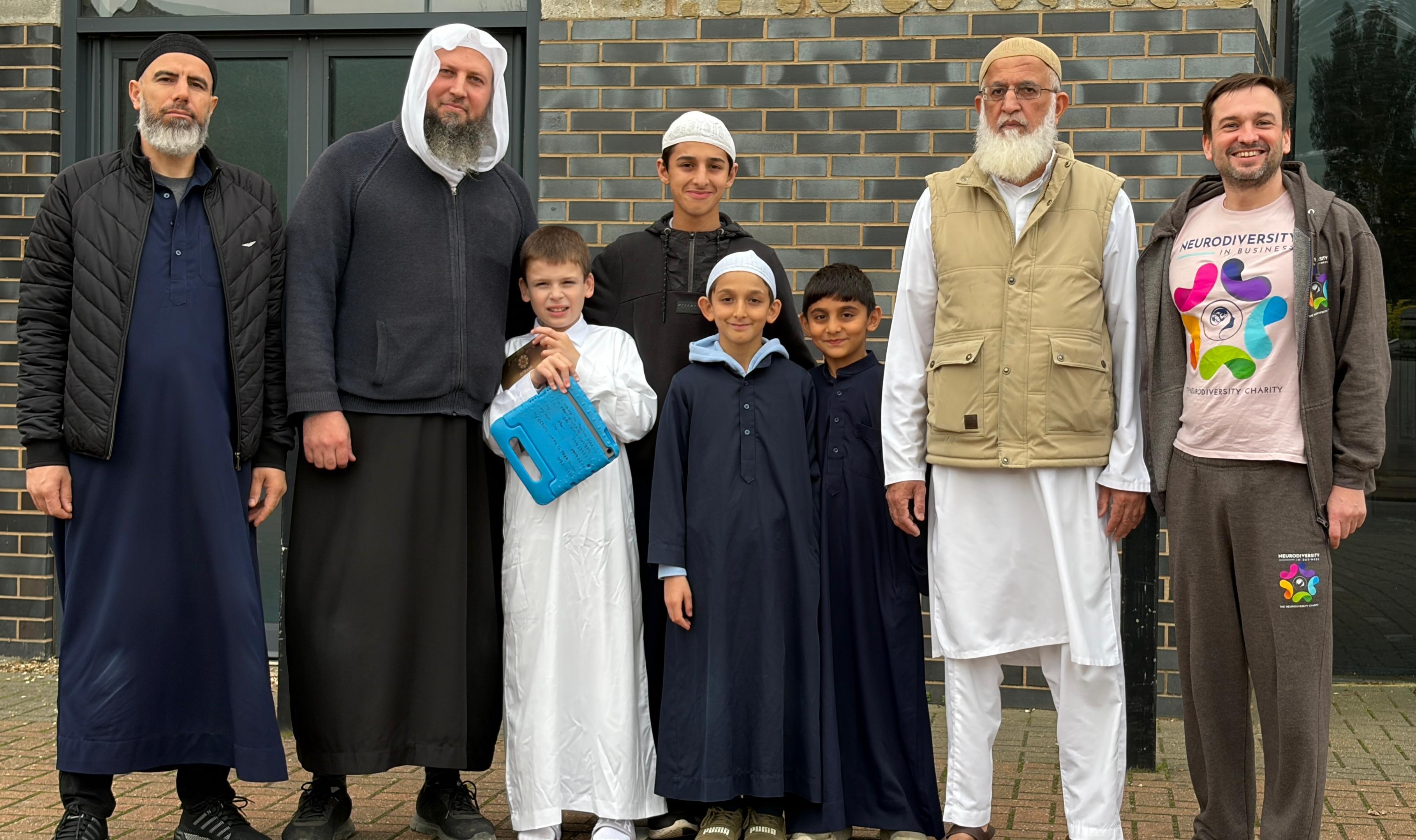
“Joshie certainly did,” Harris said.
“The post was innocuous but the far right went a bit crazy on me and then started targeting me, calling Joshie a retard, talking about eugenics, and saying that the government is wasting money on his education.”
Harris said the comments were “quite hurtful” and he found it “absolutely abhorrent that Reform UK are targeting disabled children.”
“They are some of the most vulnerable in our society. The far right are going after them and they are whipping up a fury in people who think the disabled kids are here for the perks.
“Families that I’ve met and who live in councils controlled by Reform UK are telling me that since they’ve come to power, their interactions have been all around how do we remove your legally enshrined rights.”
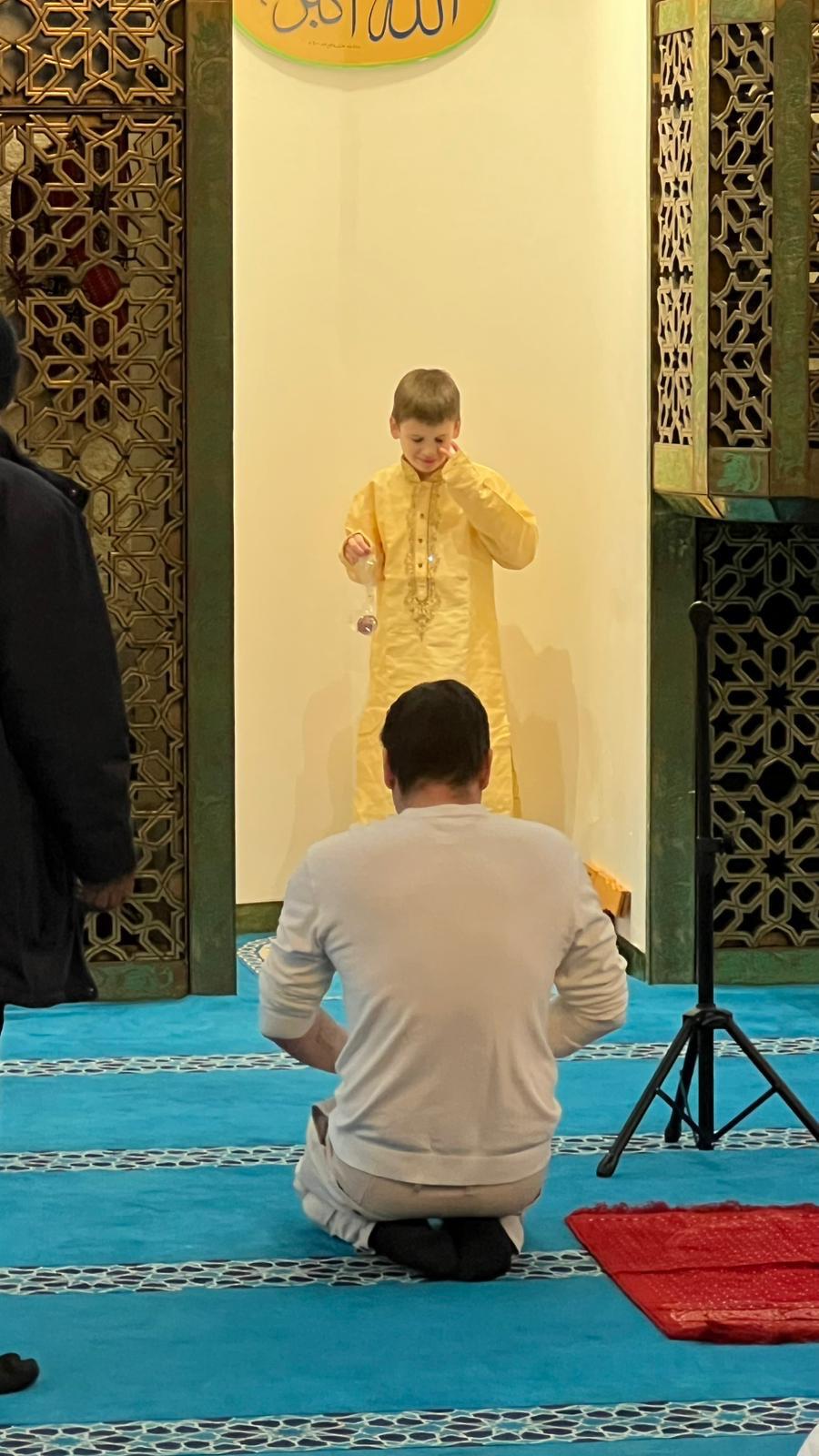
Supporting children with neurodiversity is a cause close to Harris’ heart.
After seeing how using a computer with augmentative and alternative communication software transformed the way his son was able to communicate, Harris has led a campaign that raises money to provide these aids to families who cannot afford them.
He has been to several countries, including Mexico, the US, and Brazil, giving away computers to children who are autistic and non-speaking. The next stop for father and son is Dubai, where they will be giving away 100 computers in January.
“We accept the fact that this is a drop in the ocean given how many kids need them, but if we create a bit of noise and get this on the radar that that’s a big win that people can continue with locally,” he said.
“The Middle East is such an important part of our world and over the next 50 to 100 years, it’s going to be absolutely key. Some of the countries, governments, and royal families have actually got a really forward-looking and innovative outlook on this topic.
“So I felt like this is our first chance to put a footprint in the Middle East and God willing, we will achieve some success in new relationships and go to other countries later on.”


