

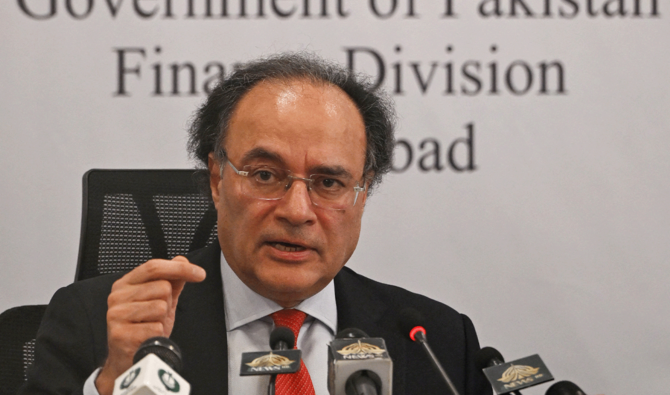

ISLAMABAD: Pakistan will integrate climate change and population pressures into its core fiscal planning, Finance Minister Muhammad Aurangzeb said on Thursday, as the government shifts from project-based climate spending to embedding resilience across national budgets.
Pakistan is among the world’s most climate-vulnerable countries, facing recurring floods, heat stress, water scarcity and rapid demographic growth while operating under tight external financing conditions. International lenders, including the IMF and World Bank, have increasingly linked macroeconomic stability to climate resilience and social protection reforms.
“Pakistan has secured significant multilateral support, including 1.3 billion dollars from the IMF under the Resilience and Sustainability Facility, 500 million dollars from the Asian Development Bank, and a 10-year Country Partnership Framework with the World Bank Group worth 2 billion dollars annually, focused primarily on climate change and population,” Aurangzeb was quoted as saying by Radio Pakistan while speaking at a conference in Islamabad.
Pakistan must now prioritize climate adaptation, disaster risk management and population stabilization within the federal budgeting process, the finance minister said, adding that “if climate priorities are not integrated into national budgets, they cannot become national policy.”
Aurangzeb said Pakistan would expand market-based climate financing mechanisms such as green bonds, carbon markets and debt-for-nature swaps, alongside mobilizing private capital and domestic resources.
He cited Pakistan’s Resilience and Sustainability Facility with the IMF and the World Bank’s Country Partnership Framework as central platforms for long-term climate planning, alongside contributions from the Asian Development Bank.
The minister also highlighted emerging private-sector and provincial initiatives, including Sindh’s mangrove carbon credit project and Acumen’s $90 million Climate Action Fund, saying such models could be “replicated and scaled nationwide” to attract international climate investment.
He said Pakistan would continue to strengthen its fiscal buffers to manage global financial uncertainty, rising protectionism and supply-chain realignments, warning that countries without resilience planning were increasingly exposed to external shocks.
Aurangzeb also referenced the establishment of the Pakistan Crypto Council and Virtual Asset Regulatory Authority, saying Pakistan’s approach to blockchain and digital finance would remain aligned with safeguards against capital flight and money laundering, and tailored to the country’s regulatory risk profile.


